Overview
Ananya had been trying to conceive for over a year. Her cycles were regular, her reports looked normal, and she was doing everything right. But pregnancy wasn’t happening.
During a consultation, her doctor asked a simple but unexpected question:
“How do you manage your menstrual hygiene?”
That question often reveals something deeper, because fertility is not just about ovulation or hormones. It’s also about the environment inside the body, especially vaginal health.
The science most women aren’t told early enough
The vagina is not just a reproductive organ. It’s a balanced ecosystem.
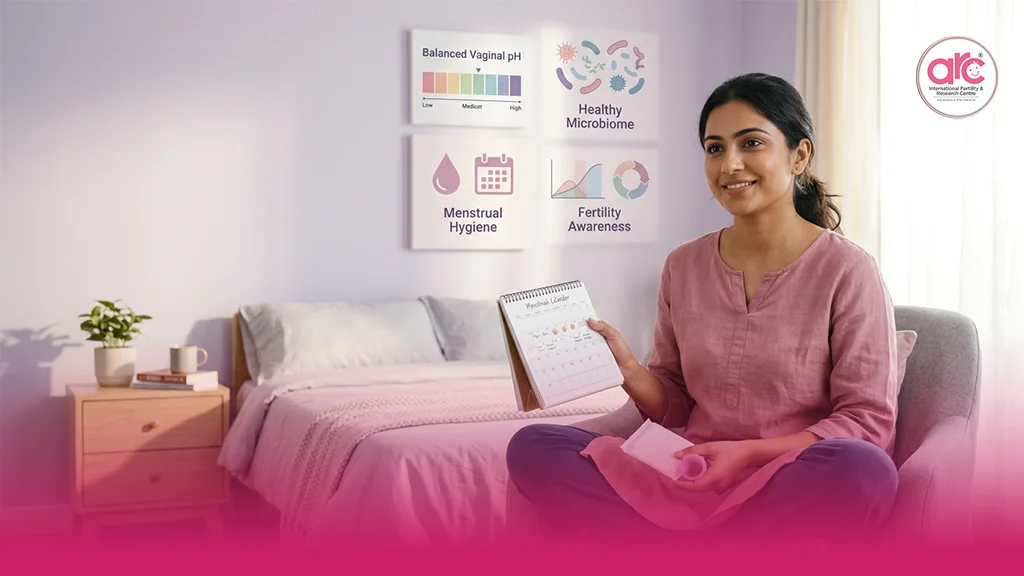
A healthy vaginal pH typically ranges between 3.8 and 4.5, which supports beneficial bacteria like Lactobacillus. These bacteria protect against infections and maintain an environment that supports fertility. When this balance shifts, harmful bacteria can grow, increasing the risk of infections that may impact conception (Source: American College of Obstetricians and Gynecologists)
This is where menstrual hygiene and vaginal health intersect, but they are not the same.
Menstrual hygiene vs vaginal health: Why the difference matters?
Most women assume that maintaining hygiene during periods is enough.
But there’s a key distinction:
Menstrual hygiene focuses on external care:
- Using sanitary pads, tampons or menstrual cups
- Changing them regularly
- Keeping the area clean
Vaginal health is internal:
- Maintaining microbial balance
- Keeping pH levels stable
- Supporting sperm survival and fertilisation
You can follow proper hygiene practices and still unknowingly disrupt vaginal health.
How does vaginal pH affect conception?
For conception to occur, sperm must survive in the vaginal environment and travel toward the egg.
A balanced vaginal pH supports this process.
When the pH becomes imbalanced (less acidic), it can:
- Encourage harmful bacterial growth
- Lead to infections like bacterial vaginosis
- Affect cervical mucus quality
- Reduce sperm survival and motility
Even mild imbalances can reduce the chances of fertilisation.
At a Fertility hospital in Chennai, this is often one of the hidden factors evaluated in couples facing unexplained infertility.
Everyday habits that quietly disrupt vaginal health
In Ananya’s case, her hygiene routine seemed correct, but small habits were affecting her internal balance.
These are common patterns many women follow:
- Overuse of intimate washes
Frequent use of scented or chemical-based products can disrupt natural bacteria.
- Internal cleaning practices
Douching or washing internally removes protective microbes and alters pH.
- Delayed changing of menstrual products
Keeping pads or tampons on for long hours creates a moist environment for bacterial growth.
- Tight or non-breathable clothing
Synthetic fabrics trap moisture and heat, affecting vaginal balance.
Individually, these habits seem harmless. Over time, they can create an environment that is not ideal for conception.
Signs your vaginal pH may be imbalanced
Vaginal health issues are often subtle and easy to ignore.
Watch for:
- Unusual discharge (grey, green or thick white)
- Strong or fishy odour
- Itching or irritation
- Burning sensation
These symptoms may seem minor but can indicate underlying imbalance.
If you’ve been trying to conceive without success, it may be time to look deeper.
Take some time to read this blog on: “How many months should you try before fertility treatment”
Why does this become critical during fertility treatment?
When couples move toward treatments like IUI or IVF, the focus shifts to optimising every condition for success.
A balanced vaginal environment:
- Improves sperm survival
- Reduces infection risks during procedures
- Supports implantation conditions
Before starting treatment, doctors typically conduct detailed evaluations to ensure the body is ready. Have a detailed understanding of “Tests to be done before IVF”
Because even advanced fertility treatments depend on a healthy internal environment.
What specialists observe in real cases?
At a Best Fertility Hospital in Chennai, it is common to see patients where:
- Ovulation is normal
- Hormone levels are balanced
- Reports show no major issues
Yet conception is delayed.
In many of these cases, underlying factors like:
- Chronic vaginal infections
- pH imbalance
- Poor cervical environment
play a significant role.
Correcting these often improves outcomes, sometimes even before moving to advanced treatments.
How to maintain a healthy vaginal pH?
The goal is not complex routines. It’s about maintaining balance.
Here’s what helps:
- Keep it simple
Use plain water externally. Avoid frequent use of chemical cleansers.
- Change menstrual products regularly
Every 4 – 6 hours to prevent bacterial growth.
- Choose breathable fabrics
Cotton underwear supports airflow and reduces moisture.
- Avoid douching
The vagina is self-cleaning. Internal washing disrupts balance.
- Don’t ignore symptoms
Recurring discharge or irritation should be evaluated early.
- Support overall reproductive health
Hormonal balance, ovulation and uterine health all work together.
The bigger picture: Small imbalances can delay results
Fertility is not determined by a single factor. It depends on multiple systems working together.
While major tests focus on hormones or egg quality, smaller factors like vaginal pH can quietly influence outcomes.
A healthy vaginal environment:
- Supports sperm function
- Reduces infection risk
- Creates favourable conditions for conception
Ignoring it means overlooking an important part of the fertility journey.
Final takeaway
Menstrual hygiene is important. But it is only one part of reproductive health.
Vaginal health goes deeper. It determines whether the environment inside the body is truly supportive of conception.
If you are trying to conceive and not seeing results, it may be worth looking beyond the obvious.
Because sometimes, improving fertility is not about doing more.
It’s about restoring balance where it matters most…