Overview
She had heard the phrase too many times.
“Your lining is thin.”
Said in passing, after a routine scan, almost as an afterthought. But for her, it was the only thing she could think about for the rest of the day.
If a thin lining meant a closed door, what did that mean for everything she had been hoping for?
Is pregnancy possible with thin endometrium lining?
This is one of the most emotionally loaded questions in fertility medicine and one where the science has actually shifted more recently than most patients realise. The honest, evidence-based answer at ARC is more hopeful than the old narrative most women have been told.
What Does a Thin Endometrium Actually Mean?
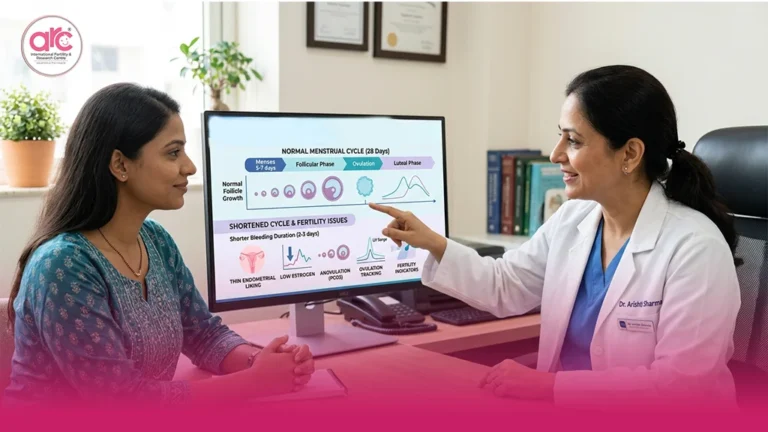
The endometrium is the inner lining of the uterus, the tissue that thickens each cycle to prepare for a potential pregnancy and is shed during menstruation if implantation does not occur.
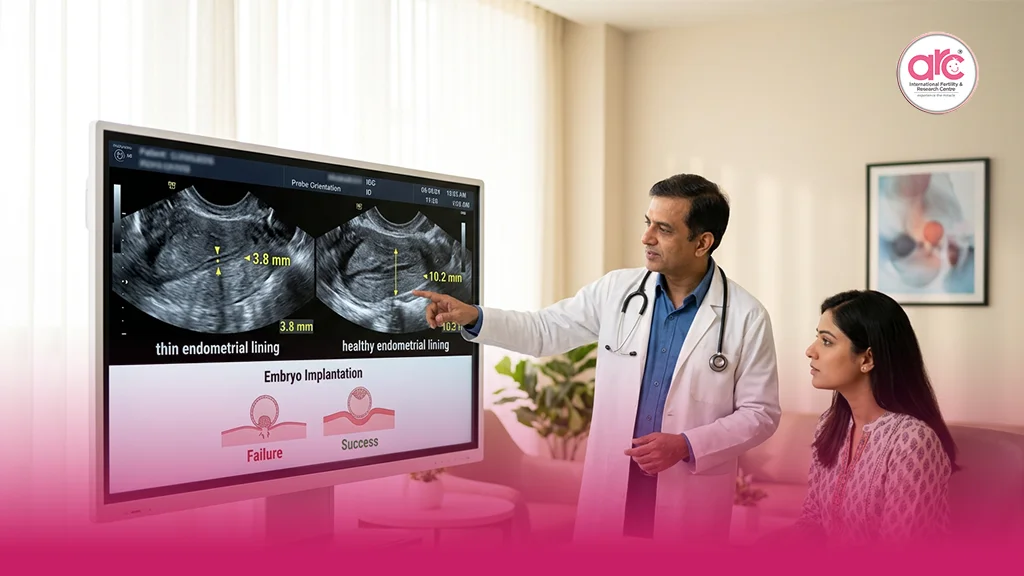
A thin endometrial lining, typically defined as an endometrial thickness of less than 7 mm, is commonly associated with failed embryo implantation, recurrent pregnancy loss and infertility.
That definition is why so many women receive the diagnosis with alarm. For decades, the assumption in reproductive medicine was straightforward: a thinner lining meant a meaningfully lower chance of pregnancy. Patients were often told to expect cancelled cycles, repeated failures or a need for aggressive intervention before any embryo transfer could proceed.
But the research landscape on this exact question has moved significantly and 2025 brought findings that are reshaping how specialists, including the team at ARC, counsel patients with this diagnosis.
The Research That Changed the Conversation
In August 2025, one of the largest studies ever conducted on this specific question delivered a finding that surprised even experienced reproductive endocrinologists.
A thin endometrial lining does not appear to decrease a woman’s chances of a successful IVF pregnancy, researchers reported in the journal Human Reproduction. Senior researcher Dr. Emre Seli, professor of obstetrics, gynecology and reproductive sciences at Yale School of Medicine, studied over 30,000 IVF cycles between January 2017 and December 2022 from clinics in the United States, Spain and the United Arab Emirates.
In the overall population, many patients may have a thin lining, which should not decrease their success rates, Seli explained.
The most striking part of the finding is, many patients had successful pregnancies even with endometrial thicknesses below 5 millimetres. “One can have a baby at 4, 5, 6 millimetres with just a slightly decreased success rate”, Seli said.
This is a meaningful departure from the older clinical assumption and it directly answers the question at the centre of this blog with more nuance than most women have previously been given.
Is Pregnancy Possible With Thin Endometrium Lining? What the Evidence Actually Shows?
Is pregnancy possible with thin endometrium lining? The honest, current answer is yes, for many women, with success rates that are closer to normal than previously believed, though the picture is not uniform across every study.
A 2024 case report published in the journal Medicine documented a successful live birth in a patient with an endometrial thickness of just 3.8 mm at the time of trigger, an outcome the authors described as rare but real, demonstrating that with appropriate interventions, successful pregnancies remain attainable even at extremely thin measurements.
A large 2025 cohort study of 2,671 patients with thin endometrium undergoing frozen embryo transfer found clinical pregnancy rates of 33.9% to 36.2% across different endometrial preparation protocols and live birth rates between 25.3% and 27.6%, depending on the cycle preparation method used. These are not negligible numbers. They reflect real, achievable pregnancy outcomes in women with confirmed thin lining.
At the same time, the picture is genuinely mixed. A separate 2025 network meta-analysis found that patients with endometrial thickness of 7 mm or less had a pregnancy rate of only 7.4%, significantly lower than the 30.8% rate for those with thickness above 7 mm.
This apparent contradiction across studies is not a sign that science is unreliable. It reflects what fertility specialists at ARC see in practice every day. Endometrial thickness is one factor among several and outcomes vary significantly based on the underlying cause of the thin lining, the preparation protocol used and individual patient factors.
Why Some Women With Thin Lining Conceive and Others Do Not?
This is where the nuance matters most.
A 2026 study examining the cause of thin endometrium, distinguishing between thin lining caused by previous uterine surgery versus thin lining that is constitutional, meaning a woman’s natural baseline without any surgical history, found that outcomes differ meaningfully based on the underlying cause.
This finding reinforces something ARC emphasises in every consultation. A thin lining is a measurement, not a diagnosis on its own. What caused it matters as much as the number itself.
Factors such as endometrial morphology, type and blood supply play crucial roles in determining receptivity, not thickness in isolation. Endometrial thickness serves as one indicator of receptivity, but it is not the only one.
This is why two women with identical 6 mm linings can have very different outcomes, one may have excellent blood flow and a triple-line pattern indicating good receptivity, while the other may have scarring from previous surgery that affects how the embryo can implant regardless of thickness.
What ARC Does to Improve a Thin Lining?
While research increasingly shows that a thin lining does not automatically mean low chances of pregnancy, ARC still actively works to optimize endometrial thickness wherever possible, because every improvement increases the odds further.
The incidence of thin endometrium in assisted reproductive technology is between 1% and 2.5% and treatment options vary in effectiveness. At ARC, the approach includes:
- Extended Estrogen Priming: Giving the lining more time and hormonal support to build before progesterone is introduced.
- Vaginal Sildenafil: Improving uterine blood flow in select patients, supporting better lining development.
- Platelet-rich Plasma (PRP) Therapy: Intrauterine PRP has shown meaningful improvements in endometrial thickness and pregnancy outcomes in difficult cases, as covered in detail in our guide on this regenerative approach.
- Hysteroscopic Evaluation: Identifying and treating Asherman’s syndrome or intrauterine adhesions when surgical history is the underlying cause.
- Nutritional and Lifestyle Support: Including dietary choices that support uterine blood flow and reduce inflammation. Our guide on whether avocado is good for embryo implantation explores one evidence-supported food choice that contributes to a more receptive uterine environment.
For a complete breakdown of the five most effective, evidence-based strategies for improving endometrial receptivity, our detailed guide on whether your uterine lining is too thin and five ways to improve endometrial receptivity covers the full clinical picture.
What This Means for Your Next Step?
If you have been told your lining is thin, the most important thing to understand is this. It is a starting point for a conversation, not a closed door.
According to the Yale School of Medicine news release on this research, the research team is now working on a calculator to help fertility specialists give patients a clearer, individualised understanding of their actual chances, rather than relying on generalised thresholds that may not reflect outcomes accurately.
At a dedicated fertility hospital in Chennai, ARC approaches a thin endometrium diagnosis the way the latest research supports: as one data point within a complete fertility evaluation, not a standalone verdict. The underlying cause is investigated. The preparation protocol is tailored. And the realistic odds based on your specific situation, not a generic number are explained clearly.
At the best fertility hospital in Chennai, that individualised, evidence-based approach is what ARC offers every patient navigating this diagnosis, because the science has moved forward and the conversation around thin lining should move with it.
Final Thoughts
She came back for her next scan with a different question this time.
Not “Is this hopeless?” , but “What is the plan?”
That shift, from fear to forward motion, is what the right information, delivered clearly, makes possible.
Frequently Asked Questions (FAQs)
Q1. What endometrial thickness is needed for pregnancy?
While 7mm or above is traditionally considered ideal, 2025 Yale research found many women conceive successfully even at 4-6 mm. Thickness is one factor among several that determine implantation success.
Q2. Can IVF work with a thin endometrium?
Yes, recent studies show clinical pregnancy rates of 33% to 36% and live birth rates of 25% to 27% in women with thin endometrium undergoing IVF, depending on the preparation protocol used.
Q3. What causes a thin endometrial lining?
Common causes include previous uterine surgery, Asherman’s syndrome, low estrogen levels, poor uterine blood flow and chronic inflammation. The underlying cause significantly affects treatment approach and outcomes.
Q4. How can I naturally improve my uterine lining thickness?
Staying well hydrated, eating foods rich in healthy fats like avocado, gentle exercise to improve blood flow and managing stress can support endometrial health alongside medical treatment recommended by your specialist.
Q5. Is a thin lining always a reason to cancel an embryo transfer?
Not necessarily! Many specialists, including ARC, now proceed with transfer in select thin-lining cases based on the latest research, while still using treatments like extended estrogen priming or PRP to optimize outcomes wherever possible.