
Overview
The first trimester is twelve weeks of extraordinary biological change.
A single fertilised cell divides, differentiates and begins building an entire human nervous system, heart and organ structure, all before most women have even told their families the news.
What you eat during these twelve weeks matters in a way that is different from any other stage of pregnancy. The baby has no placental barrier strong enough to filter everything out. Toxins, bacteria and certain nutrients in excess reach the developing embryo more directly in these early weeks than at any later stage.
And yet this is also the trimester where nausea, food aversions and exhaustion make eating thoughtfully the most difficult.
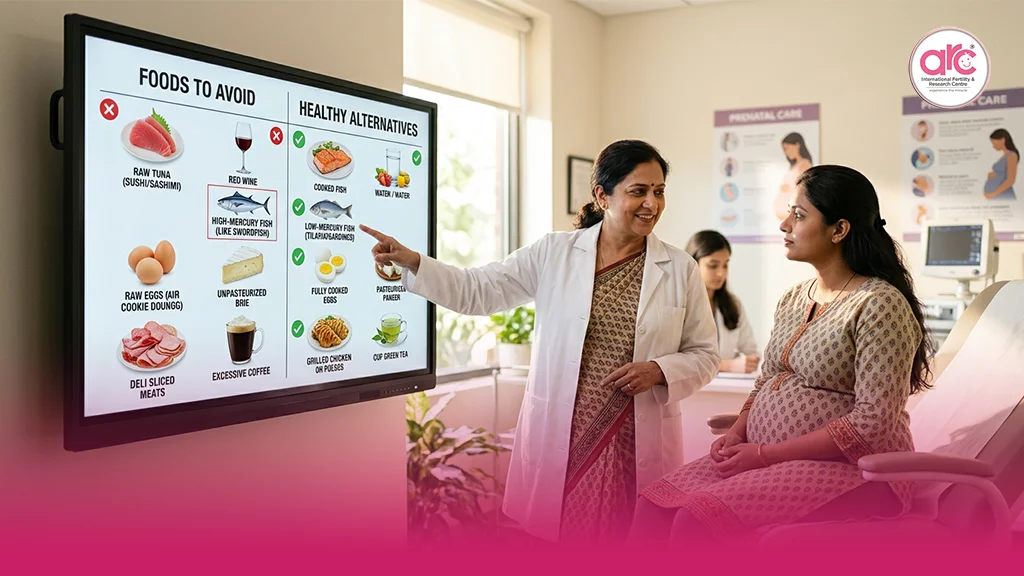
What foods to completely avoid during the first trimester? This is one of the most important questions a newly pregnant woman can ask and at ARC, we believe the answer deserves more than a vague list of warnings.
Here is the complete, honest picture.
Raw or Undercooked Meat and Eggs
This is the most consistently important restriction in early pregnancy and the one most commonly overlooked in everyday Indian cooking.
Avoid raw or undercooked meats and eggs, unpasteurised foods such as milk, juices and cheeses and high-mercury fish like shark, swordfish and king mackerel.
Raw and undercooked meat carries the risk of listeria, salmonella and toxoplasma (bacteria and parasites), that cross the placental barrier and can cause miscarriage, stillbirth and serious fetal developmental problems.
In practical Indian kitchen terms: Half-cooked kebabs, medium-rare steak if eaten at restaurants, runny egg yolk in omelettes or egg bhurji that has not been fully cooked through. These all carry real risk in the first trimester.
Raw sprouts (moong, methi, alfalfa) also carry contamination risk despite feeling like a healthy choice. Unwashed vegetables, raw sprouts and undercooked meat may harbour toxoplasma parasites, which can harm the baby’s mental development.
All meat should be cooked to an internal temperature that eliminates surface bacteria. Eggs should have fully set yolks. Sprouts should be cooked before eating.
High-Mercury Fish
Fish is a valuable source of omega-3 fatty acids for fetal brain development. But not all fish are safe in pregnancy.
Avoid high-mercury fish including shark, swordfish, tuna and marlin. Too much mercury could damage your baby’s growing nervous system.
In Indian coastal cities including Chennai, certain large ocean fish are consumed regularly. Swordfish and shark, sometimes sold at local markets, are the highest-risk options and should be completely eliminated during pregnancy.
Opt for low-mercury seafood like shrimp, anchovies, salmon and tilapia, which are proven safe for pregnant women. Rohu, catla, pomfret and sardines are generally safer options for Indian pregnant women seeking the nutritional benefits of fish without mercury risk.
Alcohol: No Safe Amount Exists
This one has no nuance to it.
There is no confirmed safe level of alcohol consumption during pregnancy, particularly during the first trimester when the neural tube, brain and organ systems are forming. Alcohol crosses the placenta freely and reaches the developing fetus at concentrations equivalent to the mother’s blood level.
Some research shows that large amounts of caffeine are associated with miscarriage, premature birth and low birth weight. The safest thing is to refrain from consuming caffeine and that principle applies even more absolutely to alcohol, where no safe threshold has been established at any stage of pregnancy.
Fetal alcohol spectrum disorders are entirely preventable. Complete abstinence through the first trimester and ideally throughout pregnancy, is the only clinically safe position.
Caffeine: Not Eliminated, But Significantly Reduced
Caffeine is a more nuanced conversation than alcohol, but still an important one in the first trimester.
As a general rule, caffeine should be limited to fewer than 200 mg per day during pregnancy. That’s one 12-ounce cup of coffee. Some research shows that large amounts of caffeine are associated with miscarriage, premature birth and low birth weight.
For context: A standard cup of South Indian filter coffee contains approximately 80 to 120 mg of caffeine. 2-3cups a day, the habit many Indian women carry into pregnancy without reconsidering, exceeds the safety threshold.
Reduce to 1 cup per day maximum in the first trimester. Switch to decaf wherever possible. Remember that chai, dark chocolate and certain cold drinks also contribute to the daily caffeine load.
Unpasteurised Dairy and Soft Cheeses
Unpasteurised milk, still consumed widely in parts of India, carries listeria risk that is particularly dangerous in early pregnancy.
Raw milk bought from local vendors, unpasteurised paneer made at home from raw milk and certain soft cheeses fall into this category. All dairy should be pasteurised. Paneer should be made from or purchased using pasteurised milk.
The listeria bacterium found in contaminated unpasteurised dairy can cause pregnancy loss, premature labour and serious neonatal infections, often without any obvious symptoms in the mother before damage has occurred.
Excess Vitamin A: Liver and High-Dose Supplements
This one surprises most people.
Consuming too much preformed vitamin A, especially in the first trimester of pregnancy, can lead to congenital malformations and pregnancy loss.
Preformed vitamin A, found in animal liver, liver-based pâtés and high-dose vitamin A supplements, is teratogenic in excess. It disrupts the development of the neural tube and facial structures during the critical early weeks of organogenesis.
Eating a small amount of chicken liver occasionally is unlikely to cause harm. But eating liver regularly or taking supplements containing retinol-form vitamin A without medical guidance, carries genuine first-trimester risk. Beta-carotene from plant sources: Sweet potatoes, carrots and leafy greens does not carry the same risk and remains safe throughout pregnancy.
Foods To Avoid In First Trimester? Quick Reference
Returning to the central question: What foods should you completely avoid during the first trimester? Here is the complete summary:
|
Food |
Risk |
Action |
|---|---|---|
|
Raw/undercooked meat and eggs |
Listeria, salmonella, toxoplasma |
Cook fully (No exceptions) |
|
High-mercury fish |
Fetal neurological damage |
Avoid shark, swordfish, large tuna |
|
Alcohol |
Fetal alcohol disorders, miscarriage |
Complete elimination |
|
Excess caffeine (>200mg/day) |
Miscarriage, low birth weight |
Limit to 1 cup of coffee |
|
Unpasteurised dairy |
Listeria |
Use only pasteurised milk and paneer |
|
Excess preformed vitamin A |
Congenital malformations |
Avoid liver-based foods and retinol supplements |
|
Raw sprouts |
Bacterial contamination |
Cook before eating |
|
Pineapple in large quantities |
Uterine contractions in excess |
Limit, especially in first weeks |
Beyond the Avoid List: What the First Trimester Needs?
Understanding what not to eat is one half of the equation.
The other half, what to actively eat to support fetal development through the first trimester, is equally important. Folate, iron, calcium, protein and vitamin D all have specific first-trimester roles that a carefully chosen diet can support.
Your antenatal care schedule in the first trimester includes not just scan and blood test milestones but also nutritional guidance that is specific to your health history and dietary patterns. Our complete guide on antenatal care and the month-by-month schedule covers what happens at each stage, from your six-week booking appointment through to the anomaly scan.
And for the foundational daily habits that support a healthy pregnancy across all three trimesters, our guide on 10 essential prenatal care tips covers the practical framework that complements the dietary restrictions above.
According to the Mayo Clinic’s pregnancy nutrition guidelines, what you eat during pregnancy directly affects your baby’s development, making the first trimester, when organogenesis is most active, the most important period to be thoughtful about food safety.
The First Trimester Is Not About Perfection
Nausea, food aversions and fatigue are real.
Many women in their first trimester cannot eat the foods that feel nutritionally ideal and the body often craves exactly the simple, starchy foods that settle a sensitive stomach.
At ARC, we work with this reality, not against it. The goal in the first trimester is not a perfect diet. It is a safe one. Avoiding the foods above protects the developing baby at the most vulnerable stage. Everything else can be built up as the second trimester brings more energy and a more co-operative appetite.
At a dedicated fertility hospital in Chennai, the first trimester nutrition conversation at ARC is grounded in what is practical, culturally relevant and evidence-based, not a generic printed list handed over at the end of a consultation.
At the best fertility hospital in Chennai, ARC approaches first-trimester care as the delicate, critical phase it is, with dietary guidance that reflects both the science and the reality of what eating looks like in a South Indian kitchen during the hardest weeks of pregnancy.
Final Thoughts
The first trimester asks a lot of you.
Knowing what to remove from your plate, clearly and completely, is one of the most direct ways to protect what is quietly, remarkably happening inside it.
Frequently Asked Questions (FAQs)
Q1. Is it safe to eat papaya during the first trimester?
Ripe papaya in small quantities is generally considered low risk, but raw or semi-ripe papaya contains latex compounds that may trigger uterine contractions. Avoid raw papaya entirely and limit ripe papaya during the first trimester.
Q2. Can I drink filter coffee during the first trimester?
One cup of South Indian filter coffee per day, approximately 80 to 120 mg of caffeine, is within the recommended limit of 200 mg daily. Two or more cups exceeds the safe threshold and should be reduced.
Q3. Is homemade paneer safe during the first trimester?
Only if made from pasteurised milk. Paneer made from raw or unpasteurised milk carries listeria risk. Ensure all dairy used in cooking during pregnancy comes from a pasteurised source.
Q4. Can I eat street food during the first trimester?
Street food carries higher food safety risk due to uncertain hygiene, raw ingredients and improper storage temperatures. During the first trimester when immunity is naturally suppressed, home-cooked meals from known, clean ingredients are significantly safer.
Q5. Are raw sprouts like moong safe during early pregnancy?
No, raw sprouts carry bacterial contamination risk regardless of how fresh or organic they appear. Always cook sprouts fully before eating during pregnancy, particularly in the first trimester.