Overview
She had assumed it was the food.
Heavily spiced lunch, too much rice, skipped the evening walk again.
The bloating had been there for weeks, a persistent fullness on the lower left side that felt different from the usual post-meal discomfort. Tighter, more constant, almost like pressure from the inside.
Her mother told her to drink ajwain (omam) water. Her colleague suggested probiotics.
It was only when the bloating persisted into the third week that she went for a scan.
The report came back with three words she had not expected.
“Ovarian cyst detected”
Can ovarian cyst cause bloating?
The answer is yes, in ways that are more specific and more clinically important than most women realise when they first experience this symptom.
What an Ovarian Cyst Actually Is?
Before the bloating connection makes full sense, a clear explanation helps.
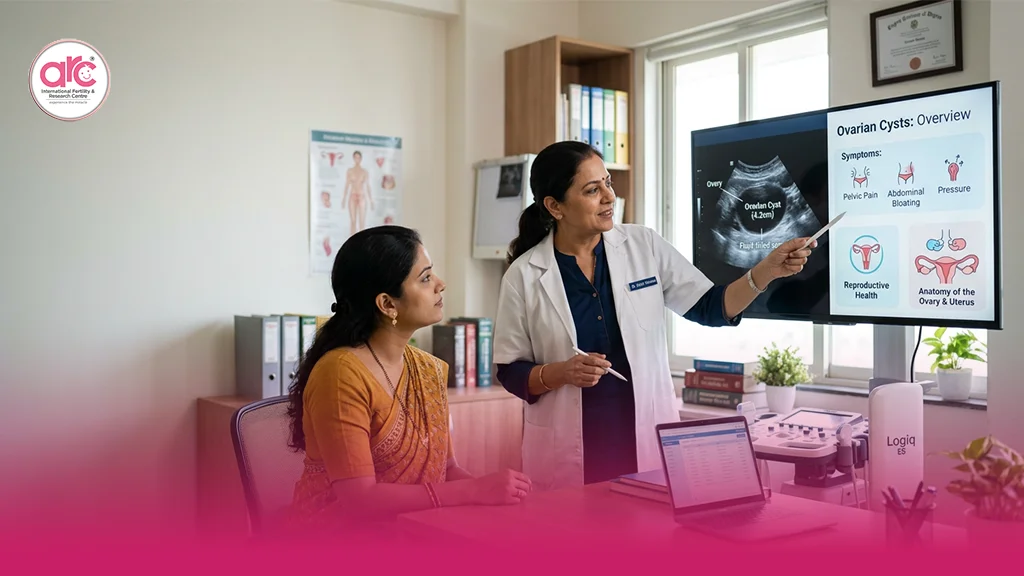
Ovarian cysts are fluid-filled sacs in the ovaries. It is estimated that about 10 out of 100 women have ovarian cysts. They are usually non-cancerous and rarely cause problems.
Most ovarian cysts develop and resolve on their own, part of the natural hormonal cycle of follicle development. These are called functional cysts and they typically disappear within 1-3 cycles without treatment.
But some cysts persist. Some grow. Some are not functional at all, including endometriomas, haemorrhagic cysts, dermoid cysts and cystadenomas. And when a cyst grows large enough or when its type involves hormonal disruption, the body begins to feel it.
Bloating is often the first signal.
Can Ovarian Cyst Cause Bloating? How the Connection Works
Ovarian cysts can indeed cause bloating. The reason is two-fold. Physically, large cysts have the potential to press against the stomach and other organs, interfering with the normal process of digestion and causing the sensation of bloating. Hormonally, some cysts, such as those from PCOS, can lead to hormonal imbalances that contribute to bloating by affecting how the body processes fluids and nutrients.
Breaking this down practically:
- Physical Pressure
Larger cysts may cause a feeling of fullness, bloating in the lower belly, that may feel more pronounced on one side of the body. As a cyst grows, it takes up space in the pelvic and abdominal cavity that the intestines, bladder and other organs previously occupied. This displacement creates a sensation of fullness that is present whether or not you have eaten, which is one of the distinguishing features of cyst-related bloating versus dietary bloating.
- Hormonal Disruption
Some cysts alter estrogen and progesterone levels or increase androgen production. These hormonal shifts affect how the body retains water and processes food, creating fluid retention and digestive disruption that manifests as persistent bloating even when the cyst is not yet large enough to cause physical pressure.
- Fluid Accumulation
There is also the possibility for cysts to leak or rupture, which can lead to fluid accumulation in the pelvic area, a cause of acute, sudden bloating that is more dramatic and painful than the slow-building pressure of a growing cyst.
What Makes Cyst Bloating Different From Ordinary Bloating?
This is the practical distinction that matters most.
Dietary bloating typically arrives after eating, specifically after certain trigger foods and resolves within hours as digestion progresses. It tends to be central and generalised across the abdomen.
Cyst-related bloating has a different character:
- It is present regardless of when or what you last ate
- It tends to be felt on one specific side, most often the lower left or lower right, corresponding to the affected ovary
- It does not resolve with dietary changes or digestive remedies
- It may worsen through the cycle, particularly in the second half when the cyst is most active hormonally
- It is often accompanied by pelvic pressure, urinary urgency or discomfort during intercourse
If a cyst does cause symptoms, you may have pressure, bloating, swelling or pain in the lower abdomen on the side of the cyst. This pain may be sharp or dull and may come and go. If a cyst ruptures, it can cause sudden, severe pain.
The persistence and laterality of the bloating, that it is consistently on one side and does not respond to the usual remedies, is the clinical signal most worth paying attention to.
Which Types of Ovarian Cysts Cause the Most Bloating?
Not all cysts produce the same degree of bloating. At ARC, the cyst types most commonly associated with significant bloating include:
- Endometriomas (Chocolate cysts)
These are cysts filled with old menstrual blood, dark brown in colour, which gives them the name chocolate cysts. They form when endometrial tissue implants on the ovary and bleeds cyclically. They can grow significantly over time and cause both physical pressure-bloating and inflammatory bloating from the surrounding tissue response. Our detailed guide on chocolate cysts of the ovary in Tamil covers the full picture in an accessible format.
- Haemorrhagic Cysts
These develop when a blood vessel in a follicle wall breaks and bleeds into the cyst. The sudden increase in cyst size can cause acute bloating alongside sharp, one-sided pain. Our guide on haemorrhagic ovarian cysts in Tamil explains what this type means and what the treatment pathway looks like.
- Large Functional or Dermoid Cysts
When any cyst grows beyond 5 to 6 cm, the physical displacement of abdominal organs becomes significant enough to cause consistent bloating, pressure and sometimes nausea independent of any hormonal effect.
- PCOS-related Cysts
Multiple small follicular cysts in PCOS do not individually cause pressure bloating, but the associated hormonal environment, including elevated androgens and insulin resistance, consistently produces fluid retention and digestive disruption that many women with PCOS experience as chronic bloating.
Can Ovarian Cyst Cause Bloating? When to Seek Medical Evaluation?
Returning to the central question, “Can ovarian cyst cause bloating?” and moving toward the action it warrants:
Bloating that is persistent, one-sided, does not respond to dietary changes and is accompanied by any of the following needs medical evaluation promptly:
- Pelvic pain or pressure, constant or intermittent
- Irregular periods or significantly heavier bleeding than usual
- Pain during intercourse
- Urinary urgency or frequency without infection
- Sudden, sharp abdominal pain, particularly if accompanied by nausea, vomiting or dizziness, which may indicate cyst rupture or torsion
According to the Office on Women’s Health, you should see your doctor if you have symptoms such as bloating, needing to urinate more often, pelvic pressure or pain or abnormal vaginal bleeding, as these can be signs of a cyst or other serious condition.
The evaluation at ARC begins with a transvaginal ultrasound, the most reliable tool for confirming cyst presence, assessing size and type and determining whether monitoring or intervention is appropriate.
What Happens After a Cyst Is Confirmed at ARC?
Not every cyst requires immediate treatment.
Most small, functional cysts are monitored across 1-2 cycles to confirm resolution. Many disappear on their own. Those that persist, grow or are of a type associated with complications: Endometriomas, dermoids, haemorrhagic cysts above a certain size, are managed through a combination of hormonal treatment, careful monitoring and, where indicated, laparoscopic surgery.
Importantly for women trying to conceive: Certain cyst types, particularly endometriomas, can affect ovarian reserve and egg quality if left unmanaged. At ARC, the approach to ovarian cysts in fertility patients considers both the immediate symptom picture and the longer-term reproductive implications.
At a dedicated fertility hospital in Chennai, the cyst evaluation at ARC includes not just imaging but a complete hormonal assessment — CA-125 where indicated, AMH to assess ovarian reserve, and a cycle history that connects the cyst picture to the patient’s broader reproductive health.
At the best fertility hospital in Chennai, ARC approaches every ovarian cyst with the same clinical thoroughness, understanding what type it is, what is causing it and what the implications are for both current symptoms and future fertility, before deciding on the most appropriate management path.
Final Thoughts
She came back three weeks after the ajwain (omam) water and probiotics.
The scan told the real story.
A 6 cm endometrioma on the left ovary.
It had been there for months. The bloating was not due to the food.
It never had been.
Frequently Asked Questions (FAQs)
Q1. How long does ovarian cyst bloating last?
Cyst-related bloating typically persists until the underlying cyst resolves or is treated. It does not respond to dietary changes, the way food-related bloating does. Functional cysts often resolve within 1-3 menstrual cycles.
Q2. Can a small ovarian cyst cause bloating?
Small cysts, under 3 cm, rarely cause physical pressure bloating, but hormonally active cysts or those associated with PCOS can cause fluid retention and digestive disruption regardless of size.
Q3. Is bloating on one side always a sign of an ovarian cyst?
Not always! But one-sided lower abdominal bloating that is persistent and does not respond to dietary changes or digestive remedies is a common symptom pattern for ovarian cysts and warrants an ultrasound evaluation.
Q4. Can an ovarian cyst cause bloating and weight gain?
Yes, larger cysts can contribute to visible abdominal distension and fluid retention that registers as weight gain, particularly if the cyst is producing hormonal changes that affect how the body retains fluid.
Q5. Do ovarian cysts go away on their own?
Most functional cysts resolve without treatment within 1-3 cycles. Endometriomas, dermoids and other non-functional cyst types typically require monitoring and in many cases medical or surgical management.