Overview
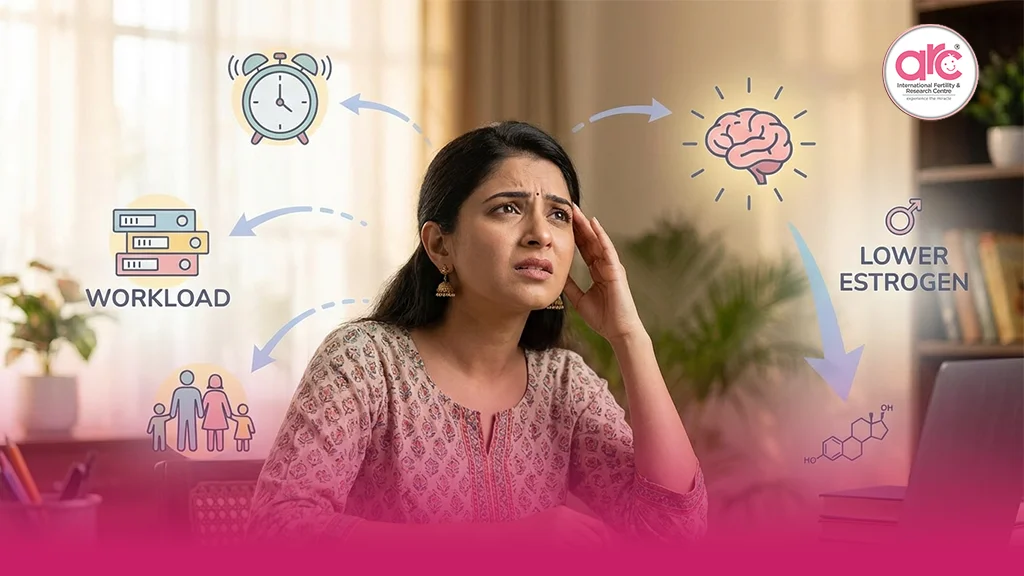
Stress does not just affect the mind. It affects hormones. It affects cycles. It affects ovulation. And it affects estrogen — one of the central hormones that controls a woman’s entire reproductive system.
Most women underestimate how deeply stress influences the body. They think stress causes mood swings or headaches. They rarely connect it to fertility. But every fertility specialist sees the pattern clearly.
Estrogen does not dip or rise randomly.
Stress pushes it.
A fertility hospital in chennai sees this every day — women with normal reports but unpredictable cycles because their stress levels are high, constant, or unacknowledged.
This blog explains how stress interferes with estrogen and what that means for fertility, health, and long-term hormonal balance.
Why Estrogen Matters So Much
Estrogen is not only about periods. It influences:
- Ovulation
- Egg maturation
- Uterine lining growth
- Vaginal health
- Mood
- Metabolism
- Bone strength
- Brain function
- Heart health
When estrogen becomes unstable, the entire reproductive system shakes.
Estrogen is the rhythm.
Stress breaks the rhythm.
How Stress Disrupts Estrogen: The Real Mechanism
Stress triggers a hormone called cortisol.
Cortisol is not harmful.
But constant cortisol is.
When cortisol stays high for weeks or months, the body shifts its priority from reproduction to survival. The body begins to think pregnancy is unsafe. So it slows down reproductive hormones — starting with estrogen.
This happens in three ways:
1. Cortisol Blocks Estrogen Production
The body uses the same raw materials to make cortisol and estrogen. Under stress, more materials are diverted to cortisol. The body prioritises stress hormones over reproductive hormones.
This leads to:
- Lower estrogen
- Irregular ovulation
- Lightweight periods
- Missed cycles
Women assume something is wrong with their ovaries.
Often the real problem is chronic stress.
2. Stress Interferes With the Brain–Ovary Connection
Ovulation depends on communication between the brain and ovaries. Stress interrupts this signal. When the brain is overwhelmed, it reduces LH and FSH — the hormones that tell ovaries to produce estrogen.
When signaling drops, estrogen drops.
This may cause cycles that are longer, unpredictable, or heavy followed by months of nothing.
An infertility specialist checks ovulation patterns first because hormonal miscommunication is extremely common in stressed women.
3. High Cortisol Raises Androgens, Which Lower Estrogen
Stress increases the production of androgens (male hormones). In women with PCOS, this effect is even stronger.
When androgens rise, estrogen balance falls.
This leads to:
- Acne
- Facial hair
- Hair fall
- Irregular cycles
Stress is not an emotion.
It is a hormone that competes with estrogen.
How Low Estrogen From Stress Affects Fertility
Low estrogen creates a chain reaction:
- Follicles do not grow well
- Eggs do not mature correctly
- The uterine lining becomes weak
- Cervical mucus becomes dry
- Ovulation becomes irregular
- Implantation becomes harder
- IVF response becomes weaker
This is why stress and fertility cannot be separated.
Women who appear “clinically normal” often struggle because their hormones are silently disrupted by stress.
A fertility hospital in chennai focuses on the whole patient — lifestyle, sleep, work patterns, and emotional load — because estrogen does not fall on its own.
How High Estrogen Happens During Stress
Not all stress lowers estrogen.
Sometimes stress increases it — especially in women with:
- PCOS
- Insulin resistance
- Thyroid imbalance
- Weight fluctuations
Stress worsens inflammation and insulin resistance. This increases estrogen dominance, leading to:
Heavy periods
- Breast tenderness
- Mood swings
- Bloating
- Weight gain
Both low and high estrogen can happen under stress.
The pattern depends on your body type, genetics, and underlying conditions.
How to Know Stress Is Affecting Your Estrogen
Watch for signs like:
Irregular periods
- Short cycles
- Long cycles
- No periods
- Mood swings
- Breast changes
- Low libido
- Vaginal dryness
- Sleep disturbances
- Weight shifts
- Headaches
If these symptoms appear together, estrogen is fluctuating.
And stress is often the hidden driver.
Visit a fertility hospital in chennai for blood tests like estradiol, LH, FSH, prolactin, and AMH. Clarity reduces fear and brings control back.
How to Restore Estrogen Balance When Stress Is the Cause
Estrogen does not stabilise in one week.
But the body responds quickly when stress is lowered consistently.
Here are practical steps:
1. Sleep Discipline
Seven hours minimum.
Sleep repairs hormonal communication.
Sleep reduces cortisol naturally.
2. Light Movement
Walk 30 minutes daily.
Walking lowers cortisol better than heavy workouts.
3. Reduce Overload
Do one thing at a time.
Multitasking worsens hormonal imbalance.
4. Eat on Time
Irregular eating shocks insulin.
Stable insulin stabilises estrogen.
5. Limit Stimulants
Cut down caffeine, excess tea, and energy drinks.
They push cortisol too high.
6. Psychological Boundaries
Say no when needed.
Protect your time.
Protect your mental bandwidth.
Lifestyle does not replace medical care.
But it supports it.
When You Need Medical Support
If lifestyle corrections are not enough, a specialist may regulate estrogen through:
- Hormonal therapy
- Ovulation induction
- Thyroid correction
- Insulin management
- Stress-focused counselling
- IVF with tailored stimulation
The best fertility hospital in chennai will choose the method based on your age, cycle pattern, ovarian reserve, and future pregnancy plans.
Final Thought
Stress changes estrogen.
Estrogen changes cycles.
Cycles change fertility.
This is not weakness.
This is physiology.
Stress is not just a feeling.
It is a chemical shift inside the body.
Understanding this gives women power — not fear.
A fertility hospital in chennai will treat the root.
The best fertility hospital in chennai will treat the woman, not just the hormone.
Stabilising estrogen begins with stabilising life.
And when balance returns, the body responds with clarity, strength, and rhythm.