Overview
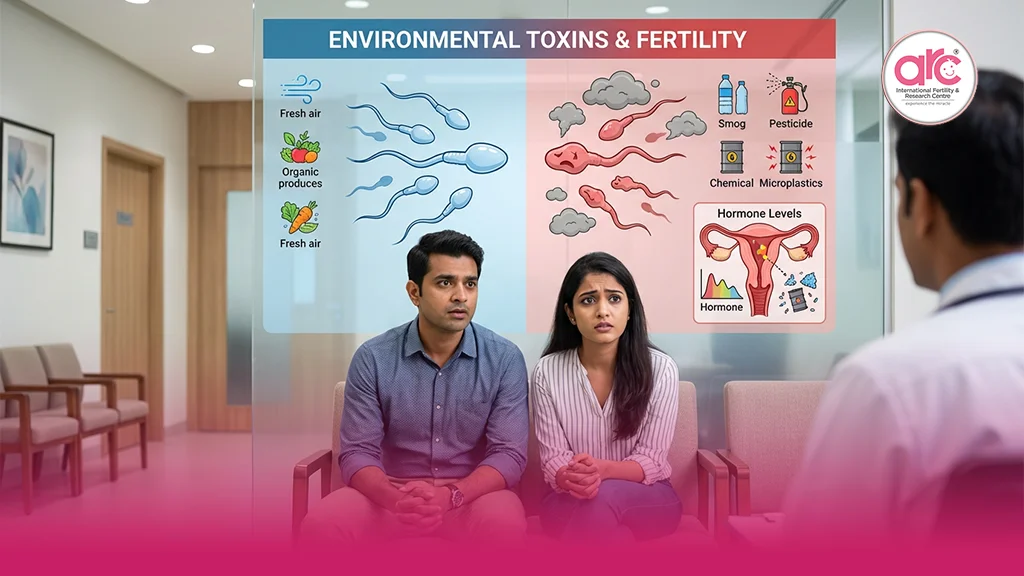
Most couples look at diet, stress, sleep, and age when trying to understand fertility struggles. But they miss one of the biggest forces shaping reproductive health today — environmental toxins. These are chemicals you touch, breathe, absorb, or wear every single day. They do not cause immediate symptoms. They slowly weaken sperm, disrupt hormones, and disturb ovulation.
A fertility hospital in chennai sees this pattern repeatedly. Reports look normal. Scans look normal. Yet something is off. Cycles shift. Sperm count drops. Hormones fluctuate. And couples have no idea that their lifestyle environment is shaping their fertility quietly and consistently.
This blog explains the toxins that matter, how they enter the body, and why they must be taken seriously.
Why Environmental Toxins Matter More Today
Your body is not designed for constant chemical exposure. But modern life forces it. Plastic containers, perfumes, cosmetics, cleaning agents, mosquito repellents, room fresheners, processed food packaging — they all contain endocrine-disrupting chemicals.
These chemicals imitate hormones.
They block hormone receptors.
They confuse the body’s natural rhythm.
A small dose does nothing.
Daily exposure changes everything.
Women experience irregular ovulation.
Men experience reduced sperm count.
Both experience hormonal imbalance without knowing the cause.
How Toxins Enter the Reproductive System
Toxins enter the body through four main channels.
Skin absorption: Anything that stays on your skin for hours gets absorbed — moisturizers, makeup, deodorants, synthetic fabrics, and hair products.
Breathing: Perfumes, incense sticks, scented candles, aerosol sprays — these chemicals reach the bloodstream through the lungs.
Food contact: Plastics release chemicals into hot food, packaged food, and microwaved food.
Water exposure: Contaminated water carries metals and chemical residues.
The body absorbs these chemicals even when the exposure feels invisible.
Key Toxins That Affect Fertility
Several chemicals play a direct role in reducing fertility.
1. Phthalates
Common in plastics, perfumes, shampoos, toys, and synthetic fabrics.
Effects include:
- Lower sperm count
- Reduced motility
- Hormonal imbalance
- Poor egg quality
- Increased miscarriage risk
Phthalates mimic estrogen and disrupt the reproductive system in both men and women.
2. BPA (Bisphenol-A)
Found in water bottles, food containers, receipts, and food cans.
It weakens egg quality, reduces ovarian reserve, disrupts implantation, and decreases testosterone.
3. PFAS (“Forever Chemicals”)
Found in non-stick cookware, waterproof clothes, stain-resistant fabrics, and packaged food.
These chemicals remain in the body for years. They disturb hormones, increase inflammation, and reduce IVF success.
4. Heavy Metals (Lead, Mercury, Cadmium)
Found in contaminated water, certain cosmetics, and pollution.
They damage sperm DNA and interfere with ovulation.
These chemicals do not leave the body quickly. They accumulate over time, especially in reproductive tissues.
The Impact on Female Hormones
Environmental toxins interfere with estrogen, progesterone, thyroid hormones, and insulin.
This leads to:
- Irregular periods
- Delayed ovulation
- PCOS-like symptoms
- Estrogen dominance
- PMS flare-ups
- Thin uterine lining
- Higher miscarriage risk
Women often mistake these signs as “stress related,” but the root may be chemical overload.
When the environment is toxic, hormones cannot maintain stability.
Men assume fertility issues belong to women. But toxins hit men faster.
Daily exposure to plastics, deodorants, artificial fragrances, pesticides, and synthetic clothing reduces:
- Sperm count
- Sperm movement
- Sperm shape
- Testosterone
- DNA quality
Men who work long hours on laptops, drive with heated seats, or wear tight synthetic fabrics face added heat damage. This combination accelerates sperm decline.
Articles discussing how synthetic clothes affect fertility already highlight the heat and chemical exposure that weaken sperm. Environmental toxins add another layer to that damage.
Household Items That Secretly Harm Fertility
Some of the most harmful exposures happen inside the home.
- Scented laundry detergents
- Floor cleaners with strong chemicals
- Room fresheners
- Mosquito sprays
- Candles with artificial fragrances
- Plastic storage boxes
- Non-stick pans
- Synthetic carpets and curtains
These are not minor irritants. They are endocrine disruptors that stay in the air you breathe and settle on your skin.
Fertility is affected by environment as much as biology.
How Toxins Affect Early Embryo Development
Even if sperm and egg meet successfully, toxins affect embryo quality and implantation. They disturb cell division. They weaken early placental formation. They trigger inflammation inside the uterus.
This is why many couples fail multiple cycles without clear medical explanations.
The environment they live in is working against them.
A best fertility hospital in chennai evaluates environmental exposure during consultations because it influences both natural conception and IVF outcomes.
Simple Steps to Reduce Toxin Exposure
You do not need a perfect environment. You need a cleaner one.
- Use glass or steel containers for food.
- Stop microwaving in plastic.
- Choose fragrance-free detergents.
- Replace heavy chemicals with mild cleaners.
- Avoid non-stick cookware when possible.
- Reduce perfume and deodorant use.
- Let rooms ventilate daily.
- Limit synthetic clothing and tight fabrics.
- Choose natural personal-care products when accessible.
Small corrections create long-term hormonal stability.
When to Seek Medical Support
If the cycles are irregular, sperm count is falling, or pregnancy is not happening despite normal tests, environmental factors must be considered.
A fertility specialist can check hormone patterns, inflammation markers, uterine health, and sperm DNA integrity.
A fertility hospital in chennai will look beyond blood reports and understand the environment shaping your body.
Final Thought
Environmental toxins do not feel dangerous. They come silently, through products you trust, clothes you wear, and air you breathe. But they accumulate. They disrupt hormones. They weaken sperm. They confuse ovulation. They interfere with implantation.
Fertility cannot be separated from the environment you live in.
Your body responds to everything around it — quietly, honestly, and without shortcuts.
You do not have to fear these chemicals.
You only have to reduce them.
When you give your body a cleaner space, it performs with more clarity, more balance, and more stability.
Your environment shapes your fertility more than you think.