Overview
Someone probably laughed when you first heard it.
“Don’t keep your laptop on your lap.”
“Skip hot showers.”
“Stop wearing tight jeans.”
It sounded like folklore. The kind of advice that floats around gyms and WhatsApp groups with no real explanation attached.
But here’s the truth men deserve to hear clearly.
These aren’t myths.
They’re biology.
And when sperm quality drops, heat is often the quiet culprit no one took seriously soon enough.
Why the Testicles Live Outside the Body (On Purpose)
There’s a reason the testes are not tucked safely inside the abdomen.
Sperm production requires a temperature 2–3°C lower than core body temperature. That difference is not cosmetic. It’s essential.
When scrotal temperature rises, even slightly, sperm production slows. When it stays elevated over time, sperm quality suffers.
Nature designed a cooling system. Modern life keeps sabotaging it.
At a fertility hospital in Chennai, doctors routinely see men with “unexplained” drops in sperm count whose biggest risk factor turns out to be heat exposure, not genetics.
What Heat Actually Does to Sperm
Heat doesn’t just reduce sperm count. It damages sperm at a cellular level.
Prolonged heat exposure leads to:
- Reduced sperm concentration
- Poor motility
- Abnormal morphology
- Increased oxidative stress
- Higher rates of sperm DNA fragmentation
DNA fragmentation is especially important because it affects fertilisation, embryo development, and miscarriage risk, even when counts look normal.
This is why men can have “okay” semen reports but still struggle with repeated IVF failure.
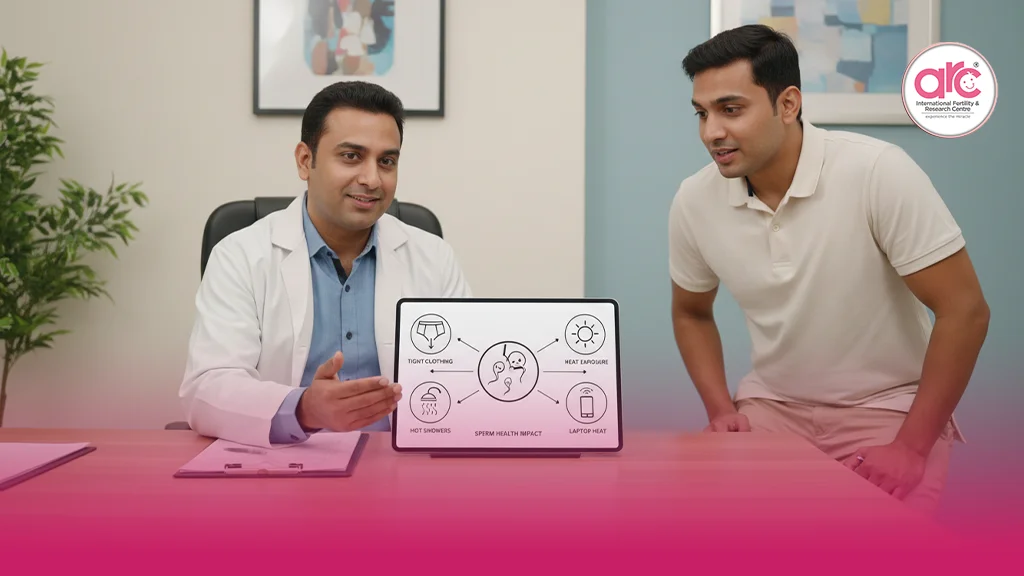
Tight Jeans: Compression + Heat = Double Trouble
Tight jeans don’t just look restrictive. They are.
They:
- Pull the testicles closer to the body
- Reduce airflow
- Trap heat
- Increase scrotal temperature for hours at a time
Wearing them occasionally isn’t catastrophic. Wearing them daily, for long work hours, while sitting most of the day, quietly compounds the problem.
Sperm production takes around 74 days. That means what you wear consistently today affects your results two to three months from now.
The best fertility hospital in Chennai doesn’t ask about jeans to judge style. They ask because temperature history matters.
Hot Showers, Saunas, and Steam Rooms
Heat exposure isn’t limited to clothing.
Hot showers feel relaxing, especially after stressful days. Saunas feel “healthy.” Steam rooms feel therapeutic.
But for sperm, repeated heat spikes are stressful.
Studies show that frequent exposure to high temperatures:
- Temporarily reduces sperm count
- Increases oxidative damage
- Disrupts sperm maturation
Occasional heat is usually reversible. Chronic exposure is not always.
This is especially relevant for men preparing for IVF or repeating semen analysis. Heat exposure in the weeks before testing can distort results and mask true potential.
Laptops on the Lap: A Modern Fertility Hazard
This one surprises many men.
Laptops generate heat. When placed directly on the lap, they increase scrotal temperature within minutes.
Add tight clothing and long sitting hours, and you have a perfect storm.
The problem isn’t technology itself. It’s duration.
Ten minutes is nothing.
Three hours a day, five days a week, for years, adds up.
Heat Creates Oxidative Stress, Not Just Warmth
Heat doesn’t “cook” sperm. It stresses them.
Elevated temperature increases reactive oxygen species, unstable molecules that damage sperm membranes and DNA.
Oxidative stress is now recognised as a major driver of:
- Poor fertilisation
- Poor embryo quality
- Early pregnancy loss
This is why lifestyle advice isn’t just about boosting numbers. It’s about protecting genetic integrity.
“Natural” Changes That Actually Make Sense
Men searching for natural ways to improve sperm quality are often given vague advice.
Here’s what actually helps, biologically.
- Wear loose, breathable underwear
- Avoid prolonged sitting without breaks
- Keep laptops off the lap
- Limit saunas and very hot showers
- Take movement breaks to improve circulation
- Sleep in cooler environments
These changes don’t fix everything. But they remove constant stressors.
Small changes don’t feel dramatic. But sperm responds to consistency, not intensity.
Why Heat Alone Isn’t Always the Whole Story
Here’s an important caveat.
Not all sperm damage is lifestyle-related.
Some men do everything “right” and still have poor parameters. This is where underlying medical causes come into play.
Small lifestyle changes are key, but some issues require medical help. See our post on Varicocele: The Reversible Male Fertility Issue.
Varicoceles, enlarged veins around the testicle, raise scrotal temperature internally and often go unnoticed. No amount of loose clothing fixes that.
This is why evaluation matters as much as effort.
Why Men Are Often Told Too Late
Male fertility is still under-discussed.
Men are rarely taught that their bodies are sensitive, responsive systems, not just sperm factories that either work or don’t.
By the time semen analysis is done, damage may already be months in the making.
Education shouldn’t start after infertility is diagnosed. It should start before numbers drop.
What to Do Before Your Next Semen Analysis
If you’re planning to repeat a test, think in timelines.
What you do today affects sperm quality two to three months from now.
This is why short-term panic changes don’t always reflect in immediate results. Sperm needs time to regenerate under better conditions.
Consistency beats urgency.
A Reframe Men Need to Hear
Avoiding heat doesn’t make you fragile.
It makes you informed.
Your reproductive system isn’t weak. It’s precise.
When you respect the conditions it needs, it responds. When those conditions are ignored, it struggles quietly.
A Grounding Truth to Hold Onto
Tight jeans and hot showers aren’t myths.
They’re signals of how modern comfort can clash with ancient biology.
You don’t need to live like a monk to protect fertility.
You just need to stop unknowingly working against your own physiology.
When men understand this, fertility stops feeling mysterious and starts feeling manageable.
And sometimes, the most effective changes are also the simplest ones.