Overview
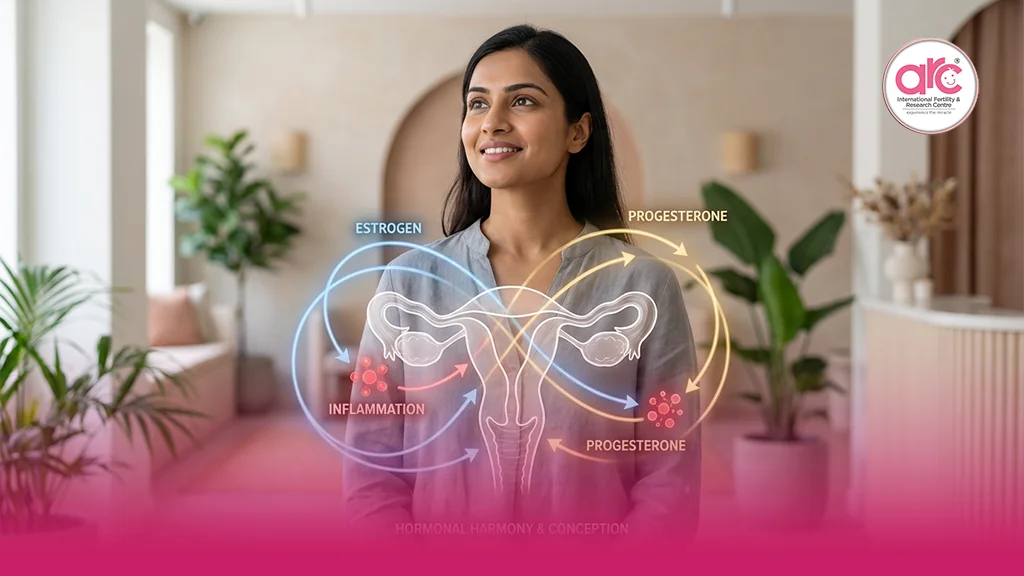
Fertility is not controlled by one hormone. It is controlled by an ecosystem. Estrogen builds the cycle. Progesterone stabilises the cycle. Inflammation shapes both — quietly, consistently, and without warning.
When this ecosystem works together, conception feels natural.
When one part weakens, the entire system becomes unpredictable.
A fertility hospital in chennai sees this daily. Women come with irregular cycles, thin lining, PMS, miscarriages, or unexplained infertility. Their scans may look normal. Their tests may look acceptable. But their hormones are out of rhythm. And when hormones lose rhythm, conception becomes a struggle.
This blog explains the three-way relationship that decides reproductive success: estrogen, progesterone, and inflammation.
Why Hormones Must Work Together, Not Individually
Most people look at estrogen or progesterone as separate problems. They treat each side without understanding the relationship between them.
But these hormones never work alone.
Estrogen prepares the uterus.
Progesterone protects the pregnancy.
Inflammation either supports or destroys the balance between them.
A small shift can change the entire outcome of a cycle.
And that shift often begins silently.
Estrogen: The Builder of the Cycle
Estrogen controls the first half of the menstrual cycle. It thickens the endometrium, prepares the cervix, supports follicle growth, and sends the signal for ovulation.
When estrogen is stable, the body feels energetic and balanced.
When estrogen is unstable, women feel it immediately — lighter flow, irregular timing, mood changes, or disturbed ovulation.
If you have read about how stress affects estrogen, you already know stress is one of the strongest forces that disturbs estrogen levels. Stress does not act externally. It acts chemically. And when estrogen becomes unstable, the entire hormone ecosystem begins to shake.
Progesterone: The Protector of Pregnancy
Progesterone controls the second half of the cycle.
It stabilises the endometrium.
It calms uterine contractions.
It supports embryo attachment.
It keeps early pregnancy steady.
When progesterone falls too early, implantation fails.
When progesterone is weak, early miscarriage risk rises.
Women often notice symptoms: breast tenderness, anxiety, spotting before periods, sleep disturbance, and low energy. These are signals that progesterone is not holding the cycle firmly.
But progesterone itself is not the starting problem. It weakens when estrogen and inflammation become imbalanced.
Inflammation: The Silent Disruptor
Inflammation is the third player, and it has more power than most women realise.
Inflammation reduces estrogen’s ability to build the lining.
Inflammation blocks progesterone receptors.
Inflammation disrupts ovulation timing.
When inflammation rises, hormones no longer act smoothly.
The body begins to prioritise survival instead of reproduction.
A woman may feel healthy. But internally, the uterus becomes less receptive, the ovulation window shifts, and early embryo development becomes vulnerable.
This is why many women face miscarriage without understanding the root cause. The embryo was not weak — the environment was unstable.
How These Three Forces Interact
The hormone ecosystem follows a simple chain:
Stress increases inflammation.
Inflammation disturbs estrogen.
Disturbed estrogen affects ovulation.
Weak ovulation produces a weaker corpus luteum.
A weak corpus luteum produces weak progesterone.
Weak progesterone destabilises implantation.
It is not random failure.
It is connected failure.
When one part collapses, the next part follows.
Why Many Women Face “Normal Reports but No Pregnancy”
Blood tests show hormone snapshots. They do not show hormonal rhythm.
Ultrasounds show structures. They do not show hormonal behaviour.
A woman may have:
- Normal estrogen on Day 2
- Normal progesterone on Day 21
- Normal AMH
- Normal follicles
Yet still struggle.
Because tests do not measure:
- How inflammation affects hormone action
- How stress affects estrogen signals
- How progesterone responds inside the uterus
- How receptors communicate with hormones
This is why unexplained infertility is common.
The issue is not the hormone.
It is the ecosystem.
Signs Your Hormone Ecosystem Is Out of Balance
Your body gives quiet warnings:
- Irregular cycles
- Short or long cycles
- PMS that gets worse over time
- Mid-cycle spotting
- Sleep disturbance
- Anxiety, irritability, or mood shifts
- Low libido
- Breast tenderness
- Bloating
- Thin lining
- Delayed ovulation
- Recurrent biochemical pregnancies
None of these signs appear alone. They represent an ecosystem that is struggling.
How to Support Hormone Balance Daily
You cannot treat estrogen on Monday, progesterone on Tuesday, and inflammation on Wednesday.
You treat the rhythm of life.
Sleep discipline:
Deep sleep resets estrogen and reduces inflammation.
Regular meals:
Stable insulin protects ovulation timing.
Slow mornings:
Avoiding chaos reduces cortisol spikes.
Simple movement:
Daily walking improves blood flow to the uterus and ovaries.
Breath control:
Calms the nervous system and reduces inflammation.
Switching from synthetic to natural fabrics:
Reduces heat and chemical exposure to reproductive organs.
Limiting plastic and harsh chemicals:
Prevents endocrine disruption.
Balance begins with environment, not medication.
When Lifestyle Is Not Enough
Some women do everything correctly and still struggle. In such cases, medical evaluation is essential.
A best fertility hospital in chennai will study:
- Estrogen patterns
- Progesterone strength
- Inflammatory markers
- Uterine environment
- Ovulation timing
- Egg and sperm quality
Treatment becomes effective only when the entire ecosystem is understood.
Final Thought
Fertility is not controlled by one hormone.
It is controlled by the relationship between them.
When estrogen builds correctly, progesterone protects correctly.
When inflammation is low, everything works with rhythm and clarity.
When the ecosystem is balanced, conception becomes natural.
When the ecosystem is disturbed, cycles fail quietly.
Support the balance.
Protect the rhythm.
Understand the signals.
And act early.
Your hormones do not need perfection.
They need cooperation — from your lifestyle, your environment, and your discipline.