Overview
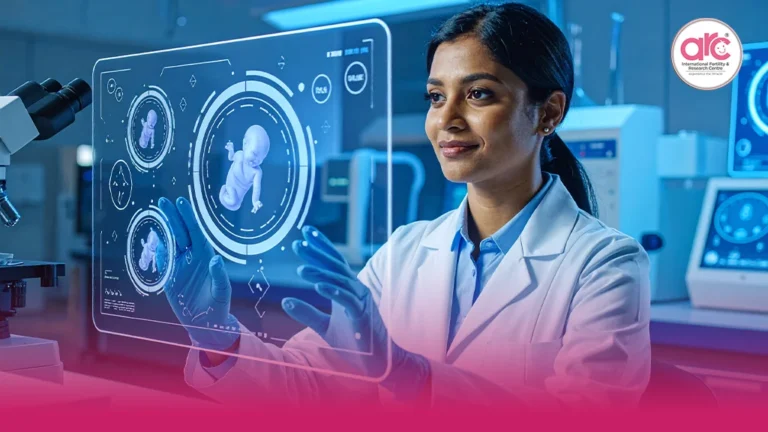
In a bold discovery, Indian researchers have identified a genetic switch inside the womb that helps an embryo implant itself.
This matters deeply for couples who face infertility, unexplained implantation failures, or repeated pregnancy loss.
The womb is not passive. It is active. It must prepare itself. Open the door. Receive the embryo. Hold it securely.
Until now, science understood many parts of the story—but the exact mechanism remained hidden.
Now that mechanism has been found.
What the Study Found
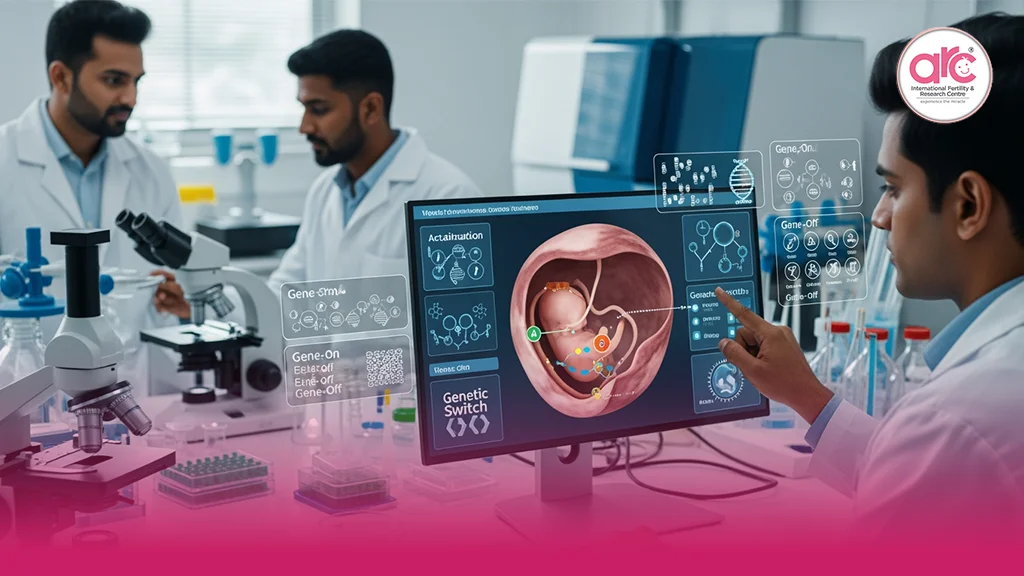
The research, led by ICMR‑NIRRCH (Mumbai) in collaboration with Banaras Hindu University and Indian Institute of Science, identified two key genes: HOXA10 and TWIST2.
HOXA10 acts as a gatekeeper. It keeps the uterine lining closed.
When the embryo arrives, HOXA10 must switch off at the right location. Then TWIST2 switches on. It softens the lining, opens the gate, and allows implantation. Hindustan Times
In laboratory tests and animal models, blocking TWIST2 prevented implantation. The womb remained closed. No pregnancy. Business Standard
This mechanism appears consistent across species—mice, monkeys, human tissue. It is ancient and vital. Awaz The Voice
Why This Change in Biology Matters for Fertility Care
For years, couples and clinics struggled when embryos were good, but implantation failed. The question remained: Why?
This discovery explains one big part of the answer.
It highlights that the womb must be “receptive”—not just the embryo or semen.
When you choose a centre to treat infertility, what matters goes beyond egg quality and sperm count. The uterine environment matters equally.
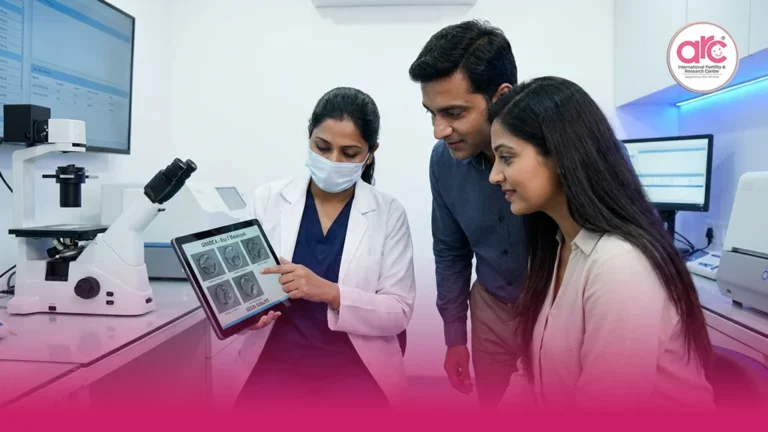
At a solid fertility hospital in chennai, doctors evaluate the womb’s readiness, not just the embryo’s quality.
This shift will save many months of failed cycles and emotional stress.
How Clinics Will Use This Knowledge
Going forward, fertility clinics may offer:
- Tests for HOXA10/TWIST2 activity or biomarkers in endometrial samples
- New therapies to modulate these genes and make the womb receptive
- Better timing for embryo transfer by assessing the true “implantation window”
When science refines implantation timing and technique, success rates improve.
The best fertility hospital in chennai will stay ahead by adopting this research swiftly.
What Couples Should Understand
If you are trying to conceive and you’ve had good embryos but no success—this study offers hope.
It does not mean treatment fails always because of the womb. But the womb could be the missing piece.
Here are some practical tips:
- Request your clinic to evaluate both embryo quality and uterine environment.
- Ask whether they account for endometrial factors and timing of transfer.
- Understand that even with top-grade lab work, if implantation gate doesn’t open, success drops.
- Seek centres that align embryo transfer with womb readiness—not only ovarian stimulation.
Your fertility journey is about alignment: egg, sperm, embryo, womb, timing.
Why Timing and Precision Matter Now More Than Ever
Assisted reproduction thrives on precision.
We talk about counts, motility, numbers. But until now we assumed the womb would simply accept the embryo. This religious expectation often failed.
The gene-gate model shows that failure may not be because of you or your partner—it may be about timing, readiness, alignment.
In every successful pregnancy, multiple things happened right. Not just one.
At a clinic, you want doctors who ask:
“Is your uterus ready today? Will it open the gate when we transfer?”
A clinic that skips this question risks delays.
What This Means for Indian Clinics and Patients
India’s fertility care is advancing fast. But variation in lab standards and uterine assessment persists.
With this discovery, patients should ask higher questions.
“When you treat me, how do you assess the womb’s receptivity?”
“When you transfer the embryo, how do you decide the day and the spot?”
When your care centre is advanced, you feel confident, not guessful.
The best fertility hospital in chennai will welcome these detailed questions. Clinics that hesitate or dismiss them may lag.
A Note of Caution
This is a breakthrough—not a cure for all infertility.
Many factors still matter: egg quality, sperm health, embryo development, uterine health, lifestyle, age.
Gene research will lead to therapies—but they need time, validation, resources.
Do not assume a test for HOXA10/TWIST2 will be ready everywhere immediately. Do not delay treatment because you wait for new science.
Use current research to raise the quality of your questions and choices.
Final Thought
Pregnancy begins when multiple systems coordinate—embryo, uterus, hormones, timing.
The new gene-gate discovery reminds us that the womb is not passive. It actively opens or closes the door.
When you understand that, your partner-choice, clinic-choice, timing-choice all change.
Choose a centre that treats your womb as seriously as your sperm or eggs.
Because the embryo cannot succeed if the door remains closed.
And when that door opens, life begins.