Overview
You’ve done the blood tests. You’ve tracked ovulation for months. Your partner’s sperm analysis came back normal. But still, no pregnancy. Your doctor mentions something called a laparoscopy, and suddenly you’re facing the possibility of surgery.
The word “surgery” sounds scary. It feels like a big step, maybe even an extreme one. But here’s what many couples don’t realize until later: sometimes the only way to truly understand what’s blocking conception is to actually look inside.
That’s exactly what laparoscopy does. And for many women, it’s the turning point between frustration and answers.
What Is Laparoscopy, Really?
Laparoscopy is a minimally invasive surgical procedure that lets doctors see inside your abdomen and pelvis using a thin, lighted camera.
Unlike traditional surgery that requires large incisions, laparoscopy uses small cuts (usually 0.5 to 1 centimeter) near your belly button and lower abdomen. The surgeon inserts a laparoscope (a narrow tube with a camera on the end) through one incision and specialized instruments through the others.
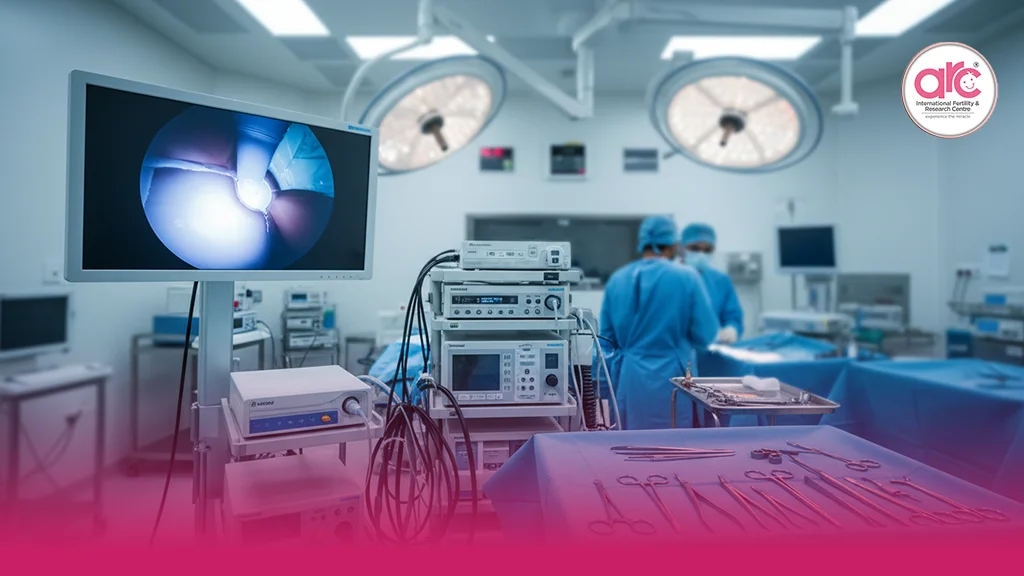
The camera projects images onto a screen, giving your surgeon a clear, magnified view of your reproductive organs: your uterus, fallopian tubes, ovaries, and the surrounding tissue.
Think of it as the difference between trying to diagnose a car problem by listening to the engine versus actually popping the hood and looking inside. Some problems simply can’t be detected any other way.
Why Your Doctor Recommends It
Laparoscopy isn’t the first step in fertility treatment. It comes after other tests and treatments haven’t given you answers or results.
Your doctor might suggest laparoscopy if:
- You have unexplained infertility. You’ve been trying for a year or more (or six months if you’re over 35), all basic tests are normal, but pregnancy isn’t happening. About 30% of infertility cases fall into this “unexplained” category, and laparoscopy often reveals the hidden reason.
- Imaging suggests something abnormal. An ultrasound or HSG (hysterosalpingogram, an X-ray test of your tubes) shows possible blockages, cysts, or other problems. Laparoscopy confirms what’s really happening and fixes it in the same procedure.
- You have symptoms of endometriosis. Painful periods, pain during sex, chronic pelvic pain, or heavy bleeding can signal endometriosis. But the only definitive way to diagnose it is by seeing it during laparoscopy.
- Previous pelvic infections or surgery. If you’ve had pelvic inflammatory disease (PID), a ruptured appendix, or previous abdominal surgery, you might have adhesions (scar tissue) blocking your tubes or binding your organs together.
- Failed IUI attempts. Some fertility specialists recommend diagnostic laparoscopy after 3-4 unsuccessful intrauterine insemination cycles to check for undetected problems before moving to IVF.
The key word here is “diagnostic.” Doctors use laparoscopy to diagnose problems. But the real value is that they can often treat what they find during the same surgery.
What Laparoscopy Can Find and Fix
This is where laparoscopy becomes more than just a diagnostic tool. It’s therapeutic.
Blocked or Damaged Fallopian Tubes
Your fallopian tubes are where sperm meets egg. If they’re blocked or damaged, conception can’t happen naturally.
Tubes can become blocked from:
- Previous infections (especially STIs like chlamydia)
- Endometriosis
- Previous ectopic pregnancy
- Adhesions from prior surgery
An HSG test can show that tubes are blocked, but it can’t always show why or where exactly the blockage is. Laparoscopy reveals the full picture.
During the procedure, surgeons can:
- Remove adhesions binding the tubes
- Open blocked tubes (salpingostomy)
- Repair damaged tube tissue
- Remove severely damaged tubes that might interfere with IVF success
One study in the journal Fertility and Sterility found that women with mild to moderate tubal disease who had laparoscopic treatment had pregnancy rates of 30-50% within a year, compared to less than 10% without intervention.
Endometriosis
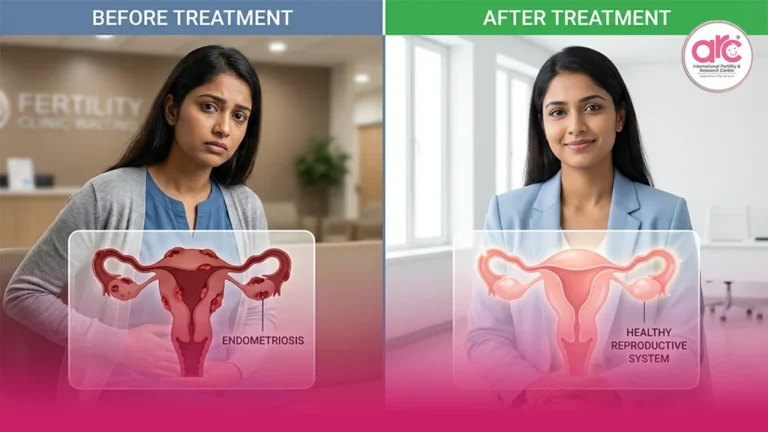
Endometriosis is tissue similar to your uterine lining growing outside your uterus, on your ovaries, tubes, bowel, or pelvic walls. This tissue bleeds during your period but has nowhere to go, causing inflammation, pain, and scar tissue.
About 25-50% of infertile women have endometriosis. Many have no pain at all, so they have no idea it’s there.
Laparoscopy is the gold standard for diagnosing endometriosis. Your surgeon can see the characteristic lesions and then remove or burn them away (ablation or excision).
Research shows that treating even mild endometriosis through laparoscopy improves natural pregnancy rates. A major study found that women with minimal to mild endometriosis who had it surgically removed were twice as likely to conceive naturally compared to those who didn’t have surgery.
Surgery is often a step for those facing structural issues; learn more in Silent Endometriosis: Can You Have “Unexplained Infertility” Without Pain?
Ovarian Cysts
Not all cysts affect fertility, but some definitely do.
Endometriomas are cysts caused by endometriosis. They’re filled with old blood (often called “chocolate cysts”) and can damage ovarian tissue, reducing your egg reserve.
Dermoid cysts are usually benign but can grow large enough to twist the ovary or take up space that interferes with ovulation.
During laparoscopy, surgeons can remove cysts while preserving as much healthy ovarian tissue as possible. This is called ovarian cystectomy.
A careful approach matters here. Aggressive cyst removal can accidentally damage healthy ovarian tissue and reduce your egg reserve. That’s why having an experienced reproductive surgeon matters.
Adhesions and Scar Tissue
Adhesions are bands of scar tissue that make organs stick together abnormally. They can develop from:
- Previous abdominal or pelvic surgery
- Infections
- Endometriosis
- Inflammatory conditions
Adhesions can:
- Block or distort fallopian tubes
- Prevent the ovary and tube from meeting properly
- Trap eggs so they can’t reach the tube
- Cause chronic pain
Laparoscopy allows surgeons to carefully cut away adhesions (adhesiolysis), freeing up your organs to function normally.
Fibroids in Critical Locations
Most fibroids don’t cause infertility. But fibroids that protrude into your uterine cavity or block the opening of your fallopian tubes can prevent pregnancy.
While some fibroids are removed through hysteroscopy (through the vagina and cervix), fibroids on the outside of the uterus or within the uterine wall often require laparoscopic removal (myomectomy).
Polycystic Ovaries
For women with PCOS who don’t respond to medication, a procedure called ovarian drilling can be done laparoscopically. The surgeon makes tiny holes in the ovary surface, which can restore normal ovulation in some women.
This isn’t first-line treatment, but for women who haven’t responded to Clomid or letrozole, it offers another option before IVF.
What Happens During the Procedure
Understanding what actually happens can ease a lot of anxiety.
Before surgery:
- You’ll have pre-operative blood tests and possibly an EKG
- You’ll be told not to eat or drink after midnight the night before
- You’ll discuss anesthesia with the anesthesiologist
During surgery:
- You receive general anesthesia, so you’re completely asleep
- The surgeon makes a small incision near your belly button
- Carbon dioxide gas is pumped into your abdomen to create space and visibility
- The laparoscope (camera) goes in through the first incision
- Additional small incisions are made for surgical instruments
- Your surgeon examines your organs and performs necessary treatments
- Everything is removed, gas is released, incisions are closed with stitches or surgical glue
The entire procedure typically takes 30 minutes to 2 hours, depending on what’s found and treated.
After surgery:
- You wake up in recovery, often feeling groggy and bloated from the gas
- Most women go home the same day
- You’ll have pain medication prescribed for discomfort
- You’ll receive specific instructions about activity restrictions
Recovery: What to Expect
Laparoscopy is considered minimally invasive, but it’s still surgery. Your body needs time to heal.
The first 24-48 hours:
- You’ll feel tired from anesthesia
- Expect soreness at incision sites
- You might have shoulder or chest pain from residual gas (this is normal and temporary)
- Rest is essential
The first week:
- Most women take 3-5 days off work, though some return sooner
- Light activities are okay, but no heavy lifting
- No sex until your doctor gives clearance (usually 2 weeks)
- You might have spotting or light bleeding
Two weeks and beyond:
- Most physical restrictions lift
- You can usually resume normal activities
- Your doctor will discuss when you can start trying to conceive again (often after your next period)
Full internal healing takes about 6 weeks, though most women feel back to normal within 2-3 weeks.
The Results: What Laparoscopy Reveals
After surgery, your doctor will explain what they found. This conversation is crucial.
- If they found and treated a problem: You now have a clearer path forward. Your doctor will discuss your chances of natural conception based on what was corrected.
- If nothing was found: This actually gives you valuable information. You can now move forward with other treatments like IVF without wondering if there’s a structural problem that wasn’t addressed.
- If the problem couldn’t be fully fixed: Some findings, like severely damaged tubes or extensive endometriosis, might mean IVF is your best option. At least now you know and aren’t wasting time on treatments less likely to work.
Studies tracking women after diagnostic and operative laparoscopy show that:
- 30-60% achieve pregnancy naturally within a year, depending on what was found and treated
- Success rates are highest for mild endometriosis, adhesions, and single-tube blockages
- Women with severe disease may still benefit but might need additional treatment
The Risks: What You Should Know
Every surgery carries risks. Laparoscopy is generally very safe, but it’s not risk-free.
Common minor side effects:
- Bloating and gas pain
- Nausea from anesthesia
- Bruising around incisions
- Fatigue
Rare but serious complications:
- Infection (less than 1% of cases)
- Bleeding requiring transfusion (very rare)
- Damage to nearby organs like bowel or bladder (less than 1%)
- Blood clots (rare)
- Complications from anesthesia
The risk of serious complications is estimated at less than 2% in experienced hands.
Choosing an experienced surgeon matters. Fertility specialists who regularly perform laparoscopy have lower complication rates and better outcomes than general gynecologists who do the procedure occasionally.
Is Laparoscopy Right for You?
Not everyone with infertility needs laparoscopy. Modern fertility treatment can bypass many structural problems through IVF.
Laparoscopy makes the most sense when:
- You prefer to try natural conception rather than jumping straight to IVF
- You’re young (under 35) with good ovarian reserve and time to try after surgery
- Imaging or symptoms strongly suggest a treatable problem
- You’ve had multiple failed IUI cycles without explanation
- You have significant pain suggesting endometriosis (treating it can improve quality of life even beyond fertility)
Laparoscopy might not be the best choice if:
- You’re over 40 with limited time
- Your ovarian reserve is already very low
- Male factor infertility is severe (IVF with ICSI is needed regardless)
- You have multiple fertility issues that make natural conception unlikely even after surgery
This is a decision to make with your fertility specialist. For comprehensive evaluation and expert surgical care, consulting a fertility hospital in Chennai can provide access to experienced reproductive surgeons who perform these procedures regularly.
After Laparoscopy: Your Fertility Timeline
Surgery is just one step. What happens next matters just as much.
If mild issues were found and corrected: Most doctors suggest trying naturally for 6-12 months. This is your best window. Pregnancy rates are highest in the first year after surgery. After that, scar tissue can start reforming, especially with endometriosis.
If more significant problems were addressed: Your doctor might recommend IUI to maximize your chances during that optimal window after surgery.
If surgery revealed you need IVF anyway: Many women feel frustrated by this outcome, but knowing for certain allows you to move forward with the treatment most likely to work rather than continuing treatments with low success rates.
The Emotional Side
Having surgery for infertility carries emotional weight that often goes undiscussed.
Some women feel relief finally having a procedure that will give definitive answers. Others feel anxious about surgery itself. Many experience a mix of hope and fear about what will be found.
After surgery, reactions vary widely. Finding and fixing a problem often brings optimism and renewed hope. Finding nothing can feel disappointing, even though it’s medically useful information.
Give yourself permission to feel whatever comes up. Infertility is stressful enough without adding surgery to the mix. Lean on your support system, whether that’s your partner, family, friends, or a therapist who specializes in fertility issues.
The Bottom Line
Laparoscopy isn’t just about looking inside. It’s about finding answers and, in many cases, removing the obstacles between you and pregnancy.
For women with blocked tubes, endometriosis, adhesions, or ovarian cysts, laparoscopy can restore normal anatomy and significantly improve the chances of natural conception.
The procedure is minimally invasive with quick recovery and high safety. When performed by experienced hands for appropriate reasons, it changes outcomes.
If your fertility journey has stalled and the reason isn’t clear, laparoscopy might be the missing piece. It’s not the right answer for everyone, but for many women, it’s the procedure that finally moves them forward.
Sometimes you have to look inside to see the way forward. And sometimes, that view changes everything.