Overview
IVF success depends on many factors. Egg quality. Sperm quality. Embryo development. But there is one factor that quietly decides whether implantation happens — the endometrium.
If the lining is thin, weak, or unresponsive, even a healthy embryo struggles to attach.
This is why fertility specialists are now looking at PRP (Platelet-Rich Plasma). Not as a miracle. Not as a shortcut. But as a biological tool that may support the uterus when standard methods fail.
A fertility hospital in chennai sees many women with repeated implantation failure, chronic thin lining, or unexplained poor response. For these women, PRP has become a conversation worth having.
This blog explains the new evidence clearly — what PRP can help, what it cannot, and who may benefit.
What PRP Actually Is
PRP is not a foreign substance. It is made from your own blood.
The blood is processed to concentrate platelets — tiny cells rich in growth factors, healing signals, and regenerative molecules.
When PRP is placed inside the uterus, these signals can stimulate:
- Better blood flow
- Improved tissue growth
- Reduced inflammation
- Increased endometrial receptivity
These changes matter because the endometrium must reach a certain structure and strength before an embryo can attach securely.
PRP does not replace IVF.
It supports IVF when the uterus needs help.
What the New Research Found (Based on the PMC Article)
The review collected data from several clinical studies where women with thin endometrium or implantation failure received PRP before embryo transfer.
The findings were consistent:
- Endometrial thickness improved in most women
- Clinical pregnancy rates increased
- Implantation rates improved
- Live birth rates showed encouraging upward trends
Women who did not respond to traditional methods like estrogen, G-CSF, or vaginal supplements showed better outcomes when PRP was added.
supplements showed better outcomes when PRP was added.
The research is not claiming a cure.
It is showing potential based on biological logic and early success.
The best fertility hospital in chennai reads research this way — honest, cautious, but hopeful.
Why Endometrial Thickness Matters
A healthy uterine lining is not just about numbers on an ultrasound screen.
It is about structure, blood flow, hormone response, and cellular readiness.
Thin lining often means:
- Poor blood supply
- Weak glandular structure
- Reduced progesterone response
- Lower implantation potential
Women with lining below 7 mm often feel desperate because embryo transfers repeatedly fail despite good embryos. PRP offers another option.
It gives the uterus a chance to rebuild instead of forcing cycles that are destined to fail.
How PRP Works in the Uterus
Research suggests PRP stimulates the endometrium through multiple pathways:
1. Growth Factors
Platelets carry signals like VEGF, PDGF, and TGF-β. These promote new blood vessels and tissue formation.
2. Healing Response
PRP reduces local inflammation, allowing the uterus to respond better to estrogen and progesterone.
3. Cell Regeneration
PRP activates stem-like cells in the endometrium, helping the lining thicken naturally.
4. Improved Receptivity
Markers that support implantation — such as integrins — increase after PRP infusion.
This combination supports embryo attachment in a way medicines alone sometimes cannot.
Who Can Benefit From PRP?
Based on available studies, PRP seems most effective for women with:
- Thin endometrium (<7 mm)
- Recurrent implantation failure
- Poor endometrial response in frozen cycles
- Low blood flow to the uterus
- Hormone-resistant lining after repeated attempts
For these women, PRP is not hype. It is a practical option backed by biology and early evidence.
A fertility hospital in chennai may recommend PRP when standard methods are not enough.
What PRP Cannot Do
PRP is not magic.
It cannot fix:
- Very low ovarian reserve
- Poor egg quality
- Severe uterine scars (Asherman’s syndrome)
- Genetic issues in the embryo
- Advanced maternal age limitations
PRP is a tool — not a guarantee.
The best fertility hospital in chennai will never oversell it. They use it only when the medical situation demands it.
Is PRP Safe?
Because PRP uses your own blood, the risk of reaction is low.
Studies show no major side effects.
The procedure is simple, outpatient, and minimally invasive.
Mild cramping or spotting may occur.
Most women tolerate it well.
Safety is one of the reasons PRP is becoming more common in IVF programs worldwide.
How Many PRP Sessions Are Needed?
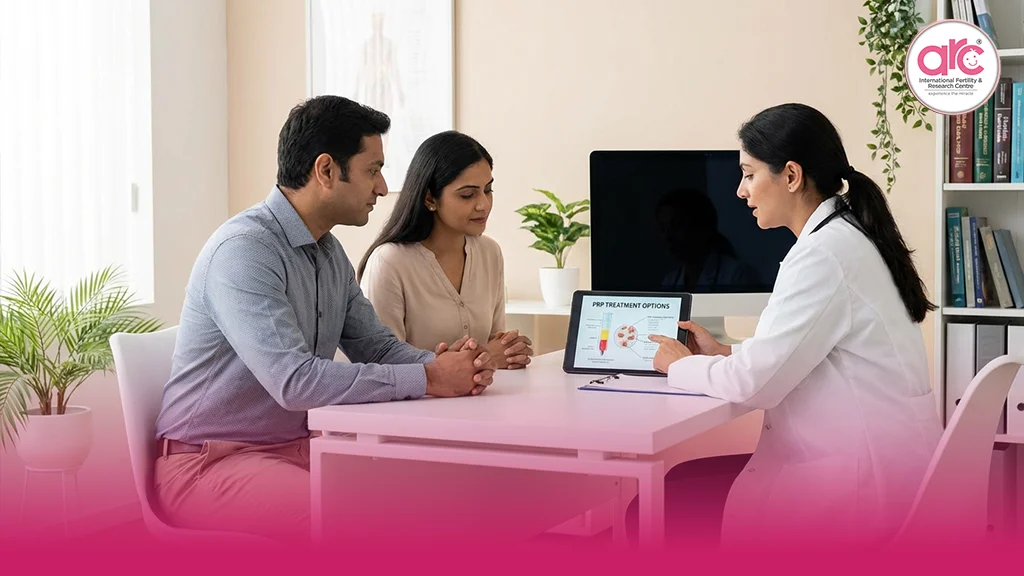
Most studies used 1–3 infusions spaced a few days apart before embryo transfer.
The timing matters.
The response matters.
Ultrasound monitoring guides the next steps.
Doctors decide the schedule based on:
- Lining growth
- Blood flow
- Hormone response
- Cycle type (fresh or frozen)
PRP is not a recipe.
It is personalised treatment.
Realistic Expectations
PRP improves the environment.
It does not change the embryo.
This means PRP works best when:
- The embryo is strong
- The uterine lining is the main issue
- Age and egg quality are not the primary problems
In such cases, PRP can shift the outcome from “no chance” to “possible.”
That shift matters more than people realise.
Final Thought
PRP is not the future of IVF.
It is the present — cautiously used, scientifically guided, and increasingly supported by evidence.
It helps the uterus prepare better.
It supports women who have struggled cycle after cycle.
It gives hope grounded in biology, not emotion.
A fertility hospital in chennai may use PRP when the lining refuses to respond.
The best fertility hospital in chennai will decide with precision — not pressure.
IVF success is never guaranteed.
But PRP gives one more chance, one more method, and one more biological push toward a healthy implantation.
And for many couples, that one step makes all the difference.