Overview
For years, men were told a comforting half-truth.
Yes, sperm changes with age.
Yes, mutations increase slowly.
But nothing dramatic. Nothing urgent. Nothing to worry about.
That narrative is now being dismantled.
New research suggests that some sperm mutations don’t just accumulate quietly with age. They actively outcompete healthier sperm. These so-called “selfish sperm” carry genetic changes that help them multiply faster inside the testes, even though those same changes can increase the risk of disease in children.
This isn’t about panic.
It’s about understanding a biological mechanism that quietly reshapes fatherhood as men age.
What Scientists Mean by “Selfish Sperm”
The term sounds provocative, but the biology behind it is unsettlingly logical.
Certain genetic mutations arise in sperm-producing stem cells as men age. Instead of harming the sperm’s ability to reproduce, these mutations actually give the cell a growth advantage. The mutated cells divide faster, produce more sperm, and gradually dominate the sperm population.
From the body’s perspective, this looks like efficiency.
From a child’s perspective, it can mean higher risk.
These mutations are associated with rare but serious conditions such as skeletal disorders, neurodevelopmental differences, and some congenital syndromes. The key insight is that these mutations don’t spread despite being harmful, they spread because they help sperm multiply.
Natural selection, but with a cruel twist.
Why Age Changes the Equation
Unlike eggs, which are formed before birth, sperm are produced continuously throughout a man’s life. Every division is a chance for mutation. Most mutations are neutral or die out.
But selfish mutations don’t die out.
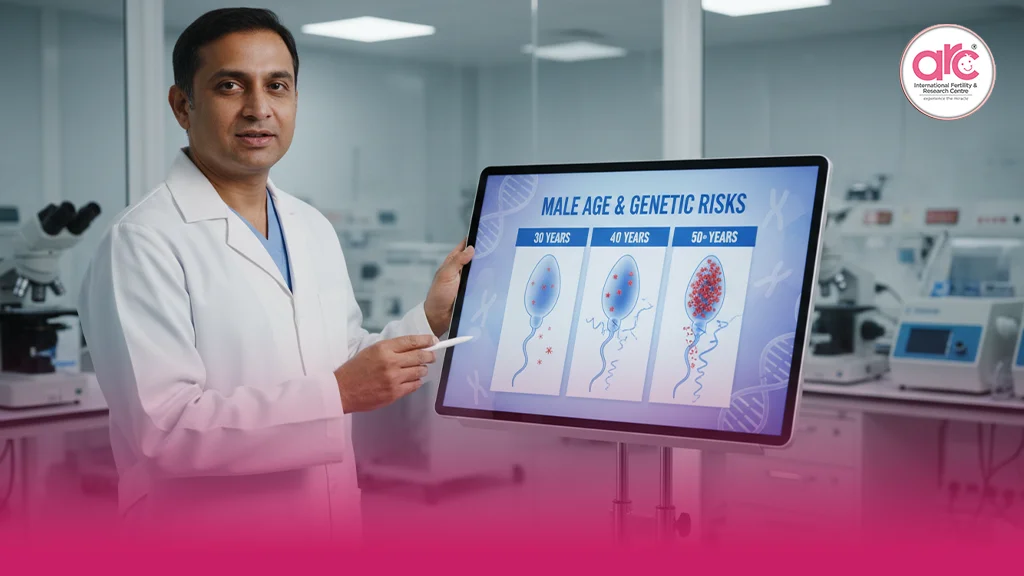
As men age, the testicular environment becomes a breeding ground for these competitive mutations. The older the father, the more opportunities these mutant stem cells have had to expand.
This explains why certain rare genetic disorders show a strong paternal age effect. It’s not just that mutations happen more often with age. It’s that some mutations actively take over.
At a fertility hospital in chennai, this understanding is reshaping how male age is discussed. It’s no longer just about count or motility. It’s about what’s quietly happening at the cellular level over time.
Why This Was Missed for So Long
Because sperm looked fine.
Traditional semen analysis doesn’t detect selfish mutations. A sample can show good numbers, decent movement, and still carry a higher proportion of genetically risky sperm.
For decades, male fertility was evaluated on performance, not integrity.
The idea that sperm could “cheat” the system by reproducing faster inside the testes, while increasing disease risk in offspring, challenges older assumptions about how evolution protects future generations.
Evolution doesn’t care about children.
It cares about replication.
How This Fits With What We Already Know
This research doesn’t stand alone. It builds on earlier findings that paternal age increases mutation rates overall.
Studies like Aging Sperm Are Mutating Faster Than Scientists Expected already showed that sperm DNA accumulates errors at a faster pace than scientists once believed. The new insight is more disturbing: some of those errors aren’t random passengers. They’re aggressive drivers.
Together, these findings paint a more complex picture of male fertility. One where age isn’t just a slow decline, but a qualitative shift in the genetic landscape of sperm.
What This Means for Real Couples
This is where nuance matters.
The vast majority of older fathers have healthy children. Biology is probabilistic, not deterministic. But risk does rise, and it rises for reasons we are only now beginning to understand.
This research doesn’t mean men should rush into fatherhood in their twenties or feel guilty for aging. It does mean male age is no longer a neutral variable.
At the best fertility hospital in chennai, clinicians increasingly factor paternal age into counselling, genetic screening discussions, and fertility planning. Not to scare couples, but to replace myths with clarity.
Why IVF and Advanced Screening Matter More With Age
When conception is assisted, doctors gain visibility that natural conception doesn’t offer.
Advanced sperm selection techniques, embryo development monitoring, and optional genetic screening can reduce the chance that harmful mutations result in pregnancy. These tools don’t eliminate risk, but they shift odds in informed ways.
Understanding selfish sperm makes it clear why “just try naturally” isn’t always neutral advice for older couples, especially when there’s a family history of genetic conditions or repeated unexplained losses.
The Emotional Blind Spot for Men
Men are rarely invited into conversations about genetic responsibility.
They’re told fertility is flexible. Forgiving. Endless.
So when science reveals that sperm can behave competitively in ways that increase risk for future children, it lands uncomfortably. It challenges the idea that time doesn’t matter.
This isn’t about blame.
It’s about participation.
Male fertility isn’t passive. It evolves, adapts, and sometimes, it cheats.
What This Research Does Not Say
It does not say older men shouldn’t have children.
It does not say every mutation leads to disease.
It does not say fatherhood is dangerous.
What it says is that biology prioritises replication over outcome. And understanding that allows humans to intervene thoughtfully.
Science isn’t removing choice.
It’s adding information.
The Bigger Shift Happening in Fertility Science
For decades, fertility narratives placed almost all responsibility on women, their eggs, their age, their bodies. Male fertility was simplified, minimised, and medically underexplored.
That era is ending.
Research on selfish sperm, mutation rates, and epigenetic inheritance is forcing a recalibration. Sperm is no longer just a vehicle. It’s an evolving population with its own internal dynamics.
And those dynamics matter.
The Truth Beneath the Headlines
“Selfish sperm” isn’t a moral judgement. It’s a biological description.
But it carries a human implication.
Fatherhood begins earlier than most men think. Not at birth. Not even at conception. But in the slow, invisible accumulation of cellular decisions made over years.
Understanding that doesn’t make parenthood fragile.
It makes it conscious.
And in fertility, consciousness is the difference between guessing and choosing wisely.