
Overview
When couples start trying to conceive, advice often sounds simple.
“Just relax.”
“Don’t think about it too much.”
“It will happen naturally.”
But biology is not random.
Pregnancy requires sperm and egg to meet within a very narrow window. If intercourse happens outside that window, the chances drop significantly, even in completely healthy couples.
Understanding the fertility window changes the equation from guessing to timing.
Timed intercourse is not about turning intimacy into a rigid schedule. It is about understanding when the body is most ready for conception.
Understanding the Fertility Window
The egg survives for a short time after ovulation.
Once released from the ovary, an egg remains viable for about 12 to 24 hours.
Sperm, however, can live inside the female reproductive tract for 3 to 5 days under optimal conditions.
This means pregnancy is most likely when sperm are already present in the fallopian tube before ovulation occurs.
The fertile window usually includes:
- The five days before ovulation
- The day of ovulation itself
Intercourse during this window offers the highest chance of natural conception.
Missing that window, even by a day or two, can significantly reduce probability.
Why Timing Matters More Than Frequency
Many couples assume that frequent intercourse across the entire cycle increases chances.
While regular intimacy is healthy, conception depends primarily on whether sperm are present when the egg is released.
Timed intercourse focuses energy on the few days when fertilization is biologically possible.
This reduces stress and improves efficiency.
At a fertility hospital in chennai, doctors often encourage couples struggling with unexplained infertility to begin with accurate ovulation tracking before moving to medical treatments.
Understanding timing alone can sometimes solve the problem.
Using Ovulation Predictor Kits (LH Surge Tests)
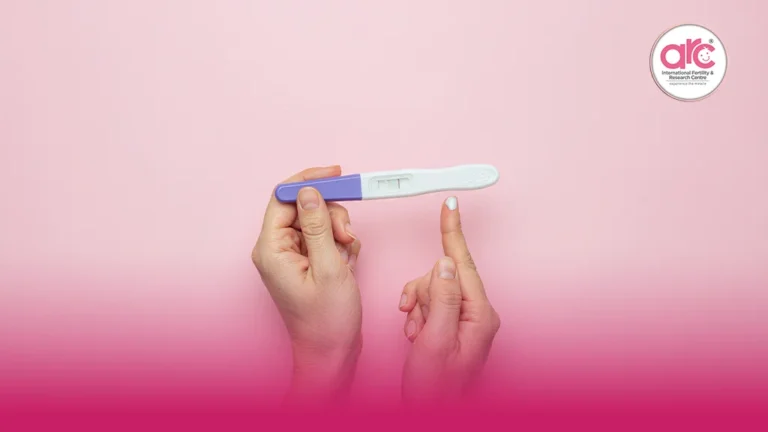
One of the simplest ways to identify ovulation is through LH surge kits.
LH stands for luteinizing hormone.
About 24 to 36 hours before ovulation, the body releases a surge of LH that triggers egg release.
Ovulation predictor kits detect this hormone in urine.
How to use them
Start testing around day 10 or 11 of your cycle if you have a typical 28–30 day cycle.
Test once daily at roughly the same time.
When the test line becomes as dark or darker than the control line, the LH surge has begun.
Ovulation usually follows within the next 24 hours.
The best timing for intercourse is:
• The day the test turns positive
• The following day
This ensures sperm are present before the egg arrives.
Follicular Monitoring Through Ultrasound
For couples wanting more precision, doctors sometimes recommend follicular monitoring.
This involves ultrasound scans during the cycle to track the growth of ovarian follicles.
Each follicle contains a developing egg.
When the dominant follicle reaches around 18 to 22 mm, ovulation is approaching.
Doctors may advise intercourse within the next 24–36 hours.
Follicular monitoring provides clear visibility of the ovulation timeline.
The best fertility hospital in chennai often uses this method for couples who have irregular cycles or difficulty detecting ovulation with home kits.
Signs Your Body Is Approaching Ovulation
The body often gives subtle signals during the fertile window.
Recognizing these signs can help couples time intercourse naturally.
Cervical mucus changes
As ovulation approaches, cervical mucus becomes clear, slippery, and stretchy.
Many women describe it as resembling raw egg whites.
This mucus supports sperm movement and survival.
Mild pelvic discomfort
Some women feel a slight pulling sensation on one side of the lower abdomen during ovulation.
This is called mittelschmerz and occurs when the ovary releases an egg.
Increased libido
Hormonal shifts around ovulation can increase sexual desire.
This is the body’s natural fertility signal.
These signs vary from woman to woman, but when combined with LH testing or ultrasound monitoring, they become reliable indicators.
How Often Should Couples Have Intercourse?
During the fertile window, intercourse every 24 to 48 hours is usually recommended.
This frequency maintains healthy sperm levels while ensuring sperm are present when ovulation occurs.
Daily intercourse is not harmful, but it is not strictly necessary for most couples.
The goal is timing, not pressure.
Common Mistakes Couples Make
Even when couples track ovulation, certain misunderstandings can reduce effectiveness.
One common mistake is waiting until after ovulation to have intercourse.
Because the egg survives only briefly, waiting too long often misses the opportunity.
Another mistake is starting ovulation tests too late in the cycle, especially for women with shorter cycles.
In such cases, the LH surge may be missed entirely.
Finally, relying only on calendar predictions can be misleading because ovulation does not always occur on the same day each month.
Tracking hormones or follicle growth provides much greater accuracy.
When to Seek Medical Guidance
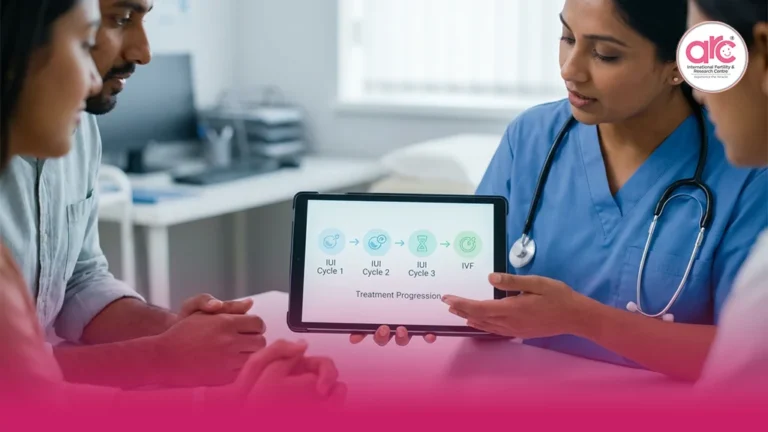
Timed intercourse works best when ovulation is regular and sperm quality is normal.
If pregnancy has not occurred after:
• 12 months of trying under age 35, or
• 6 months of trying over age 35
it may be helpful to consult a fertility specialist.
Medical evaluation can check ovulation, sperm health, and fallopian tube function.
Early guidance can save time and reduce frustration.
A Grounded Perspective
Timed intercourse is often the first step in fertility care because it aligns biology with opportunity.
It respects the body’s natural rhythm while improving the odds of sperm and egg meeting at the right moment.
For many couples, simply understanding the fertility window transforms the experience of trying to conceive.
Instead of uncertainty, there is clarity.
Instead of guessing, there is timing.
And sometimes, that small shift is enough to turn hope into pregnancy.