Overview
You’re in the middle of a cycle.
Your body feels unfamiliar.
Your ovaries feel heavy.
Your mind is louder than usual.
And then comes the question no one answers clearly.
Should I be resting… or moving?
Is the gym helping my uterus, or putting this cycle at risk?
Some people tell you to stay in bed.
Others say movement improves blood flow.
And suddenly, even exercise feels dangerous.
Let’s bring clarity to this. Without extremes. Without guilt.
The Bed Rest Myth That Refuses to Die
First, let’s address the most persistent misconception.
You do not need complete bed rest during IVF.
Unless your doctor has given a specific medical restriction, lying still all day does not improve implantation. In fact, prolonged inactivity can reduce circulation, increase stiffness, worsen mood, and amplify anxiety.
At a fertility hospital in Chennai, doctors see this often. Patients who stop moving entirely out of fear, only to feel worse physically and emotionally.
The goal during IVF is not stillness.
It’s safe movement.
Why Movement Matters During an IVF Cycle
Gentle, intentional movement supports IVF in ways that medication alone cannot.
Movement:
- Improves blood flow to the pelvis and uterus
- Reduces inflammation
- Supports insulin sensitivity
- Regulates stress hormones like cortisol
- Improves sleep and digestion
All of these influence how your body responds to stimulation and how receptive the uterus becomes later.
This is why complete inactivity is rarely advised.
But not all movement is equal.
The Real Risk: Ovarian Torsion
Here’s where caution is actually justified.
During stimulation, ovaries enlarge. Sometimes significantly. Enlarged ovaries are heavier and more mobile, which increases the risk of ovarian torsion, a painful twisting that can compromise blood supply.
Activities that increase this risk include:
- High-impact HIIT workouts
- Sprinting
- Jumping
- Sudden twisting movements
- Heavy lifting above 10–15 kg
This doesn’t mean exercise is forbidden.
It means intensity matters.
The best fertility hospital in Chennai will usually advise modifying workouts, not eliminating them.
Yoga During IVF: Friend, Not Foe
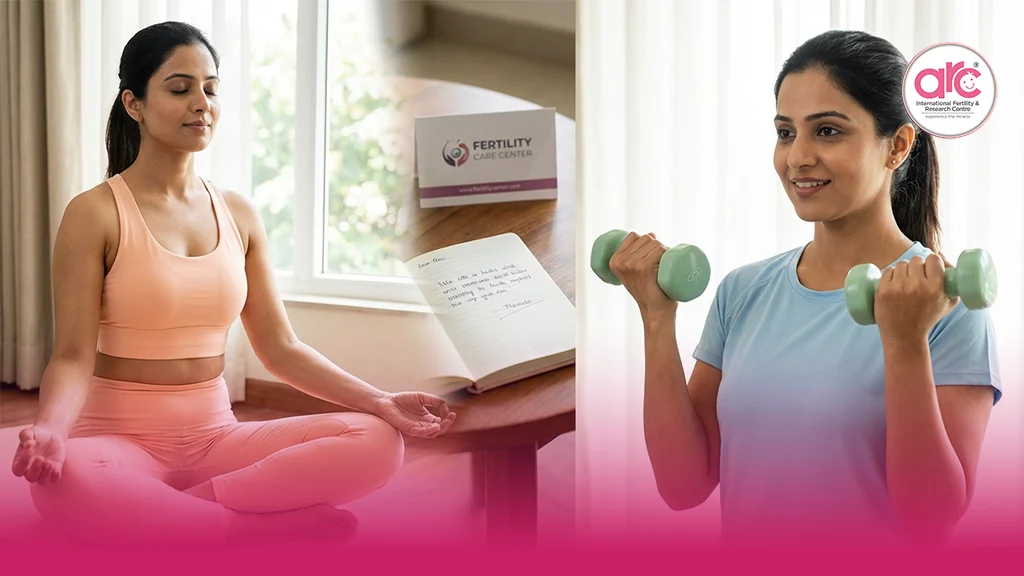
Yoga, when done mindfully, is one of the safest forms of movement during IVF.
Gentle yoga:
- Encourages pelvic blood flow
- Reduces sympathetic nervous system activation
- Improves breath awareness
- Supports lymphatic drainage
But here’s the key detail.
Not all yoga is gentle.
During stimulation and after transfer, avoid:
- Deep twists
- Strong core compression
- Inversions
- Heated or power yoga
Instead, focus on:
- Slow flow
- Restorative poses
- Hip-opening stretches
- Breath-led movement
Yoga during IVF isn’t about flexibility or strength.
It’s about circulation and calm.
What About Lifting Weights?
This is where confusion peaks.
Strength training is not inherently bad for IVF.
In fact, gentle strength training supports metabolic health, insulin sensitivity, and hormonal balance. These are all beneficial for ovarian response and uterine receptivity.
What matters is how you lift.
During stimulation:
- Avoid lifting more than 10–15 kg
- Avoid straining or breath-holding
- Avoid exercises that sharply engage the core or twist the torso
Safe options include:
- Light dumbbells
- Resistance bands
- Controlled upper-body movements
- Seated or supported lower-body work
Think functional strength, not personal records.
If you’re lifting and holding your breath, it’s too much.
If your ovaries feel like they’re bouncing, stop.
After Egg Retrieval: A Temporary Pause
After retrieval, ovaries are at their largest and most sensitive.
This is the one phase where rest truly matters.
For a few days:
- Walk gently
- Avoid structured workouts
- Hydrate well
- Let the ovaries shrink back down
Returning to exercise too soon after retrieval increases discomfort and torsion risk. This pause is not weakness. It’s protection.
After Embryo Transfer: Movement vs. Stillness
This is where anxiety peaks.
Many patients freeze after transfer, afraid to move wrong.
Here’s the truth.
Gentle walking and light movement do not dislodge embryos.
The uterus is not an open container.
The embryo is not loose.
What helps after transfer is:
- Light walking
- Gentle stretching
- Normal daily activity without strain
What doesn’t help:
- Intense workouts
- High-impact movement
- Heavy lifting
- Long periods of total inactivity driven by fear
Implantation is influenced by blood flow and hormonal environment, not by whether you walked around your house.
Why Stress Around Exercise Can Backfire
This part matters more than most people realise.
When exercise becomes a source of fear, stress hormones rise. Elevated cortisol can interfere with progesterone action and uterine receptivity.
In other words, being terrified of movement can be more disruptive than movement itself.
This is why many fertility specialists now talk about inflammation and stress together. For a deeper look at physical health and hormones, read our guide on How Inflammation Silently Damages Fertility.
The body responds to safety, not perfection.
How to Know If You’re Overdoing It
Use these signals, not guilt, as your guide.
Stop or modify if:
- You feel pelvic heaviness or pain
- You experience sharp abdominal discomfort
- You feel pressure or pulling in the ovaries
- You’re breath-holding or straining
- You feel wiped out instead of refreshed
Movement should make you feel better, not braced.
A Simple Rule That Actually Works
If you want one guideline that won’t confuse you, here it is.
If you could do the activity while breathing calmly and holding a conversation, it’s probably safe.
If you can’t talk, it’s too intense.
The Truth Patients Need to Hear
IVF doesn’t require you to become fragile.
Your body is working hard, yes.
But it’s not made of glass.
Yoga and gentle strength training don’t harm IVF success. When done thoughtfully, they support circulation, hormone balance, and emotional regulation.
What IVF asks of you is not stillness.
It asks for respectful movement.
Movement that listens.
Movement that adapts.
Movement that supports your body instead of punishing it.
You don’t need to choose between the couch and the gym.
You need to choose what keeps your body calm, supported, and safe.
And that choice, done gently, is already enough.