
Overview
Most women were taught what to do during their period.
Change your pad. Dispose of it and move on.
What they were not taught and what nobody talked about openly was why certain habits matter beyond basic comfort. Why the product you choose, how often you change it, what you wash with and what you wear during your period has a direct impact on the health of your vaginal environment.
And your vaginal environment, as it turns out, is directly connected to your fertility.
Menstrual hygiene can prevent infections, reduce odours and keep you comfortable during your period. But at ARC, we would take that statement further. Menstrual hygiene can also protect the conditions your reproductive system depends on, month after month, cycle after cycle.
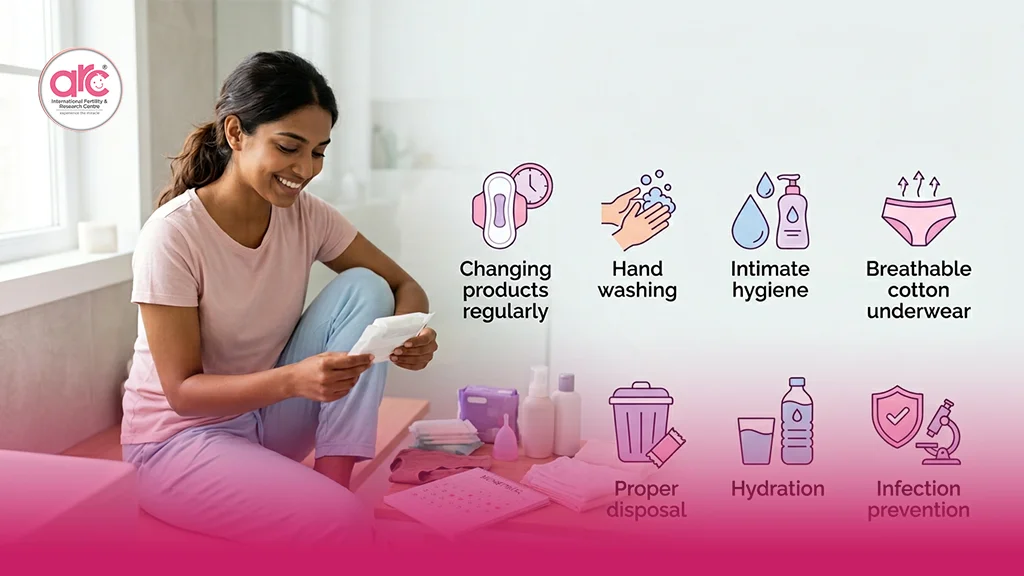
Here are 7 essential menstrual hygiene tips to prevent infections and irritation, practical, evidence-informed and relevant to every woman who wants to take her reproductive health seriously.
Tip 1: Change Your Pad or Tampon Every 4-6 Hours
This is the foundational rule and the one most commonly ignored.
Menstrual blood, once outside the body, becomes a warm, moist environment in which bacteria multiply rapidly. A pad or tampon left unchanged for more than six hours significantly increases the risk of bacterial vaginosis, urinary tract infections and skin irritation.
Prevalence of self-reported urogenital symptoms was associated with the type and cleanliness of menstrual material used.
On light flow days, the temptation is to leave a pad longer than needed. This is where most infections begin. Not on heavy days when changing frequently feels obvious, but on lighter days when it does not.
Even if flow is minimal, change every 4-6 hours. No exceptions at all!
Tip 2: Wash With Water Only; Neither Soap Nor Intimate Washes
This one surprises most women.
The vagina is self-cleaning. It maintains its own pH between 3.8 and 4.5 through a naturally acidic environment dominated by lactobacillus bacteria. The vaginal microbiome is mainly dominated by lactobacilli, which are bacteria that produce lactic acid and keep the vagina healthy.
Soap, even mild soap, even soap marketed as feminine wash, disrupts this pH. Fragranced intimate washes are worse. They strip away the protective bacterial layer, raise vaginal pH and create the exact conditions in which harmful bacteria and yeast thrive.
Clean the external vulval area with plain water during your period. Nothing else needs to go inside.
Tip 3: Choose the Right Menstrual Product for Your Body
Not all products interact with vaginal health the same way.
Vaginal infections, such as vulvovaginal candidiasis, bacterial vaginosis and aerobic vaginitis are common and a huge burden on our society. The vaginal microbiome is important in the prevention of these infections, in fertility and for healthy pregnancies.
Conventional pads with synthetic backings, bleached fibres and artificial fragrances sit against sensitive skin for hours, disrupting pH and causing irritation in women with sensitive tissue. If you experience recurring irritation, itching or infections, your product may be contributing.
Alternatives worth considering:
- Organic cotton pads: Free from synthetic fragrance, bleach and plastic layers
- Menstrual cups: Collect rather than absorb, preserving natural vaginal moisture and pH
- Period underwear: For light days, made from breathable natural fabrics
The right product is the one that keeps you dry, comfortable and infection-free. If what you are currently using is not doing all three, it may be worth changing.
Tip 4: Wash Your Hands Before and After Changing Products
This step is so basic it barely feels worth mentioning.
It is also the one most frequently skipped, particularly in workplaces or public settings where the bathroom feels rushed.
Infrequent handwashing was associated with prevalence of self-reported urogenital symptoms.
Hands carry bacteria that transfer easily to the vulval area during product change. In a study examining hygiene practices and reproductive tract infections, handwashing was identified as one of the modifiable factors most associated with infection risk.
Wash hands before handling a new pad, tampon or cup. Wash again after. This is not optional. It is the simplest infection prevention step available.
Tip 5: Wear Breathable Underwear During Your Period
Synthetic fabrics (nylon, polyester, spandex) trap heat and moisture. During menstruation, when the vulval area is already warmer and more prone to irritation, synthetic underwear compounds the problem.
Cotton underwear allows the skin to breathe, reduces moisture retention and keeps the external environment less hospitable to the bacteria and fungi that cause infections.
Switch to 100% cotton underwear during your period. Avoid tight-fitting synthetic fabrics during the heaviest flow days. If you are prone to recurring yeast infections, this single change can reduce frequency meaningfully.
Tip 6: Never Use Douches or Internal Cleansers
Douching, flushing the inside of the vagina with water or cleansing solutions, is one of the most harmful menstrual hygiene practices still in common use.
It disrupts the vaginal microbiome completely, raises pH, removes protective lactobacillus bacteria and creates conditions for bacterial vaginosis and ascending infections that can reach the uterus and fallopian tubes.
Douching has been associated with increased risks of bacterial vaginosis, pelvic inflammatory disease and, in some studies, reduced fertility.
The vagina does not need internal cleaning. Any discharge or blood that does not exit naturally will do so on its own. Introducing anything internally to speed this process does more harm than any perceived benefit.
Tip 7: Pay Attention to What Your Period Is Telling You
This is the tip that goes beyond hygiene and into health literacy.
Your period changes when something is changing internally. The colour, the flow duration, the presence of unusual odour, the degree of irritation or discomfort, all of these are signals.
A suddenly shorter period, consistently light flow or unusual odour should not be managed away with better products. They should be investigated.
The connection between period patterns and fertility is something most women are never told about and it deserves more attention than a hygiene tip can cover. Our guide on what your period hygiene says about your fertility explores the full picture of what monthly changes reveal about your hormonal and reproductive health.
And if your period has been consistently shorter or lighter than it once was, our piece on whether a short menstrual cycle means low fertility addresses exactly that question, with the clinical nuance it deserves.
When Hygiene Is Not Enough, What Recurring Infections May Signal?
If you are following every hygiene guideline above and still experiencing recurring infections, irritation, unusual discharge or persistent odour, the issue is no longer about hygiene.
Recurring vaginal infections can indicate:
- An imbalanced vaginal microbiome that needs medical support
- Undiagnosed bacterial vaginosis that requires treatment
- An underlying hormonal imbalance affecting vaginal pH
- Pelvic inflammatory disease, which can affect fertility if left untreated
According to the CDC’s menstrual hygiene guidelines, maintaining proper menstrual hygiene is foundational but recurring symptoms despite good practice should be evaluated by a healthcare provider promptly.
At a dedicated fertility hospital in Chennai, recurring infections and hygiene-related reproductive concerns are evaluated in the context of your full hormonal and reproductive health picture at ARC, not treated as isolated episodes but as patterns that may point to something worth investigating properly.
Because an infection that clears and comes back is not just an inconvenience.
It is your body asking the same question twice.
At the best fertility hospital in Chennai, that question gets the thorough, clinically grounded answer it deserves at ARC, through a complete evaluation that looks at vaginal microbiome health, hormonal balance and reproductive wellbeing together.
Conclusion
Your period arrives every month.
What you do during those days and how seriously you take the signals it sends, shapes the environment your reproductive system works within for the rest of the cycle.
Small habits, consistent practice and informed attention.
That is what menstrual hygiene actually means.
FAQs
Q1. How often should I change my pad during my period?
Every 4-6 hours, even on light flow days. Leaving a pad unchanged longer than this increases the risk of bacterial growth, odour and skin irritation significantly.
Q2. Is it safe to use intimate wash or feminine hygiene spray during my period?
No, fragranced intimate washes and sprays disrupt vaginal pH and strip away protective bacteria. Plain water is all that is needed to clean the external vulval area during menstruation.
Q3. Can poor menstrual hygiene affect my fertility?
Yes, recurring infections from poor hygiene practices can lead to bacterial vaginosis or pelvic inflammatory disease, both of which can affect the fallopian tubes and uterine environment over time, reducing fertility if left untreated.
Q4. Are menstrual cups more hygienic than pads?
Menstrual cups collect rather than absorb, which means they do not disrupt vaginal moisture or pH the way absorbent products can. When properly sterilised between cycles, they are a hygienic and reproductive-health-friendly option for many women.
Q5. When should I see a doctor about recurring period-related infections?
If you experience recurring itching, unusual odour, abnormal discharge or irritation despite following proper hygiene, then see a specialist! Recurring symptoms indicate an underlying issue that hygiene alone cannot resolve.