Overview
For many couples, the path to parenthood is not always straightforward.
Some conceive naturally.
Others may require fertility treatment such as IVF.
And for a smaller group of patients, even IVF using their own eggs and sperm may not be possible.
When this happens, many couples begin exploring alternative options that can help them achieve pregnancy.
One option that is becoming increasingly discussed is embryo donation in India.
Although it is less commonly known than IVF or egg donation, embryo donation has helped many individuals and couples experience pregnancy and parenthood when other fertility treatments were not suitable.
So, what exactly is embryo donation, and who can benefit from it?
Let’s take a closer look.
What Is Embryo Donation?
Embryo donation involves transferring an embryo created through IVF from one individual or couple to another person who wishes to become pregnant.
In simple terms, the embryo has already been formed using an egg and sperm.
The donated embryo is then transferred into the recipient’s uterus, where it may implant and develop into a pregnancy.
This differs from:
- Egg donation, where only the egg is donated
- Sperm donation, where only the sperm is donated
With embryo donation, both reproductive cells have already been used to create the embryo before transfer.
How Does Embryo Donation Work in India?
The process is similar to a frozen embryo transfer cycle used in IVF treatment.
The main steps typically include:
Medical Evaluation
The recipient undergoes fertility assessment and health screening to determine whether the uterus is ready to support pregnancy.
Endometrial Preparation
Hormonal medications may be prescribed to prepare the uterine lining for embryo implantation.
Embryo Transfer
The donated embryo is carefully transferred into the uterus using a thin catheter.
The procedure is usually simple and does not require surgery.
Pregnancy Testing
After the transfer, a pregnancy test is performed to determine whether implantation has occurred.
Many patients are surprised to learn that the embryo transfer process itself is often similar to conventional IVF treatment.
Who Can Benefit From Embryo Donation?
Embryo donation may be considered in several situations.
Women With Poor Egg Quality
Some women may have significantly reduced ovarian reserve or poor egg quality, making pregnancy with their own eggs difficult.
Couples Facing Both Male and Female Fertility Factors
In certain cases, both egg-related and sperm-related fertility challenges may be present.
Embryo donation may provide an alternative path to pregnancy.
Repeated IVF Failure
For some couples, multiple IVF cycles may not result in successful pregnancy despite good medical care.
Embryo donation may sometimes be discussed as an option after careful evaluation.
Genetic Concerns
Individuals with certain inherited genetic conditions may explore embryo donation when there is concern about passing a condition to future children.
Single Women and Certain Family-Building Situations
Depending on medical eligibility and legal regulations, embryo donation may also be considered in specific circumstances beyond traditional infertility treatment.
Is Embryo Donation the Same as Embryo Adoption?
The terms are often used interchangeably.
However, in medical settings, the term “embryo donation” is more commonly used.
The primary goal is to help individuals achieve pregnancy through the transfer of donated embryos.
Legal and regulatory frameworks may vary depending on the country and fertility regulations in place.
What Are the Success Rates of Embryo Donation?
Success rates can vary depending on several factors, including:
- Embryo quality
- Age of the egg provider at the time the embryo was created
- Uterine health
- Overall reproductive health
- Fertility clinic expertise
As with any fertility treatment, success cannot be guaranteed.
However, embryo donation may offer pregnancy opportunities for patients who have limited options using their own eggs and sperm.
Understanding factors that influence IVF success rates can also help patients make informed decisions when considering treatment.
Emotional Considerations
Embryo donation is not only a medical decision.
It can also be an emotional one.
Some individuals need time to process the idea that the child will not share a direct genetic connection with one or both intended parents.
These feelings are completely normal.
Many fertility centers provide counseling and support to help patients explore their options and make informed decisions that align with their personal values and family goals.
Open communication between partners is often an important part of the process.
Common Myths About Embryo Donation
Myth 1: Pregnancy Is Different
Once pregnancy occurs, the experience of carrying and giving birth to a baby is generally the same as with other pregnancies.
Myth 2: Embryo Donation Is Only a Last Resort
While it is often considered after other treatments, some patients may choose embryo donation earlier depending on their circumstances.
Myth 3: Success Is Guaranteed
Like all fertility treatments, embryo donation improves possibilities but does not guarantee pregnancy.
Is Embryo Donation Legal in India?
Fertility treatment regulations continue to evolve in India.
Embryo donation is governed by applicable fertility and assisted reproductive technology regulations.
Patients should always seek treatment through licensed fertility centers that follow current legal and ethical guidelines.
A qualified fertility specialist can explain eligibility requirements and treatment options based on individual circumstances.
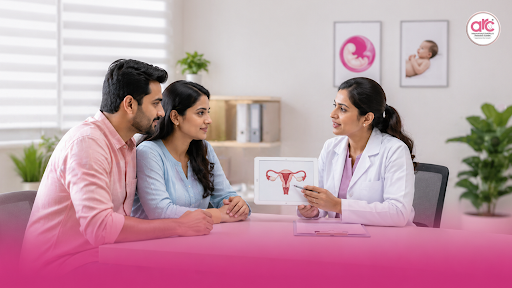
When Should You Consider Speaking to a Fertility Specialist?
If pregnancy has not occurred despite treatment attempts, or if significant egg or sperm-related fertility challenges are present, discussing all available options with a fertility expert can be helpful.
Modern fertility care offers several pathways to parenthood, and understanding those options allows couples to make informed decisions about their future.
At a fertility hospital in Chennai, fertility specialists evaluate each patient’s medical history, reproductive health, and treatment goals before recommending the most appropriate approach.
The Final Word
Embryo donation in India is a valuable fertility option that can help certain individuals and couples achieve pregnancy when other treatments may not be suitable.
While the decision involves medical, emotional, and personal considerations, it has helped many families experience the joy of parenthood.
Understanding how embryo donation works, who may benefit, and what the process involves can make it easier to explore this option with confidence.
If you are considering fertility treatment and would like personalized guidance, consulting specialists at the best fertility hospital in Chennai can help you understand all available reproductive options and create a treatment plan tailored to your needs.
Frequently Asked Questions
What is embryo donation?
Embryo donation involves transferring a donated embryo into the recipient’s uterus to achieve pregnancy.
Who can benefit from embryo donation?
Women with poor egg quality, couples facing both male and female infertility factors, and patients with repeated IVF failure may benefit from embryo donation.
Is embryo donation the same as egg donation?
No. Egg donation involves only the egg, while embryo donation involves an embryo that has already been created using both egg and sperm.
Is embryo donation legal in India?
Embryo donation is regulated under applicable fertility and assisted reproductive technology guidelines in India. Patients should consult licensed fertility centres for current information.