Overview
If you’re considering IVF, one question is likely to come up sooner or later:
Should I choose a fresh embryo transfer or a frozen embryo transfer (FET)?
For many patients, this can feel confusing.
Both options are commonly used in modern fertility treatment.
Both have helped countless couples achieve pregnancy.
And both can be highly effective depending on individual circumstances.
However, advances in embryo freezing technology have changed the way fertility specialists approach IVF treatment.
As a result, many patients now wonder whether frozen embryo transfers offer better outcomes than fresh transfers.
Understanding the differences between the two can help you make a more informed decision about your fertility journey.
What Is a Fresh Embryo Transfer?
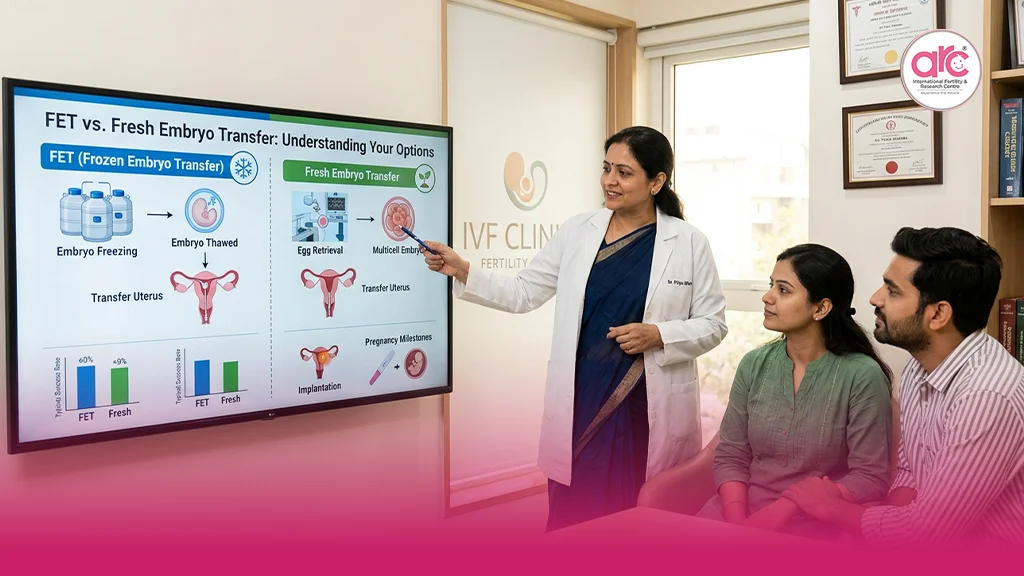
In a fresh embryo transfer cycle, embryos created during IVF are transferred into the uterus just a few days after egg retrieval.
The process usually follows this sequence:
- Ovarian stimulation
- Egg retrieval
- Fertilisation
- Embryo development
- Embryo transfer
Everything happens within the same treatment cycle.
Fresh transfers were once considered the standard approach for IVF.
Today, they are still used in selected situations.
What Is a Frozen Embryo Transfer (FET)?
A frozen embryo transfer involves freezing embryos after IVF and transferring them during a later cycle.
Modern freezing techniques, known as vitrification, allow embryos to be preserved safely for future use.
The process usually involves:
- IVF and embryo creation
- Embryo freezing
- Uterine preparation
- Frozen embryo transfer
Because the transfer occurs later, the body has additional time to recover from ovarian stimulation.
This is one reason why FET has become increasingly popular.
Why Has FET Become More Common?
In recent years, many fertility clinics have adopted a “freeze-all” strategy for certain patients.
This approach offers several potential advantages.
Better Uterine Environment
After ovarian stimulation, hormone levels may be significantly elevated.
Some specialists believe that transferring embryos in a later cycle may provide a more natural environment for implantation.
Reduced Risk of OHSS
Women at risk of ovarian hyperstimulation syndrome (OHSS) may benefit from delaying embryo transfer.
Greater Flexibility
Frozen embryos allow treatment timing to be personalized according to the patient’s needs.
FET vs Fresh Embryo Transfer Success Rates
This is the question most patients want answered.
So which option has higher success rates?
The reality is more nuanced than many online articles suggest.
In some situations, frozen embryo transfers may achieve similar or even slightly higher pregnancy rates than fresh transfers.
However, success depends on many factors, including:
- Maternal age
- Egg quality
- Embryo quality
- Uterine health
- Underlying fertility diagnosis
There is no single transfer method that is automatically best for everyone.
The most appropriate approach depends on individual circumstances.
When Fresh Embryo Transfer May Be Recommended
Fresh transfers may still be suitable when:
- Hormone levels remain within an optimal range
- There is no significant risk of OHSS
- The uterine lining appears favourable
- The fertility specialist believes immediate transfer is appropriate
For some patients, fresh transfer provides an efficient path to pregnancy without requiring embryo freezing.
When FET May Be Recommended
Frozen embryo transfer may be preferred when:
High Risk of OHSS
Delaying transfer allows the body to recover safely.
Genetic Testing Is Planned
Embryos may need to be frozen while test results are processed.
Endometrial optimization is needed.
Additional time may help prepare the uterine lining.
Medical Conditions Require Further Evaluation
Some patients benefit from addressing uterine or hormonal concerns before transfer.
Is One Option Safer Than the Other?
Both fresh and frozen embryo transfers are considered safe when performed under appropriate medical supervision.
The choice is usually based on which approach offers the highest chance of success for a specific patient.
This is why treatment plans are increasingly personalised.
At a fertility hospital in Chennai, fertility specialists evaluate hormone levels, ovarian response, embryo development, and uterine health before recommending a transfer strategy.
Does Embryo Quality Matter More Than Transfer Type?
In many cases, yes.
Patients often focus heavily on whether embryos are transferred fresh or frozen.
However, embryo quality remains one of the most important factors affecting IVF outcomes.
Healthy embryos have a greater chance of:
- Implantation
- Pregnancy progression
- Live birth
This is why modern fertility treatment focuses on optimizing every stage of the IVF process rather than relying solely on transfer timing.
What Should Patients Consider?
When comparing FET vs. fresh embryo transfer, consider the following:
Your Fertility Diagnosis
Different fertility challenges may influence the recommended approach.
Ovarian Response
Patients producing a large number of eggs may benefit from freezing embryos.
Uterine Health
The condition of the endometrial lining can affect implantation.
Personal Preferences
Some couples prefer immediate transfer, while others are comfortable waiting for a frozen cycle.
The best decision is often made in consultation with your fertility specialist.
The Final Word
So, when comparing FET vs. fresh embryo transfer, which has better success rates?
There is no universal answer.
Both fresh and frozen embryo transfers can lead to successful pregnancies.
Advances in embryo freezing technology have made FET an increasingly popular option, and in some situations it may offer advantages.
However, the best transfer strategy depends on factors such as embryo quality, uterine health, hormonal response, and overall reproductive health.
Rather than focusing solely on whether the embryo is fresh or frozen, patients should focus on receiving personalized care and evidence-based recommendations.
If you are exploring IVF treatment options, consulting specialists at the best fertility hospital in Chennai can help determine which embryo transfer approach is most appropriate for your individual situation.
Frequently Asked Questions
What is the difference between FET and fresh embryo transfer?
Fresh embryo transfer occurs during the same IVF cycle as egg retrieval, while FET involves freezing embryos and transferring them later.
Does FET have a higher success rate?
In some cases, FET may achieve similar or slightly higher success rates, but outcomes depend on individual factors.
Is frozen embryo transfer safer?
Both methods are generally safe. FET may be beneficial for patients at risk of ovarian hyperstimulation syndrome.
Which embryo transfer is better?
Neither option is universally better. The best choice depends on your fertility diagnosis, embryo quality, and treatment plan.