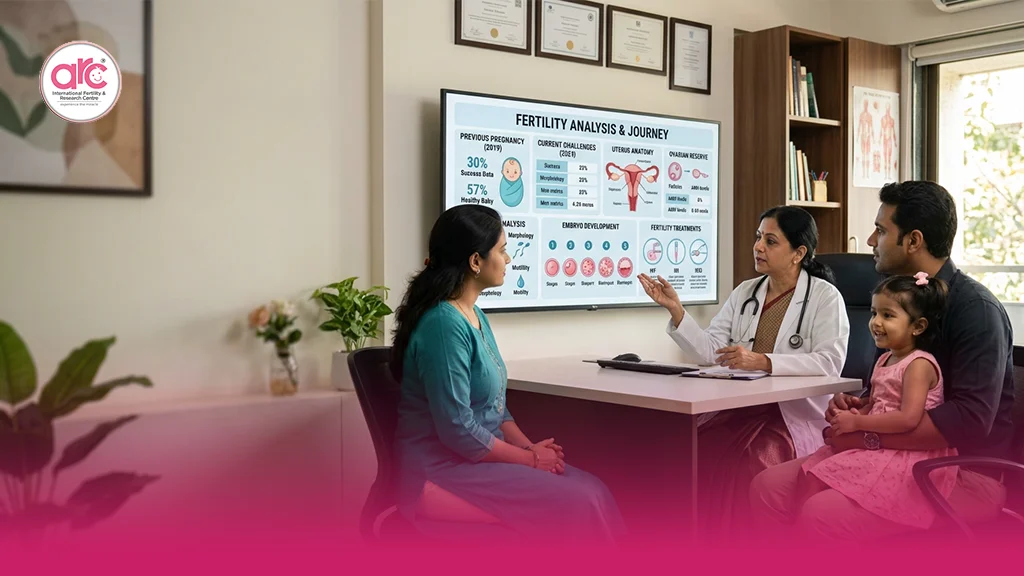
Becoming pregnant once often creates the expectation that it will happen again just as easily. So, when months pass without another pregnancy, many couples are left feeling confused and frustrated. Friends and family may even dismiss their concerns by saying, “At least you already have one child.” But the emotional impact of struggling to conceive again is very real.
Secondary infertility is the inability to conceive or carry another pregnancy to term after previously having a successful pregnancy without fertility treatment. It is more common than many people realise and can affect couples regardless of age or how healthy the first pregnancy was.
The reassuring news is that secondary infertility is often treatable. The first step is understanding why it happens and seeking timely medical evaluation rather than assuming it will resolve on its own.
What Is Secondary Infertility?
Secondary infertility is diagnosed when a couple is unable to conceive again after:
- 12 months of regular, unprotected intercourse if the woman is under 35 years old.
- 6 months if the woman is 35 years or older.
A previous pregnancy does not guarantee future fertility because many factors can change over time. Age, hormone levels, egg quality, sperm health, weight, medical conditions, and reproductive health may all be different compared to the first pregnancy.
What Causes Secondary Infertility?
There is rarely a single reason. Fertility depends on healthy ovulation, good egg quality, open fallopian tubes, a healthy uterus, and adequate sperm quality. A problem affecting any of these can delay pregnancy.
1. Age-Related Decline in Fertility
Age is one of the biggest contributors to secondary infertility. Women are born with a fixed number of eggs, and both egg quantity and quality naturally decline over time.
Even a gap of three to five years between pregnancies can make conception more challenging, particularly after age 35.
2. Ovulation Disorders
Regular ovulation is essential for pregnancy. Conditions such as:
- Polycystic Ovary Syndrome (PCOS)
- Thyroid disorders
- High prolactin levels
- Premature ovarian insufficiency
can interfere with ovulation and make conception more difficult.
Women may notice irregular periods, skipped cycles, acne, weight changes, or excess facial hair alongside fertility concerns.
3. Fallopian Tube Damage
Healthy fallopian tubes allow the egg and sperm to meet naturally.
Tubes can become blocked or damaged because of:
- Pelvic inflammatory disease (PID)
- Previous abdominal or pelvic surgery
- Endometriosis
- Ectopic pregnancy
- Pelvic infections
Even women with regular periods may have tubal damage without obvious symptoms.
4. Endometriosis
Endometriosis occurs when tissue similar to the uterine lining grows outside the uterus.
It may cause:
- Painful periods
- Pelvic pain
- Pain during intercourse
- Fertility problems
Sometimes women develop endometriosis only after their first pregnancy, making it a common cause of secondary infertility.
5. Changes in Sperm Quality
Fertility is never only a woman’s responsibility.
Male fertility may change over time due to:
- Reduced sperm count
- Poor sperm motility
- Smoking
- Diabetes
- Obesity
- Varicocele
- Certain medications
- Increasing age
This is why fertility specialists evaluate both partners from the beginning.
6. Uterine Conditions
The uterus also changes over time.
Conditions such as:
- Fibroids
- Endometrial polyps
- Scar tissue (Asherman’s syndrome)
- Adenomyosis
may interfere with implantation or pregnancy.
Symptoms of Secondary Infertility
Many couples have no obvious symptoms apart from difficulty conceiving.
However, some women may notice:
- Irregular menstrual cycles
- Very painful periods
- Heavy bleeding
- Pelvic pain
- Pain during intercourse
- Recurrent miscarriages
- Changes in cervical mucus
- Symptoms of hormonal imbalance
Men often have no symptoms at all despite sperm abnormalities.
When Should You See a Fertility Specialist?
You should seek medical advice if:
- You are under 35 and have tried for one year.
- You are over 35 and have tried for six months.
- Your periods have become irregular.
- You have a history of miscarriage.
- You have PCOS or endometriosis.
- You previously had an ectopic pregnancy.
- Your partner has known sperm problems.
Many couples delay seeking help because they conceived naturally before. Unfortunately, waiting too long may reduce treatment options, particularly as age advances.
How Is Secondary Infertility Diagnosed?
A fertility evaluation usually includes both partners.
Your doctor may recommend:
- Detailed medical history
- Ovulation assessment
- Ultrasound scan
- AMH test for ovarian reserve
- Thyroid and prolactin tests
- Semen analysis
- HSG to assess fallopian tubes
- Additional investigations when needed
The goal is to identify the underlying reason before recommending treatment.
Treatment Options for Secondary Infertility
Treatment depends entirely on the cause.
Lifestyle Changes
For some couples, improving lifestyle factors may support fertility.
Doctors may recommend:
- Maintaining a healthy weight
- Regular exercise
- Quitting smoking
- Limiting alcohol
- Managing diabetes or thyroid disease
- Improving sleep and stress management
Lifestyle changes support fertility but may not solve structural or hormonal problems.
Ovulation Induction
Women who are not ovulating regularly may benefit from medications such as Letrozole or Clomid to stimulate ovulation.
Ultrasound monitoring helps identify the best time for conception.
Intrauterine Insemination (IUI)
IUI may be recommended when:
- Ovulation occurs normally
- At least one fallopian tube is open
- Mild male-factor infertility exists
- Unexplained infertility is diagnosed
Prepared sperm is placed directly inside the uterus around ovulation to improve the chance of fertilisation.
In Vitro Fertilisation (IVF)
IVF may be advised if:
- Both fallopian tubes are blocked
- Egg reserve is significantly reduced
- Severe male infertility is present
- Endometriosis is advanced
- Multiple IUI cycles have failed
- Maternal age significantly affects fertility
IVF bypasses the fallopian tubes by fertilising eggs in the laboratory before transferring an embryo into the uterus.
Success depends on several factors, including age, egg quality, sperm quality, embryo development, and uterine health. No ethical fertility centre can guarantee pregnancy in a single cycle.
Emotional Impact of Secondary Infertility
Secondary infertility often carries a unique emotional burden.
Many couples feel guilty because they already have one child and worry they “shouldn’t” feel upset. Others experience loneliness because family and friends may not understand their grief.
It is important to remember that wanting another child is a valid hope. Seeking support, asking questions, and exploring treatment options are all reasonable steps.
Why Early Evaluation Matters
Fertility evaluation guidelines from the American Society for Reproductive Medicine (ASRM) also recommend timely assessment based on age and how long a couple has been trying to conceive.
One of the biggest mistakes couples make is assuming they simply need more time because pregnancy happened naturally before.
While patience is sometimes appropriate, delaying evaluation may reduce treatment success if age or underlying reproductive conditions are involved.
At ARC Fertility Hospitals, specialists evaluate both partners before recommending treatment. Women searching for the Best Fertility Hospital in Chennai often want more than advanced technology they want clear explanations, realistic expectations, and compassionate care. If you are looking for a trusted Fertility Hospital in Chennai, choosing a team that focuses on personalised diagnosis rather than one-size-fits-all treatment can make your fertility journey less overwhelming.
Final Thoughts
Secondary infertility can be unexpected, but it is not uncommon. Many couples who conceived naturally before later discover that age, ovulation changes, sperm quality, tubal factors, or uterine conditions are affecting their ability to have another child.
The most important step is not to blame yourself or continue guessing month after month. A timely fertility evaluation can identify the cause and help you understand whether lifestyle changes, ovulation induction, IUI, or IVF is the most suitable path forward.
Every fertility journey is different. With the right medical guidance, evidence-based treatment, and emotional support, many couples with secondary infertility can move closer to growing their family.