Overview
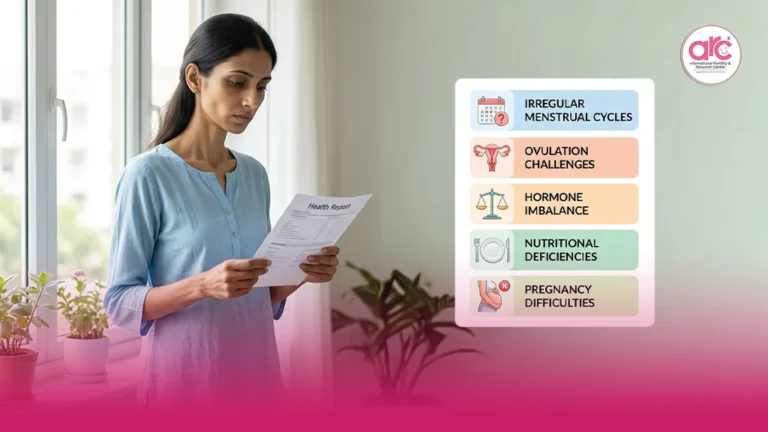
Heavy periods are exhausting.
Not just physically! But in many frustrating ways
Bleeding through your clothes when you least expect it. Cancelling plans because your body had already made other ones. Spending a whole week every month just trying to get through each day.
But there is another kind of tiredness that comes with this.
The kind that builds up when you keep being told it is normal.
When you sit in a doctor’s room, describe everything that has been happening and leave with a painkiller prescription and zero real answers.
If that has been your experience, you are not alone.
A lot of women go through this for years before anyone looks deeper.
And in many of those cases, a condition called adenomyosis turns out to be the reason behind it all.
The name sounds complicated.
But what that it actually means, is what we are going to clarify in this blog.
What exactly is adenomyosis?
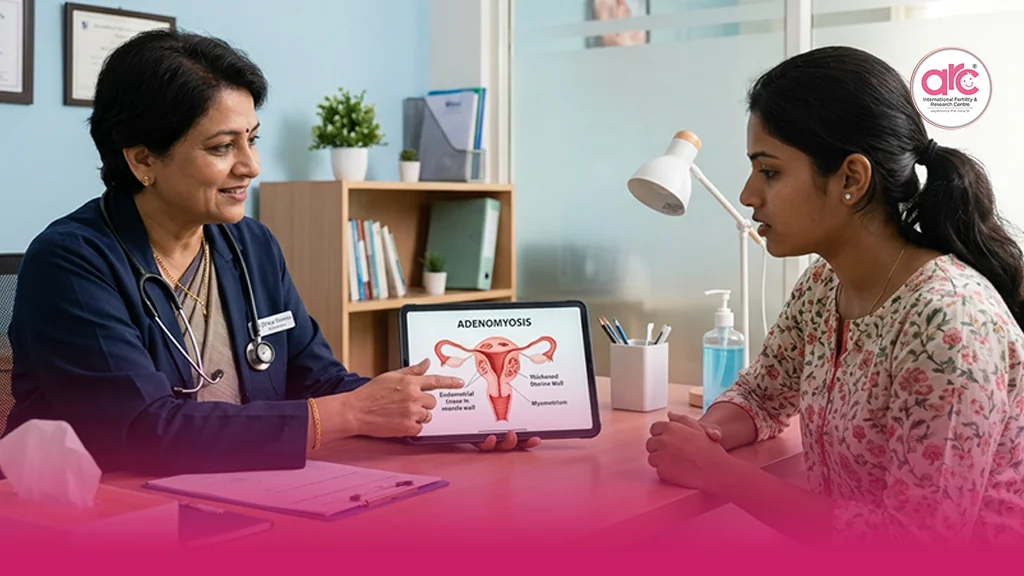
Think of your uterus as having layers.
The innermost layer, the one that builds up each month and sheds during your period is called the endometrium.
In adenomyosis, some of those cells wander into the muscle wall of the uterus. A place they were never supposed to be.
And once they settle there, they keep doing what they have always done.
Every month, they respond to your hormones. They build up. They try to shed.
But they cannot leave the body.
So instead, they cause swelling and irritation deep inside the uterine wall. The uterus itself becomes enlarged and tender. And every period becomes harder than the one before.
That is why the bleeding is heavier.
That is why the cramps feel deeper, not just in your lower abdomen but sometimes in your back and thighs too.
That is why the pain has a different quality to it.
More relentless! More draining!
Many women also notice bleeding between periods. Bloating that builds through the cycle. Discomfort during sex. A general feeling that something is consistently off, even when a routine test comes back fine.
Who does this happen to?
Adenomyosis is far more common than most people realise.
It is most often found in women in their 30s and 40s. But it can show up earlier too and it frequently goes unrecognised for years.
Part of the reason is that heavy, painful periods have long been dismissed as something women simply have to manage.
Part of it is that adenomyosis shares symptoms with other conditions such as fibroids and endometriosis. So, it either gets misread or misdiagnosed.
One important thing to know: adenomyosis and endometriosis are different conditions. But they can exist at the same time in the same person and when they do, symptoms tend to be more intense.
If you have been dealing with unexplained infertility alongside these symptoms, endometriosis may be playing a role too. Here is what the research says.
If your periods have been getting progressively worse over time, if anaemia has become a pattern, if the pain is now affecting your ability to work, sleep or simply function, that is not something to push through.
That is something to investigate.
What are the treatment options?
There is no single answer that works for everyone.
The right treatment depends on how severe your symptoms are: your age, whether you are hoping to have children and how much the condition is affecting your daily life.
Here is a simple breakdown of what is available:
- Hormonal support is usually the first step. Certain medications, including the hormonal coil, can calm the monthly activity inside the uterine wall and reduce bleeding significantly.
- Non-hormonal medication can help reduce bleeding volume and ease pain during periods. These are often used alongside hormonal treatment.
- A procedure called uterine artery embolisation cuts off blood supply to the affected tissue. It is done without major surgery and is a good option for women who want to keep their uterus.
- Endometrial ablation removes the uterine lining and can dramatically reduce or stop periods altogether. This is not suitable for women who still want to conceive.
- Hysterectomy: Removal of the uterus is the only permanent solution. It is considered when nothing else has worked and when having children is no longer part of the plan.
The right choice is a conversation. Not a quick decision made at the end of an appointment but a proper discussion with someone who understands your full picture.
What about fertility?
This is the question many women are most anxious about.
And it deserves a straight answer.
“Research covering data from nearly 200 million women found that among those struggling to conceive, as many as 1 in 3 have adenomyosis often undiagnosed” Source: Global Meta-Analysis, Reproductive Biology & Endocrinology, 2025
Adenomyosis can make conception harder. The changes it causes inside the uterine wall can interfere with a fertilised egg settling in properly. It can also increase the chance of very early pregnancy loss.
But in the same case, harder does not mean impossible.
Many women with adenomyosis do go on to have successful pregnancies. Especially when the condition is identified early, managed well and the right fertility support is put in place.
This is where the quality of specialist care makes a genuine difference.
At a dedicated fertility hospital in Chennai, the approach does not stop at managing pain or reducing bleeding. It looks at the uterine environment as a whole. It considers how adenomyosis is affecting implantation. And it builds a plan that holds both goals at once, relief from symptoms and a real path toward pregnancy.
Why does getting the right diagnosis matter so much?
Here is the problem with adenomyosis.
It does not always show up on a routine scan.
Unlike fibroids which are usually easy to spot, adenomyosis needs a more careful look. A high-resolution internal ultrasound or an MRI is often required to see it clearly.
Many women spend years being told they have heavy periods. Or suspected fibroids. Or an unexplained hormonal imbalance. All while adenomyosis is sitting quietly in the background, undetected.
A proper diagnosis changes everything.
Not just in terms of treatment, but in terms of how you understand your own body and what has been happening to it.
At the best fertility hospital in Chennai, the starting point is always a thorough evaluation. One that takes your symptoms seriously, uses the right imaging and looks at how everything connects: your hormones, your uterine structure and your reproductive goals.
Because getting the diagnosis right is not just the first step.
It is the most important one.
The simple truth
Heavy periods are not a life sentence.
Adenomyosis is a real condition, with real causes and real treatment options.
The path forward will look different for every woman. But it starts in the same place for all of them.
Being taken seriously. Being properly evaluated. And being given a plan that is built around your life, not a generic one-size-fits-all response.
If your body has been telling you something is wrong for a while now, it is worth listening to.
And it is worth finding someone who will listen too.