Best Sleeping Positions to Help Get Pregnant: What Really Matters?
When you are trying to conceive, even the smallest daily habit can start to feel important. Many women wonder whether sleeping on the left side, keeping the hips raised, or avoiding certain positions after intercourse can improve the chances of pregnancy. It is a natural question, especially when every cycle feels emotionally loaded.
The honest medical answer is reassuring: there is no proven sleeping position that can guarantee pregnancy or significantly increase conception on its own. Pregnancy depends mainly on ovulation timing, sperm health, fallopian tube function, egg quality, uterine health, age, and how regularly intercourse happens during the fertile window. Still, your body position after intercourse may matter in a small practical way for comfort and reducing anxiety, even if it is not a fertility treatment.
At ARC Fertility Hospitals, many women ask these questions because they want to feel they are doing everything correctly. That concern deserves a calm, clear answer—not myths, pressure, or false promises.
Does Sleeping Position After Sex Help Sperm Reach the Egg?
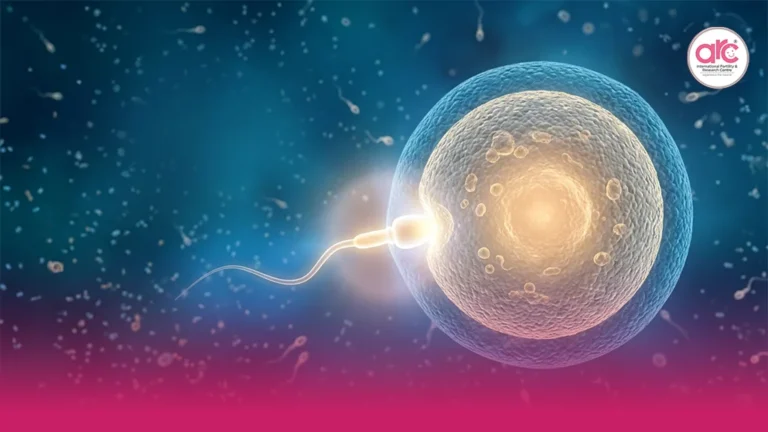
Sperm are biologically designed to move through cervical mucus and into the reproductive tract. Healthy sperm can begin moving toward the cervix within minutes after ejaculation. Gravity does not play the main role here. The cervix, fertile cervical mucus, uterine contractions, sperm motility, and timing around ovulation are far more important.
This means you do not need to sleep all night in a particular position to help sperm travel. If semen leaks out after intercourse, it does not mean all sperm have been lost. Leakage is common and expected because semen contains fluid in addition to sperm. The sperm that need to move usually do so quickly.
However, lying down for about 10 to 15 minutes after intercourse may help some women feel calmer and less rushed. It may reduce immediate leakage, but it should not be seen as a requirement. If you need to get up, use the bathroom, or clean yourself, you have not spoiled your chances.
Positions That May Feel Comfortable After Intercourse
1. Lying on your back for a short time
Lying on your back after intercourse is the most commonly suggested position. It is simple, comfortable for many women, and may help you relax for a few minutes. Some women place a small pillow under the hips, but this is optional. Keeping the hips raised for long periods is not necessary and can even cause back discomfort.
2. Side sleeping if you are uncomfortable on your back
If lying flat feels uncomfortable, sleeping on either side is perfectly acceptable. There is no strong evidence that the left side or right side improves conception. Choose the side that helps you rest better. Good sleep supports hormonal balance, mood, and general health, which can indirectly support fertility planning.
3. Avoiding stress around “doing it perfectly”
One of the most overlooked parts of trying to conceive is emotional strain. If you are turning sleep into another fertility task, it may increase stress rather than help. A relaxed routine after intercourse—lying down briefly, breathing normally, and sleeping comfortably—is usually enough.
What Matters More Than Sleeping Position?
The fertile window matters far more than posture. Intercourse is usually most helpful in the five days before ovulation and on the day of ovulation. For women with regular cycles, this may be estimated using cycle tracking, cervical mucus changes, or ovulation predictor kits. For women with irregular periods, PCOS, thyroid imbalance, or unexplained cycle changes, ovulation may be harder to predict and may need medical evaluation.
Sperm quality is also important. Even if intercourse is well timed, low sperm count, poor motility, or abnormal morphology can reduce the chance of natural conception. Couples often focus only on the woman’s body, but fertility is shared. If sperm motility is a concern, understanding how long sperm quality may take to improve can help couples plan with more realistic expectations.
Hydration, sleep, nutrition, and avoiding smoking or excess alcohol may support reproductive health, but they do not replace diagnosis when conception is delayed. For women who are trying to conceive, even simple habits such as fluid intake can become confusing; this guide on how much water to drink when trying to conceive may help clarify one common doubt.
When Should You Stop Relying on Home Tips?
Home tips can feel comforting, but they should not delay medical help when it is needed. If you are under 35 and have been trying for 12 months without pregnancy, it is sensible to meet a fertility specialist. If you are 35 or older, evaluation is usually advised after 6 months of trying. If you have irregular periods, known PCOS, endometriosis, previous pelvic infection, recurrent miscarriage, painful periods, or a history of low sperm count in your partner, you may benefit from earlier consultation.
A fertility evaluation is not the same as starting IVF immediately. Many couples fear that seeing a fertility doctor means they will be pushed into advanced treatment. In reality, the first step is usually understanding the reason for delay. This may include ovulation assessment, ultrasound, ovarian reserve testing, semen analysis, tubal evaluation, and hormone tests. Once the cause is clearer, the treatment can be matched to the couple’s actual need.
IUI vs IVF: Where Does Sleeping Position Fit In?
Sleeping position has no meaningful role in deciding whether IUI or IVF is needed. IUI may be considered when tubes are open, ovulation can be tracked or induced, and sperm parameters are reasonably suitable. IVF may be recommended when there are blocked tubes, significantly low sperm quality, reduced ovarian reserve, advanced maternal age, severe endometriosis, repeated IUI failure, or long-standing unexplained infertility.
After IUI or embryo transfer, many women ask if bed rest improves success. In most cases, prolonged bed rest is not required. Doctors may advise brief rest immediately after a procedure, but normal gentle movement is usually allowed. What matters more is embryo quality, uterine lining, hormonal support, age, and the underlying fertility diagnosis.
Cost Concerns and Realistic Expectations
Many women search for natural methods first because fertility treatment feels financially and emotionally overwhelming. That is understandable. But delaying evaluation for too long can sometimes increase cost later, especially when age-related fertility decline becomes a factor. A basic fertility check-up may help you avoid months of guessing and repeated disappointment.
IVF success is never guaranteed, and no ethical fertility centre should promise pregnancy. Success depends on age, egg and sperm quality, embryo development, uterine health, medical history, and treatment planning. The role of a fertility specialist is to explain your options clearly, including likely timelines, costs, alternatives, and whether simpler treatment may be reasonable before IVF.
If you are looking for a Best Fertility Hospital in Chennai, choose a centre that explains both natural and assisted conception options without pressure. A good Fertility Hospital in Chennai should help you understand what is medically necessary, what is optional, and what is simply a myth.
A Practical After-Intercourse Routine
If you want a simple routine, keep it gentle. Have intercourse during the fertile window, lie down comfortably for 10 to 15 minutes if you wish, avoid immediately turning the moment into a test of success or failure, and then sleep in whatever position feels natural. Do not force yourself to keep your legs raised, avoid urination out of fear, or sleep uncomfortably through the night.
The best approach is not about perfect posture. It is about good timing, healthy sperm, confirmed ovulation, open tubes, uterine readiness, and knowing when to ask for help. If pregnancy is taking longer than expected, a fertility consultation can replace guesswork with clarity—and sometimes that clarity itself brings enormous relief.
Final Takeaway
The best sleeping positions to help get pregnant are not magic positions. Lying on your back briefly after intercourse may be comfortable, but it is not the deciding factor. Sleep well, time intercourse around ovulation, care for both partners’ reproductive health, and seek medical evaluation if conception is delayed. Fertility is not about doing everything perfectly; it is about understanding your body and getting the right support at the right time.