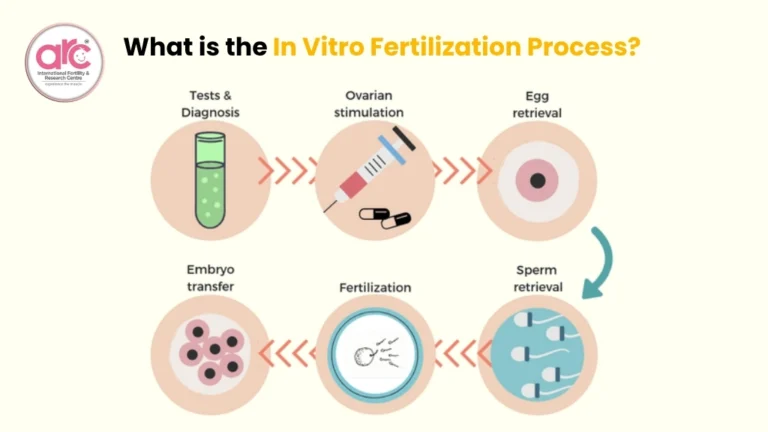
Overview
Transfer day is finally here.
After weeks of injections, monitoring scans, egg retrieval, fertilisation reports and anxious waiting, the embryo is placed inside the uterus. The procedure takes minutes. And then you are helped off the table, given instructions and sent home.
And somewhere on the drive back, the thought arrives.
What if it falls out?
It sounds almost too simple to be a real concern. But it is one of the most common questions women ask after embryo transfer, quietly, sometimes too embarrassed to say out loud.
“Can an embryo slip out after IVF transfer?”
The short answer is no. But the biology behind that answer is worth understanding properly, because knowing why it cannot slip out is often the only thing that genuinely settles the anxiety.
What the Embryo Transfer Procedure Actually Involves?
To understand why slipping out is not physically possible, the mechanics of the procedure matter.
During embryo transfer, a thin, flexible catheter is guided through the cervix into the uterine cavity under ultrasound guidance. The embryo, suspended in a tiny drop of culture medium, typically less than 30 microlitres of fluid, is deposited at a carefully chosen position within the uterine cavity, usually 1-2 centimetres from the top of the uterus.
The catheter is then withdrawn slowly and checked under the microscope to confirm the embryo was successfully deposited and not retained inside the tube.
The entire volume of fluid placed into the uterus is smaller than a raindrop.
Can an Embryo Slip Out After IVF Transfer? The Anatomy That Prevents It
The uterus is not an open cavity. It is a muscular organ with walls that rest against each other, the front wall touching the back wall, with only a small potential space between them. The embryo is placed into this space.
Once the catheter is withdrawn, the uterine walls close back around the position where the embryo was deposited. The embryo is effectively held within this closed muscular environment.
The cervix (the narrow passage the catheter passed through), acts as a natural barrier. It is not wide open after the procedure. The cervical canal is tight and the embryo (microscopic in size), cannot travel back through it against the direction of natural uterine pressure and cervical mucus.
Can an embryo slip out after IVF transfer because of gravity, movement or urination? No. The uterus is not gravity-dependent. It is a closed, muscular space oriented in the pelvis, not a cup that tilts and empties. The embryo cannot feel gravity the way a liquid in a container does.
Urination does not affect the uterus. The bladder and uterus are entirely separate anatomical structures. Using the bathroom immediately after transfer carries zero risk of dislodging the embryo.
What Actually Happens to the Embryo After Transfer?
This is where biology replaces the anxiety with something more grounded.
After the embryo is placed in the uterine cavity, it does not implant immediately. It floats freely within the uterine fluid for approximately 2-3 days, moving slightly within the cavity, while the endometrium and embryo go through the molecular signalling process that prepares both for implantation.
Implantation (the embryo physically attaching to and embedding into the uterine lining), typically occurs between 5-7 days after a blastocyst transfer. During this window, the embryo is within the uterine cavity. It is not stationary. But it is also not at risk of exiting the uterus, because the cervix is closed and cervical mucus creates a physical plug.
The discharge that some women notice after transfer, sometimes watery, sometimes slightly tinged, is not the embryo. It is cervical mucus and residual fluid from the procedure that exits through the vagina. The embryo remains within the uterine cavity.
What Can Affect Implantation? What Actually Matters?
Once you know the embryo is secure, the mind naturally shifts to the next question, the one that actually matters. What makes it implant?
Endometrial receptivity (the quality of the uterine lining), is the primary determinant of whether implantation occurs. Uterine contraction intensity around the time of transfer has been studied as a factor. Strong uterine contractions in the moments after transfer may theoretically affect embryo placement, which is why some clinics use antispasmodic medications or brief rest periods after the procedure.
Embryo quality is another significant variable. Not all transferred embryos implant, even in ideal uterine conditions. This is the clinical reality that every IVF patient deserves to understand clearly: a failed cycle most often reflects chromosomal factors within the embryo, not anything the patient did or did not do after transfer.
To improve the physical environment for implantation, some ARC patients also benefit from embryo glue (a hyaluronan-enriched transfer medium), that may help the embryo adhere to the uterine lining more effectively. Our guide on embryo glue in IVF explains what it contains, who it is recommended for and what the evidence shows.
And if you are choosing between a fresh and frozen embryo transfer for your next cycle, the comparative outcomes are covered in depth in our guide on FET vs fresh embryo transfer success rates, a useful read for understanding which approach gives the best odds for your specific situation.
What to Do and What Not to Stress About, After Transfer?
The two-week wait is genuinely difficult. The absence of certainty is uncomfortable. And it is natural for the mind to reach for something it can control.
Bed rest for extended periods is not supported by the research and is not required. Routine daily activity (light walking, gentle movement), is entirely fine. The embryo cannot be dislodged by normal, non-strenuous activity.
What matters during the two weeks after transfer is not immobility. It is avoiding significant physiological stress such as extreme heat, intense exercise, alcohol, high-caffeine intake and taking prescribed progesterone support consistently.
According to the American Society for Reproductive Medicine’s guidance on embryo transfer, there is no evidence that bed rest after embryo transfer improves IVF success rates. Normal daily activity during the two-week wait does not negatively affect implantation outcomes.
The embryo is where it was placed.
The rest is biology and biology needs time, not inertia.
When to Contact ARC After Transfer?
Most post-transfer symptoms (light spotting, mild cramping, bloating, fatigue) are entirely normal and do not indicate a problem.
Contact your specialist at ARC if you experience:
- Heavy bleeding similar to or heavier than a full period
- Severe abdominal pain that does not settle
- Fever above 38 degree Celsius
- Significant shoulder tip pain, a possible sign of internal fluid accumulation
- Rapidly worsening bloating with reduced urination (possible OHSS)
None of these are related to the embryo slipping out. They are separate clinical concerns that need prompt evaluation.
At a dedicated fertility hospital in Chennai, the post-transfer support at ARC is built into the cycle, not just the transfer day, but the entire two-week wait. Questions about symptoms, discharge, activity and medication are handled through direct access to the ARC team, because uncertainty in the two weeks after transfer should not be navigated alone.
At ARC, recognized as the best fertility hospital in Chennai, the post-transfer period is treated as a critical phase. They provide clear guidance, continuous support and attentive care to ensure patients feel less isolated during the difficult waiting period.
Final Thoughts
The embryo is where it belongs.
It cannot slip out. It cannot be walked out, sneezed out or washed out.
It is held within one of the most well-designed biological environments in the human body.
Now, give it time.
Frequently Asked Questions (FAQs)
Q1. Can the embryo come out when I use the bathroom after transfer?
No, the bladder and uterus are entirely separate anatomical structures. Using the bathroom immediately after embryo transfer carries zero risk of dislodging or affecting the embryo’s position.
Q2. What is the discharge I notice after embryo transfer? Is it the embryo?
No, post-transfer discharge is cervical mucus and residual fluid from the procedure exiting through the vagina. The embryo remains within the closed uterine cavity and cannot exit through the cervix.
Q3. Does lying down after transfer improve the chances of implantation?
No, ASRM guidelines confirm that bed rest after embryo transfer does not improve IVF success rates. Normal gentle daily activity is fine and extended bed rest is not recommended.
Q4. Can sneezing or coughing dislodge the embryo after transfer?
No, the embryo is held within the closed muscular environment of the uterus. Normal physical actions like sneezing, coughing or walking cannot dislodge it. The uterine walls and cervical barrier prevent any external movement from affecting embryo position.
Q5. If implantation does not occur, does that mean the embryo slipped out?
No, failed implantation is most commonly related to chromosomal factors within the embryo or endometrial receptivity issues. The embryo remaining within the uterus but not implanting is different from physically exiting the uterine cavity, which cannot happen.