Can undescended testes cause infertility?
Yes, undescended testes can cause infertility in some men, but the impact varies from person to person. For many couples, this question comes up only after months of trying to conceive without success. Often, the woman may have completed several fertility tests before anyone asks about the man’s childhood history, including whether one or both testes were undescended.
An undescended testis, medically called cryptorchidism, means the testicle did not move down into the scrotum before birth or during early infancy. The scrotum is not just a location; it keeps the testes slightly cooler than the rest of the body. That cooler temperature is important for healthy sperm production. When a testis remains in the abdomen or groin for too long, heat exposure may affect the cells that later produce sperm.
At ARC Fertility Hospitals, couples are encouraged to look at fertility as a shared evaluation, not as a “female problem” or “male problem.” If your partner had surgery for an undescended testis as a child, has a smaller testis, or was told he had testicular development concerns, it is worth discussing during fertility consultation.
How undescended testes affect sperm production
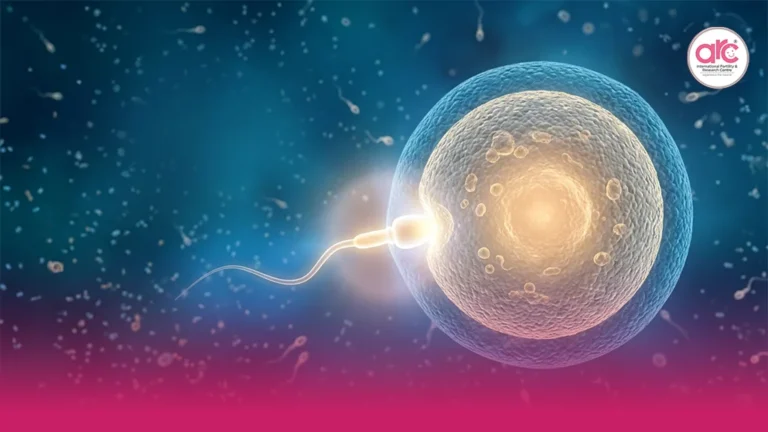
Sperm production begins in the testicular tissue. For sperm to develop normally, the testes need the right temperature, good blood supply, healthy hormone signals, and functioning sperm-producing cells. An undescended testis may be exposed to higher internal body temperature, especially if it stays in the abdomen. Over time, this can reduce the number and quality of sperm-producing cells.
The effect is usually greater when both testes were undescended. If only one testis was affected and the other developed normally, fertility may still be possible naturally. But even unilateral undescended testis can sometimes be associated with lower sperm count, abnormal semen parameters, or testicular size differences. This is why assumptions can be misleading. A semen analysis gives much clearer information than childhood history alone.
Does early surgery prevent infertility?
Surgery to bring the testis into the scrotum is called orchiopexy. When done early in childhood, it may reduce the risk of future fertility problems, but it cannot always fully reverse changes that have already occurred. In general, earlier correction is better for testicular development, monitoring, and long-term health.
However, many men who had timely surgery can still have normal or usable sperm counts. Others may have low sperm count or even no sperm in the semen, especially if both testes were affected. The important point for couples is this: a past history of undescended testes does not automatically mean pregnancy is impossible, but it does mean male fertility testing should not be delayed.
What signs should a woman notice while trying to conceive?
Many women seeking fertility information understandably focus on ovulation, periods, egg reserve, and age. But if conception is taking longer than expected, your partner’s reproductive history matters too. You may want to ask gently whether he had any testicular surgery in childhood, one testis that was not in the scrotum, a very small testis, groin surgery, or previous advice from a urologist.
There may be no visible symptoms. Sexual function, erection, and ejaculation can be completely normal even when sperm count is low. This can be confusing for couples because “everything seems normal.” Male infertility is often silent, which is why semen analysis is one of the simplest and most useful early tests in a fertility workup.
Which tests help confirm fertility impact?
The first test is usually a semen analysis. It checks sperm count, movement, shape, semen volume, and other basic parameters. If the sperm count is low or absent, doctors may repeat the test because results can vary due to fever, illness, stress, recent ejaculation timing, medications, or lab differences.
Depending on the result, a fertility specialist may advise hormone tests such as FSH, LH, testosterone, and prolactin. A physical examination can assess testicular size, position, and whether there is a varicocele. Ultrasound may be used in selected cases. If there is azoospermia, meaning no sperm seen in the semen, doctors evaluate whether sperm production is severely reduced or whether there may be a blockage.
Fertility evaluation should also include the female partner’s age, ovulation pattern, ovarian reserve, fallopian tube status, and uterine health. Sometimes more than one factor is present. For example, male factor infertility may coexist with endometriosis, PCOS, tubal issues, or immune-related infertility questions. A complete couple-based assessment prevents wasted time and repeated disappointment.
Can men with undescended testes still become fathers?
Yes, many men with a history of undescended testes can become fathers. The path depends on sperm availability and the couple’s overall fertility picture. If semen parameters are close to normal and the female partner has no major fertility concerns, natural conception may be possible with time and guidance. If sperm count is mildly reduced, doctors may discuss timed intercourse, lifestyle changes, or IUI in selected cases.
If sperm count is very low, IVF with ICSI may offer a more practical route. In ICSI, a single sperm is selected and injected directly into an egg in the laboratory. This can help when sperm numbers are limited, but it still depends on egg quality, embryo development, uterine factors, and overall treatment response. No fertility treatment can guarantee pregnancy, but the right diagnosis helps avoid ineffective steps.
In some men with no sperm in the semen, sperm may still be found directly from the testicular tissue through surgical sperm retrieval techniques. If retrieved sperm are usable, they may be combined with ICSI. This decision requires careful counselling because success depends on whether sperm production exists within the testes.
What about hormones and sexual health?
Undescended testes mainly raise concern about sperm production, but in some men, hormone production may also be affected. Testosterone is produced by testicular cells and supports libido, erections, muscle health, mood, and general male reproductive function. Many men with one previously undescended testis have normal testosterone, especially if the other testis is healthy. But if both testes were affected, hormone testing may be useful.
It is also important to review lifestyle and medical factors that can worsen sperm health. Smoking, anabolic steroids, heavy alcohol use, uncontrolled diabetes, obesity, heat exposure, infections, and certain medicines may contribute. Couples sometimes overlook medication history, but it can matter. If your partner takes treatment for hypertension, it may be helpful to read about blood pressure medicines and male fertility and discuss concerns with a doctor rather than stopping any medicine on your own.
How long should couples wait before seeking help?
If the female partner is under 35, couples are usually advised to seek fertility evaluation after 12 months of regular unprotected intercourse. If she is 35 or older, it is better to seek help after 6 months. But if there is a known male factor history, such as bilateral undescended testes, previous testicular surgery, absent testis, chemotherapy, or very small testes, earlier evaluation is sensible.
This is especially important because fertility treatment decisions are time-sensitive. A woman’s age and ovarian reserve influence egg quality and treatment planning. Waiting a year when there is already a known sperm risk may add emotional strain and reduce available options. A semen analysis is simple, non-invasive, and often clarifies the next step quickly.
Cost and treatment planning: what couples should expect
Costs depend on the level of evaluation and treatment needed. A semen analysis and basic hormone tests are usually far less involved than IVF or surgical sperm retrieval. If results are reassuring, couples may avoid unnecessary advanced treatment. If results show severe male factor infertility, doctors can plan more directly instead of moving through repeated cycles that have a low chance of working.
At ARC Fertility Hospitals, counselling focuses on matching treatment intensity to the couple’s diagnosis. Not every couple needs IVF. Not every low sperm count needs ICSI immediately. But when sperm production is severely affected due to undescended testes, a clearer plan can save time, cost, and emotional energy.
What should you do next?
If you are trying to conceive and your partner has a history of undescended testes, start with a fertility consultation and semen analysis. Bring any old surgery records if available, but do not worry if you do not have them. Current test results are more important for planning.
Most importantly, avoid blame. Male factor infertility is a medical condition, not a personal failure. Many men never knew their childhood testicular condition could matter later. For women carrying the stress of delayed pregnancy, understanding this connection can bring relief because it opens a clearer path forward. With the right evaluation, couples can move from guessing to informed decision-making.