Can You Get Pregnant If You Only Have One Ovary? Yes, you can get pregnant if you only have one ovary. For many women, one healthy ovary is enough to release eggs, support natural conception, and even respond to fertility treatment when needed. But the real answer is more personal than a simple yes or no. Your chances depend on why one ovary is absent or not functioning, whether the remaining ovary is healthy, whether at least one fallopian tube is open, your age, your ovarian reserve, your uterus, and your partner’s sperm health.
At ARC Fertility Hospitals, we often meet women who feel anxious after surgery for an ovarian cyst, endometriosis, torsion, ectopic pregnancy, or removal of one ovary. A common fear is, “Has my fertility been cut in half?” In reality, the body is more adaptive than that. One ovary can often continue the work of ovulation. What matters is not just the number of ovaries, but the quality of the remaining reproductive pathway.
How Pregnancy Happens With One Ovary
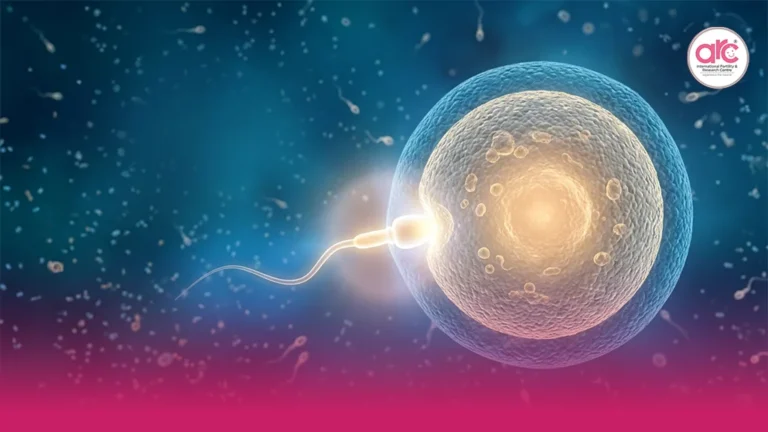
Each menstrual cycle, an ovary usually develops a follicle that contains an egg. Around ovulation, the egg is released and may be picked up by a fallopian tube. If sperm meets the egg and fertilization happens, the embryo travels to the uterus and implants.
When you have one ovary, that ovary may ovulate regularly. Some women notice no change in their menstrual cycle after losing one ovary. Others may see changes if the remaining ovary has reduced reserve, previous surgery, endometriosis, polycystic ovarian syndrome, or age-related decline. The key point is this: one ovary can still ovulate, and ovulation is what makes natural conception possible.
Does One Ovary Mean Lower Fertility?
It can, but not always. Fertility is not measured only by the number of ovaries. A woman with one healthy ovary, regular ovulation, open tubes, a normal uterus, and good sperm parameters may conceive naturally. On the other hand, a woman with two ovaries may still struggle if she has blocked tubes, poor egg reserve, severe endometriosis, irregular ovulation, or male factor infertility.
That said, having one ovary may reduce the total number of eggs available, especially if ovarian reserve was already low before surgery. In IVF, doctors may retrieve fewer eggs from one ovary compared with two. But fewer eggs does not mean no chance. Treatment planning becomes more individualized, and doctors focus on egg quality, stimulation response, embryo development, and the safest path forward.
The Fallopian Tube Matters Too
Many women ask about the ovary but forget about the tube. For natural pregnancy, at least one fallopian tube should usually be open and functional. If your remaining ovary is on the same side as an open tube, conception may happen more easily. Interestingly, the body is not always perfectly side-specific; in some cases, the opposite tube may still pick up an egg, but this cannot be relied on as a certainty.
If one ovary and one tube were removed on the same side, and the other tube is healthy, natural conception may still be possible. If the remaining tube is blocked or damaged, IVF may be recommended because IVF bypasses the fallopian tubes and allows fertilization to happen in the laboratory before embryo transfer into the uterus.
What Affects Your Chances Most?
Age and egg quality
Age is one of the strongest fertility factors. Egg quantity and quality decline over time, especially after the mid-30s. A woman with one ovary at 28 may have a very different fertility outlook from a woman with one ovary at 39. This is why timely evaluation is important instead of waiting in uncertainty.
Ovarian reserve
Ovarian reserve gives doctors an idea of how many eggs may remain and how the ovary may respond to stimulation. Tests such as AMH, antral follicle count on ultrasound, and sometimes FSH and estradiol help build this picture. These tests do not predict pregnancy with perfect accuracy, but they guide decisions about natural attempts, IUI, IVF, or fertility preservation.
Reason for losing one ovary
The reason matters. If one ovary was removed because of a benign cyst and the other ovary is normal, the outlook may be reassuring. If the surgery was due to endometriosis, cancer treatment, repeated cysts, or infection, doctors may look more carefully at ovarian reserve, tubes, and pelvic health.
Male fertility factors
Pregnancy is not only a female fertility question. Semen analysis is a simple but essential test. Low sperm count, poor motility, or abnormal morphology can reduce the chance of natural conception even when ovulation is regular.
When Should You See a Fertility Specialist?
If you are under 35 and have been trying for 12 months without pregnancy, it is wise to seek evaluation. If you are 35 or older, consider seeing a fertility specialist after 6 months of trying. If you have irregular periods, known endometriosis, previous pelvic surgery, a history of ectopic pregnancy, chemotherapy, very painful periods, or only one ovary with concerns about reserve, you do not have to wait that long.
At ARC Fertility Hospitals, evaluation usually begins with understanding your history rather than rushing into treatment. Doctors may ask about your surgery, menstrual cycle, ovulation symptoms, previous pregnancies, pain, medical conditions, and how long you have been trying. This is followed by ultrasound, hormonal tests, tubal assessment when needed, and semen analysis for the male partner.
Can IVF Work With One Ovary?
Yes, IVF can work with one ovary. The stimulation plan may be adjusted based on your AMH, follicle count, age, body response, and previous treatment history. Some women with one ovary produce a good number of eggs. Others produce fewer eggs, but even a smaller egg number can lead to embryos if egg and sperm quality are favorable.
The goal is not to overstimulate the ovary aggressively, but to use a safe, sensible protocol. Doctors in best fertility hospital in chennai may discuss options such as individualized ovarian stimulation, embryo freezing, pre-treatment planning, or IVF with ICSI when sperm factors are present. If ovarian reserve is very low, the conversation may include realistic expectations and possible alternatives. A trustworthy fertility plan should never promise success; it should explain the reasoning clearly.
Can You Have a Healthy Pregnancy With One Ovary?
Having one ovary alone does not usually make a pregnancy high risk. Once pregnancy happens, the ovary is not the main factor controlling the pregnancy. The uterus, placenta, maternal health, and obstetric history become more important. Your doctor will monitor the pregnancy based on age, medical conditions, previous miscarriages, previous cesarean section, blood pressure, diabetes risk, and fetal growth.
If you have had a previous cesarean and later conceive, you may also have questions about birth choices. ARC has a helpful guide on normal delivery after a previous C-section, which explains how doctors think about safety, eligibility, and delivery planning.
Trying Naturally: What Can You Do?
If your cycles are regular, tracking ovulation can help. You may use ovulation predictor kits, cervical mucus observation, or cycle tracking apps, though apps are only estimates. Intercourse during the fertile window, especially the few days before ovulation and the day of ovulation, gives sperm the best chance to meet the egg.
It also helps to prepare your body before pregnancy. Maintain a healthy weight, avoid smoking, limit alcohol, review medications with your doctor, manage thyroid or diabetes concerns, and start folic acid as advised. These steps do not “create” fertility, but they support a healthier conception environment.
What You Should Not Assume
Do not assume that one ovary means you cannot conceive. Do not assume that regular periods always mean everything is fine. Do not assume IVF is the only option. And do not assume you should keep waiting if age, symptoms, or medical history suggest earlier evaluation.
The most helpful approach is clarity. A few focused tests can often replace months of fear. For some women, the answer may be to keep trying naturally for a little longer. For others, IUI, IVF, surgery, or fertility preservation may be discussed. The right path depends on your complete fertility picture, not one isolated fact.
Final Thoughts
Can you get pregnant if you only have one ovary? In many cases, yes. One healthy ovary can ovulate and support conception. But your personal chances depend on ovarian reserve, egg quality, fallopian tube health, age, sperm health, and the reason one ovary is absent.
If you are unsure, anxious, or have been trying without success, a fertility consultation can give you a clearer answer. At ARC Fertility Hospitals in chennai, the focus is on medically sound evaluation, honest counselling, and treatment plans that respect both your biology and your emotions. You do not need to guess your fertility future based on fear. You can understand it step by step.
The NHS explains that many women continue to ovulate and can still become pregnant naturally with one healthy ovary, although fertility depends on individual reproductive health and the reason for surgery.