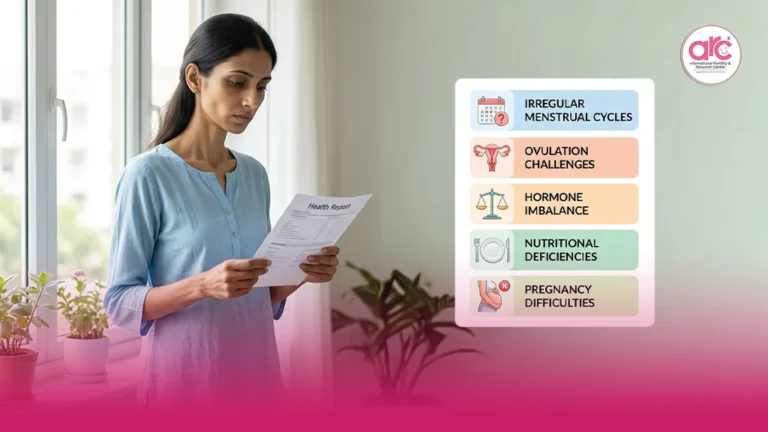
You may have gone for a routine scan while trying to conceive and heard a doctor say, “You have fibroids.”
For many women, that single sentence triggers a wave of questions.
Will fibroids stop me from getting pregnant?
Do I need surgery before IVF?
Can fibroids cause miscarriage?
Will they affect my baby if I become pregnant?
The reassuring news is that many women with fibroids conceive naturally and have healthy pregnancies. However, some fibroids can interfere with fertility, embryo implantation, IVF success rates, and pregnancy outcomes depending on their size, number, and location.
Understanding which fibroids matter and which often do not can help you make informed decisions without unnecessary fear.
What Are Uterine Fibroids?
Uterine fibroids are non-cancerous growths that develop from the muscle layer of the uterus. They are extremely common, especially in women during their reproductive years.
Many women have fibroids without knowing it because they cause no symptoms. Others may experience:
- Heavy menstrual bleeding
- Pelvic pressure or pain
- Frequent urination
- Pain during intercourse
- Bloating or abdominal fullness
- Difficulty conceiving
Fibroids vary greatly in size. Some are smaller than a pea, while others can grow large enough to distort the shape of the uterus.
Do Fibroids Affect Fertility?
The answer depends largely on where the fibroid is located.
Not all fibroids affect fertility.
Some women with fibroids conceive naturally without any difficulty, while others may struggle because the fibroids interfere with implantation or embryo development.
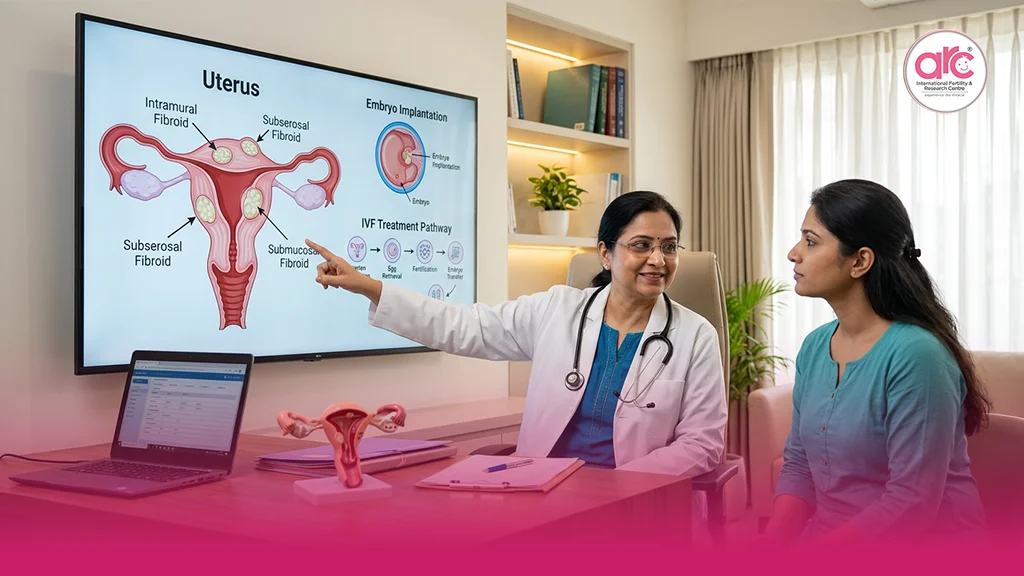
Doctors generally classify fibroids into three main categories:
1. Submucosal Fibroids
These grow into the uterine cavity.
Among all fibroid types, submucosal fibroids are the most likely to affect fertility because they can:
- Distort the uterine cavity
- Interfere with embryo implantation
- Reduce blood flow to the endometrium
- Increase miscarriage risk
Even relatively small submucosal fibroids may negatively impact fertility.
2. Intramural Fibroids
These develop within the muscular wall of the uterus.
Intramural fibroids may affect fertility if they:
- Become large
- Distort the uterine cavity
- Reduce endometrial receptivity
Small intramural fibroids that do not affect the uterine cavity often have minimal impact on fertility.
3. Subserosal Fibroids
These grow on the outer surface of the uterus.
Subserosal fibroids generally do not affect fertility because they rarely interfere with implantation or embryo development.
Many women with subserosal fibroids become pregnant naturally and through IVF without additional treatment.
Can Fibroids Affect IVF Success?
One of the most common questions fertility specialists hear is:
“Should I remove my fibroids before IVF?”
The answer depends on whether the fibroid affects the uterine cavity.
Fibroids may reduce IVF success rates when they:
- Distort the endometrial cavity
- Interfere with embryo implantation
- Reduce blood supply to the uterine lining
- Trigger chronic inflammation within the uterus
Research consistently shows that submucosal fibroids can significantly reduce implantation and pregnancy rates during IVF.
Large intramural fibroids may also affect outcomes, particularly when they alter the shape of the uterine cavity.
However, small fibroids located outside the cavity often do not reduce IVF success and may not require surgery before treatment.
This is why fertility specialists perform detailed ultrasound scans and, in some cases, hysteroscopy or MRI before recommending IVF.
Should Fibroids Be Removed Before IVF?
Not always.
Fibroid removal, known as myomectomy, may be recommended when:
- Fibroids distort the uterine cavity
- Repeated IVF failures have occurred
- Recurrent miscarriages are present
- Heavy bleeding affects health
- Large fibroids interfere with embryo transfer
However, surgery is not automatically recommended for every fibroid.
Removing fibroids unnecessarily may delay fertility treatment and, in some cases, create uterine scar tissue.
The decision should be individualised based on age, ovarian reserve, fibroid characteristics, and fertility history.
Can Fibroids Cause Miscarriage?
Certain fibroids can increase miscarriage risk.
This is particularly true when fibroids:
- Distort the uterine cavity
- Reduce implantation space
- Affect blood flow to the developing pregnancy
- Trigger uterine contractions
Women with cavity-distorting fibroids may have a higher risk of early pregnancy loss compared with women without fibroids.
However, many women with fibroids complete pregnancy successfully and never experience miscarriage.
What Happens If You Get Pregnant with Fibroids?
Many fibroids remain stable during pregnancy, while others may grow because of hormonal changes.
Potential pregnancy complications associated with fibroids include:
- Pain due to fibroid degeneration
- Bleeding during pregnancy
- Placental abnormalities
- Breech presentation
- Preterm labour
- Caesarean delivery
The risk depends largely on the size and location of the fibroid.
Most women with small fibroids experience normal pregnancies and healthy deliveries.
Regular monitoring helps doctors identify potential concerns early.
How Are Fibroids Diagnosed During Fertility Evaluation?
Fibroids are usually detected through:
Pelvic Ultrasound
The most common first-line investigation.
Transvaginal Ultrasound
Provides detailed information about fibroid size and location.
Saline Sonography
Helps determine whether a fibroid extends into the uterine cavity.
MRI Scan
Sometimes recommended for large or multiple fibroids before surgery.
Hysteroscopy
Allows doctors to directly examine the uterine cavity.
Accurate diagnosis is important because treatment decisions depend more on location than size alone.
When Should You See a Fertility Specialist?
Consider fertility evaluation if:
- You are under 35 and have been trying for over 12 months
- You are 35 or older and have been trying for over 6 months
- You have known fibroids and difficulty conceiving
- You have recurrent miscarriages
- You have heavy periods or pelvic symptoms
- You have experienced failed IVF cycles
Early assessment helps determine whether fibroids are truly contributing to infertility or whether another factor is involved.
Fibroids, Fertility, and Personalised Treatment
Every fibroid behaves differently.
A small fibroid inside the uterine cavity may affect fertility more than a larger fibroid growing outside the uterus.
This is why treatment decisions should never be based on size alone.
At ARC Fertility Hospitals, fertility specialists evaluate fibroids alongside age, ovarian reserve, sperm parameters, IVF history, and reproductive goals before recommending treatment. Women searching for the Best Fertility Hospital in Chennai often benefit from this personalised approach because it helps avoid unnecessary surgery while ensuring that significant fertility barriers are addressed.
For couples looking for a trusted Fertility Hospital in Chennai, understanding whether fibroids are truly affecting conception is often the first step toward choosing the most effective treatment plan.
Final Thoughts
So, do fibroids affect fertility, IVF success, or pregnancy?
Sometimes yes but not always.
The impact depends mainly on where the fibroid is located and whether it changes the shape of the uterine cavity. Submucosal fibroids and certain large intramural fibroids can reduce fertility and IVF success, while many subserosal fibroids have little or no effect.
If you have fibroids and are trying to conceive, avoid assuming the worst or ignoring them completely. A proper fertility evaluation can determine whether the fibroids need treatment or whether another factor is responsible for the delay in pregnancy.
The goal is not simply to treat fibroids. The goal is to help you achieve the healthiest and safest path to pregnancy.