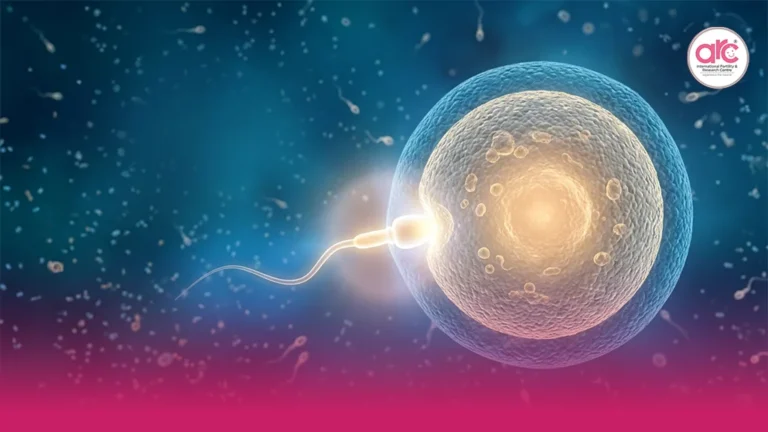
When a couple is trying to conceive, timing can start to feel like a small science project. Ovulation apps, fertile windows, cervical mucus, pregnancy tests, and then one more question quietly appears: should your partner abstain from ejaculation to “save up” better sperm?
It is a common question, especially for women who are tracking every detail of the cycle and wondering whether one choice could improve the chances of pregnancy. The simple answer is: abstinence can affect sperm quality, but longer abstinence is not always better. In many cases, a moderate gap between ejaculations gives the best balance between sperm count, movement, and freshness.
At ARC Fertility Hospitals, fertility specialists usually look beyond one rule and consider the couple’s age, ovulation timing, semen analysis, treatment plan, and previous history before advising an abstinence period.
What Does Abstinence Mean in Fertility?
In fertility discussions, abstinence usually means the number of days a man avoids ejaculation before giving a semen sample or having intercourse during the fertile window. This includes ejaculation through sex or masturbation.
Many laboratories ask for 2 to 5 days of abstinence before a semen analysis. This is not because every man needs the same timing for conception, but because standard testing needs a reasonably consistent sample. If a man gives a sample after 10 days once and after 1 day another time, the results can look different even if his underlying fertility has not changed.
For natural conception, the goal is slightly different. You are not trying to produce a perfect lab sample. You are trying to make sure healthy, motile sperm are present in the reproductive tract around ovulation.
Does Abstinence Improve Sperm Quality?
Abstinence may improve sperm quantity, especially semen volume and sperm concentration, because sperm have more time to accumulate. But sperm quality is not only about count. Doctors also care about motility, morphology, and DNA integrity.
Longer abstinence can sometimes increase the number of sperm in the sample, but it may also increase the proportion of older sperm. Older sperm may move less efficiently and may have higher oxidative stress, which can affect DNA quality in some men. This is why “saving sperm” for too many days is not always helpful.
For many couples, an abstinence period of about 2 to 3 days is often a practical middle ground. It may support adequate count without allowing sperm to sit for too long. However, if semen analysis shows a very low count, poor motility, or high DNA fragmentation, your fertility doctor may suggest a more personalised ejaculation schedule.
How Abstinence Affects Count, Motility, and DNA
Sperm count
Sperm count often rises with a few days of abstinence. This is why a man who ejaculates several times in one day may have a lower sperm concentration in later samples. But higher count alone does not guarantee pregnancy. A sample with more sperm but poor movement may still struggle to reach the egg naturally.
Sperm motility
Motility means how well sperm move. After prolonged abstinence, motility can decline in some men. For conception, movement matters because sperm must travel through cervical mucus, the uterus, and the fallopian tube. If your partner already has borderline motility, waiting too long between ejaculations may not be ideal.
Sperm morphology
Morphology refers to sperm shape. Abstinence alone does not usually “fix” morphology. Shape is influenced by sperm production, heat exposure, infections, smoking, varicocele, metabolic health, toxins, and nutritional status. If morphology is a concern, it is better to seek evaluation rather than rely only on timing. You may also find it useful to read about whether daily multivitamins can support sperm morphology, especially when lifestyle and nutrition are part of the fertility plan.
Sperm DNA quality
Sperm DNA fragmentation is an advanced marker that tells doctors whether sperm DNA has more breaks than expected. Some men with normal count and motility may still have high DNA fragmentation. In such cases, shorter abstinence or more frequent ejaculation may sometimes be advised, because it may reduce the time sperm are exposed to oxidative stress. This decision should be guided by a fertility specialist, not guessed at home.
What Is the Best Abstinence Period When Trying Naturally?
If you are trying to conceive naturally and cycles are regular, intercourse every 1 to 2 days during the fertile window is usually a sensible approach. The fertile window is the few days before ovulation and the day of ovulation. Sperm can survive for several days in fertile cervical mucus, so you do not need to wait for one “perfect” day.
Many women feel pressure to identify the exact hour of ovulation. In reality, couples often do better with relaxed, consistent timing rather than one high-pressure attempt after many days of abstinence. If your partner has normal semen parameters, daily or alternate-day intercourse around ovulation is generally reasonable.
If intercourse becomes stressful or painful, or if timed sex is affecting the relationship, it is worth discussing this with a doctor. Fertility care should not turn intimacy into a monthly examination.
Abstinence Before Semen Analysis, IUI, IVF, or ICSI
For a semen analysis, most fertility centres recommend 2 to 5 days of abstinence. This allows doctors to compare results with standard reference ranges. If the result is abnormal, the test is often repeated because illness, fever, stress, poor sleep, alcohol, medications, and recent ejaculation can all affect the sample.
Before IUI, IVF, or ICSI, the abstinence recommendation may vary depending on semen quality. For IUI, doctors need enough motile sperm after processing. For IVF or ICSI, the focus may include sperm maturity, motility, and DNA integrity. Some men are advised to abstain for 2 to 3 days. Others, especially those with DNA fragmentation concerns, may be advised to ejaculate more recently before the final sample.
This is one reason couples should avoid copying advice from friends or forums. The “best” abstinence period depends on the diagnosis and treatment plan.
When Longer Abstinence May Be Harmful
Abstinence for a week or more may increase semen volume and count, but it can also lead to a higher percentage of less motile or older sperm in some men. It may also make timed intercourse more stressful because everything feels dependent on a single attempt.
Long abstinence is especially not a solution for problems such as infection, varicocele, hormonal imbalance, erectile difficulty, retrograde ejaculation, or lifestyle-related sperm damage. If semen analysis shows repeated abnormalities, a fertility evaluation is more useful than simply changing abstinence days.
Women often carry most of the emotional burden of fertility tracking, but sperm health contributes to nearly half of infertility situations either alone or along with female factors. A balanced evaluation of both partners saves time, especially after age 35 or when cycles are irregular.
Other Factors That Matter More Than Abstinence Alone
Sperm production takes roughly three months, so daily habits matter. Smoking, vaping, frequent alcohol use, anabolic steroids, poor sleep, obesity, uncontrolled diabetes, high heat exposure, and untreated infections can affect sperm quality. Fever can temporarily reduce sperm quality for weeks.
Some couples also notice unusual symptoms after intercourse, such as burning, itching, swelling, or discomfort. These symptoms are not usually about sperm quality, but they should not be ignored. Rarely, semen sensitivity can cause distress and confusion, so understanding signs of sperm allergy and pregnancy concerns may help couples know when to seek medical advice.
Improving sperm health may involve lifestyle changes, antioxidant support when appropriate, treatment of infections, hormone testing, ultrasound for varicocele, or advanced sperm testing. ARC Fertility Hospitals focuses on identifying the reason behind sperm concerns rather than offering one-size-fits-all advice.
When Should You See a Fertility Specialist?
You should consider seeing a fertility specialist if you have been trying for 12 months without pregnancy, or after 6 months if the woman is 35 or older. Earlier evaluation is also wise if there are irregular periods, PCOS, endometriosis, previous pelvic infection, recurrent miscarriage, known low sperm count, erectile or ejaculation problems, or a history of testicular surgery, injury, or infection.
A semen analysis is simple, non-invasive, and often one of the first tests recommended. If results are abnormal, your doctor may repeat the test and then decide whether hormonal tests, genetic tests, infection screening, DNA fragmentation testing, or urology referral is needed.
The Practical Takeaway
So, does abstinence improve sperm quality? Sometimes it improves sperm count, but longer abstinence does not automatically mean better fertility. For many couples, 2 to 3 days of abstinence before a semen sample and intercourse every 1 to 2 days during the fertile window are practical guidelines. But if there is male factor infertility, recurrent IVF failure, poor motility, or high DNA fragmentation, the advice may be different.
The most reassuring step is not trying to control every variable alone. With the right fertility evaluation, couples can understand whether timing is the issue or whether sperm health, ovulation, fallopian tubes, egg reserve, or another factor needs attention. ARC Fertility Hospitals helps couples move from guesswork to a clear, medically guided plan—without blame, pressure, or unrealistic promises.