Overview
Most people never connect fertility with clothing. They check their diet. Their sleep. Their stress. Their medical tests. But they rarely look at what they wear every single day.
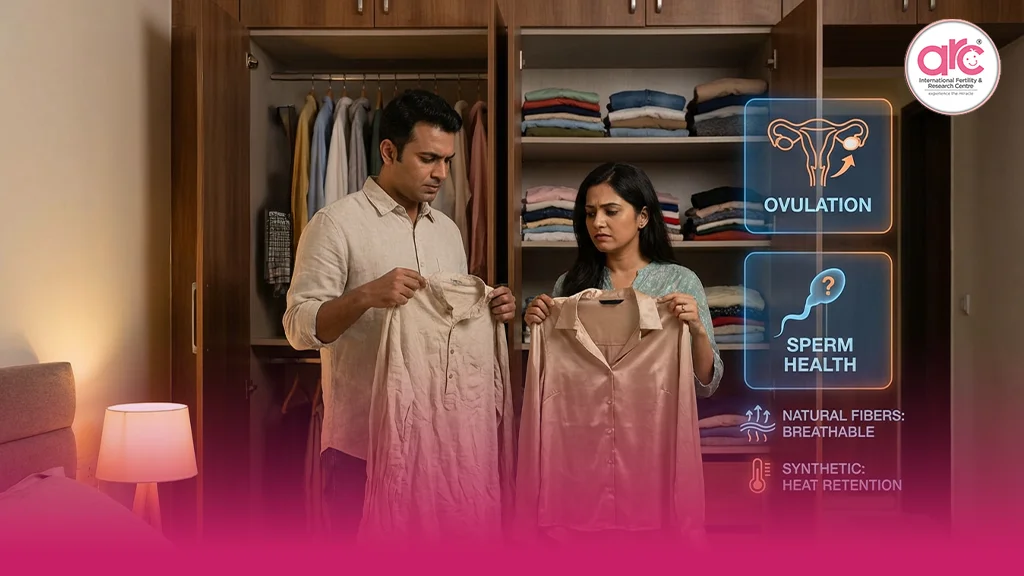
Synthetic fabrics like polyester, nylon, rayon, spandex, and tight athletic wear may look comfortable and stylish. But the truth is simple — these materials can silently disrupt your hormones and reproductive balance.
A fertility hospital in chennai sees this pattern in both men and women.
Lifestyle triggers are not always big. Sometimes, they are woven into the clothes you wear.
This blog explains how synthetic clothing affects sperm, ovulation, and hormones — and why natural fabrics protect your fertility better.
Why Synthetic Fabric Is a Problem
Synthetic clothes are made from petroleum-based products. They often contain phthalates, dyes, formaldehyde, plasticizers, and endocrine-disrupting chemicals. These chemicals do not stay locked inside the fabric. They break down slowly. They leach into sweat. They enter the skin.
Your skin is not a wall.
It absorbs what you place on it.
And synthetic chemicals interfere with hormone function when absorbed repeatedly over tim
Clothing is not innocent.
Especially when tightly fitted, unbreathable, and worn daily.
How Tight Synthetic Clothes Increase Heat — and Reduce Fertility
Reproductive organs require specific temperatures to function properly.
For men, the testicles must stay cooler than the rest of the body. Synthetic underwear, gym wear, and tight jeans trap heat. Heat reduces:
- Sperm count
- Sperm motility
- Testosterone levels
- Sperm DNA quality
Even a one-degree rise affects sperm production.
Tight synthetics raise temperature throughout the day.
For women, trapped heat increases inflammation, vaginal discomfort, and bacterial imbalance.
This affects ovulation rhythm and uterine health.
Heat is a silent disruptor — and synthetic fabrics amplify it.
How Synthetic Fabrics Disrupt Hormones Through Chemicals
The bigger danger is not heat.
It is chemical exposure.
Phthalates
Common in polyester, PVC prints, elastic waistbands, and synthetic blends. Phthalates are endocrine disruptors. They interfere with estrogen, progesterone, testosterone, and thyroid hormones.
Effects include:
- Irregular ovulation
- Low ovarian reserve
- Poor egg quality
- Low sperm count
- High sperm DNA fragmentation
- Increased miscarriage risk
Phthalates mimic hormones. They confuse the body’s natural signals. This disturbs the fertility cycle.
Plastic Microfibers
Synthetic clothes release microplastics that settle on the skin. These particles carry chemicals that trigger inflammation and hormonal disruption.
Chemical Dyes and Finishes
Wrinkle-free, stain-resistant, and stretch fabrics contain chemicals that imbalance hormones and irritate the skin, especially near reproductive organs.
The more synthetic, the more chemical contact.
The tighter the fit, the deeper the absorption.
Impact on Women: Ovulation and Reproductive Health
Women who wear tight synthetic clothing around the pelvis — leggings, shapewear, nylon underwear, polyester salwar linings — often face:
- Irregular periods
- Lower estrogen stability
- Vaginal pH imbalance
- Increased yeast infections
- Pelvic heat buildup
- Slower ovulation
- Hormonal swings
When chemicals disrupt estrogen levels, ovulation becomes irregular.
When heat increases inflammation, implantation becomes harder.
A best fertility hospital in chennai checks lifestyle factors when cycles are unpredictable — clothing is one of them.
Impact on Men: Sperm Quality and Hormone Balance
Men who wear polyester underwear, gym shorts, or tight synthetic pants face constant heat stress. Studies show polyester reduces sperm count significantly compared to cotton.
Synthetic fabric increases:
- Scrotal temperature
- Oxidative stress
- Sperm defects
- DNA fragmentation
- Testosterone imbalance
Men assume fertility depends on strength or performance.
But sperm health depends on biology — and biology depends on temperature and chemicals.
Skin Absorption: The Silent Pathway
Anything kept on the skin for hours gets absorbed. Synthetic clothing sits on the body all day. Combined with sweat, heat, and friction, absorption becomes faster.
Chemicals move through skin → enter bloodstream → reach reproductive organs.
This is why personal care, environment, and clothing all influence fertility.
Your skin is not a shield.
It is a doorway.
Who Is Most at Risk?
The impact is stronger in:
- Office workers who sit long hours
- Men who wear tight pants daily
- Women who wear leggings and shapewear constantly
- Athletes wearing synthetic gym wear
- People with high sweating
- Those with PCOS or irregular periods
- Couples struggling with unexplained infertility
In many unexplained cases, lifestyle fixes like switching fabrics make visible improvements.
Safer Alternatives That Protect Fertility
Natural fabrics are not luxury.
They are biology-friendly.
Choose:
- Cotton
- Bamboo
- Linen
- Muslin
- Hemp
- Organic blends
- Loose breathable underwear
Benefits include:
- Lower heat retention
- Reduced chemical exposure
- Balanced temperature
- Less irritation
- Better hormone stability
Natural fabrics allow the body to breathe.
Breathing keeps hormones balanced.
Balanced hormones support fertility.
Practical Changes to Start Today
- Replace synthetic underwear with cotton.
- Choose loose pants instead of tight jeans.
- Limit leggings and shapewear to short durations.
- Avoid synthetic gym wear outside workouts.
- Wear breathable nightwear.
- Use natural-fiber bedsheets and sleepwear.
- Wash new clothes before wearing to reduce chemical residue.
Small changes protect long-term fertility.
A fertility hospital in chennai often recommends lifestyle adjustments before medical treatment — clothing is part of that plan.
Final Thought
Fertility is not shaped by one factor.
It is shaped by everything you breathe, eat, wear, and absorb.
Synthetic fabrics are convenient. But convenience has a cost when chemicals and heat interfere with hormones, sperm quality, and ovulation.
Your wardrobe is not just a fashion choice.
It is a health choice.
And sometimes, it becomes a fertility choice.
The best fertility hospital in chennai will guide you medically.
But your daily habits — including what you wear — determine how well your body supports conception.
Choose clothing that respects your biology.
Because fertility begins with the environment you create around your body every day.