Overview
She woke up from the sedation feeling groggy and tender.
That part she had expected.
What she had not fully prepared for was the sharp, cramping sensation in her lower abdomen, deeper than period pain, on one side more than the other, that arrived quietly once the sedation had fully cleared.
Is this normal? She texted her sister. Should I call the clinic?
Is sharp pain normal after egg retrieval?
It is one of the most anxious questions women ask in the hours immediately following IVF egg collection. The procedure is over. The embryology team has the eggs. And now, alone at home, trying to rest, the body is making itself heard.
Here is what is actually happening, what pain is normal and what requires immediate medical attention.
What the Egg Retrieval Procedure Does to Your Body?
Before the pain makes sense, the procedure needs to be understood clearly.
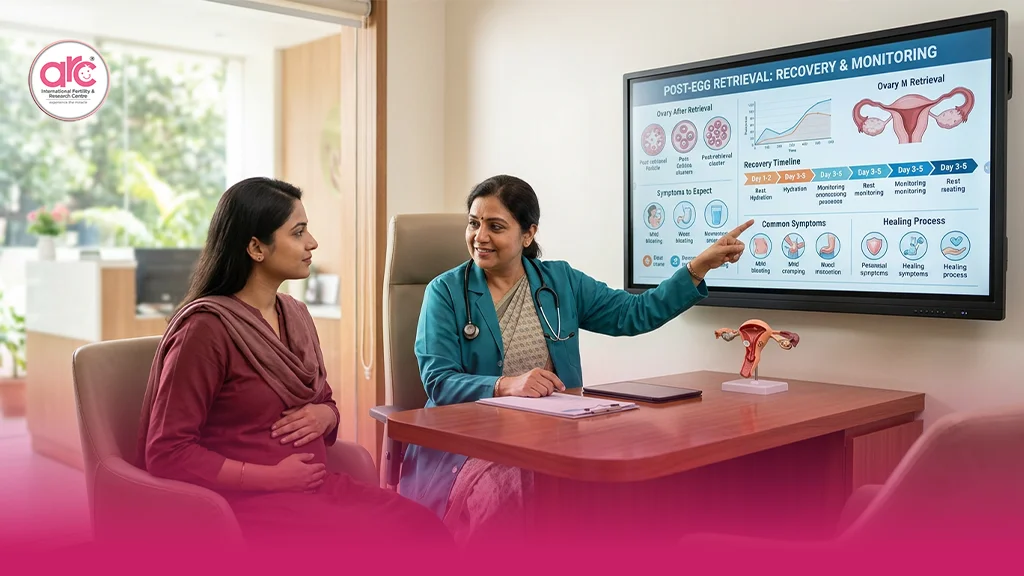
Egg retrieval is a minimally invasive procedure that involves taking mature eggs from the ovaries with a thin needle under ultrasound guidance. A needle is inserted through the vaginal wall into each follicle of the stimulated ovaries. The fluid inside each follicle, along with the egg it contains, is aspirated into a collection tube.
The ovaries at this point are significantly larger than normal. Weeks of stimulation have caused each ovary to develop multiple follicles, sometimes ten, twelve or more, each filled with fluid. By the time of retrieval, the ovaries may be the size of small oranges instead of their usual walnut size.
When the needle punctures each follicle to retrieve the egg, it causes micro-trauma to the ovarian tissue. After retrieval, the now-empty follicles begin to fill with blood and fluid, forming what are called corpus lutea, the structures that will produce progesterone to support potential implantation.
All of this explains why pain after egg retrieval is not an anomaly. It is an expected biological response to a real physical event.
Is Sharp Pain Normal After Egg Retrieval? What the Research Says?
The research on post-retrieval pain is more substantive than most patients are told before the procedure.
A 2024 retrospective cohort study of 1,000 oocyte retrieval procedures found that post-procedural pain was observed in 608 of 986 patients, approximately 62% of all retrievals. Moderate to severe pain was experienced by 23% of patients within 4 hours of the procedure.
That is not a small number. Nearly 1 in 4 women experiences significant pain immediately after retrieval and the majority experience some degree of discomfort.
Sharp stabbing pain originates from various causes after the retrieval weeks. Some common reasons include OHSS, ovarian cysts, enlarged ovaries, internal and vaginal wall bleeding or pelvic and ovary infection.
Breaking this down by what is normal versus what is not:
Normal pain after egg retrieval:
- Cramping in the lower abdomen, similar to strong period pain, on days 1 & 2
- A feeling of heaviness or pressure in the pelvis
- One-sided discomfort corresponding to which ovary was more active
- Mild bloating and a sensation of fullness
These symptoms stem from the ovaries returning to their natural size following stimulation. The pain feels like period cramps or mild discomfort in the lower abdomen and usually goes away in 1 or 2 days.
Pain that is less expected but still manageable:
Some women experience sharp, stabbing sensations rather than dull cramping, particularly in the first 12 hours. Sharp pain in the pelvic area is experienced by some women throughout the area below the belly button and between the hip bones. This may be due to the stimulation of the ovaries and the egg retrieval process itself.
If this sharp pain is present but not worsening, responds partially to rest and mild pain relief and is not accompanied by fever, heavy bleeding or difficulty breathing, it is within the expected recovery range.
What Causes the Sharp Pain Specifically?
Understanding the specific causes helps distinguish what is happening inside the body.
- Follicle Collapse and Ovarian Shrinkage
Each punctured follicle collapses after aspiration. The ovary, which expanded significantly during stimulation, begins contracting back toward its normal size. As the surgeon works to retrieve the egg, the ovary grows. If you try to shrink it to its normal size, you will feel a sharp pain three days after egg retrieval. This shrinkage process and the internal tissue response that accompanies it, is the most common source of sharp post-retrieval pain.
- Vaginal Wall Micro-Trauma
A small amount of bleeding or pink discharge is common, usually due to the needle puncture in the vaginal wall. This typically resolves within 1-2 days and is not clinically concerning on its own.
- Constipation from Progesterone and Pain Medication
Progesterone supplementation begins after egg retrieval and progesterone significantly slows gut motility. Combined with pain medication and reduced physical activity during recovery, constipation is extremely common and contributes meaningfully to abdominal discomfort that can feel sharp when gas is trapped or bowel pressure builds.
When Sharp Pain After Egg Retrieval Becomes a Concern?
This is the information every woman needs before she goes home after retrieval.
Seek medical attention if you experience severe or sharp pain that does not improve with over-the-counter pain medication, a fever above 100.4°F (38°C) which may indicate infection, heavy vaginal bleeding or large blood clots, cramping that lasts longer than a week or worsens over time, swelling and redness of the abdomen, difficulty urinating, shortness of breath or chest pain or persistent nausea and vomiting that does not subside.
The most important warning sign to understand is OHSS (Ovarian HyperStimulation Syndrome).
OHSS is a serious complication that can occur when the ovaries are overstimulated by the hormones used during the IVF process. OHSS can cause the ovaries to swell and leak fluid into the abdomen or chest. Symptoms range from mild to severe and may include shoulder pain, diarrhea and other indications.
Shoulder tip pain specifically, pain felt at the tip of the shoulder when lying down, is a red flag for internal fluid accumulation pressing on the diaphragm. This is not normal post-retrieval discomfort. It requires a same-day medical evaluation.
Similarly: Sharp pain that intensifies rather than gradually improves over 24 to 48 hours, sharp pain accompanied by significant abdominal distension and reduced urination and any sharp pain after the third day that was previously resolving, all of these need clinical assessment.
Managing Normal Sharp Pain at Home After Retrieval at ARC
For the pain that falls within the expected recovery range, here is what ARC recommends:
- Rest genuinely: The first 24 hours after retrieval should involve minimal physical activity. The ovaries need time to settle. Gentle movement around the home is fine. Returning to full activity such as commuting, exercise, prolonged standing, on day one is not.
- Warmth: A warm (not hot) compress or wheat bag placed across the lower abdomen reduces cramping for most women during the first 24 hours.
- Hydration: Drinking adequate fluids supports recovery and is one of the most effective ways to reduce mild OHSS progression. Coconut water and electrolyte-containing fluids are particularly useful.
- Paracetamol: Appropriate for mild to moderate pain in the post-retrieval period. Avoid NSAIDs like ibuprofen unless specifically cleared by your ARC doctor. Some NSAIDs may affect progesterone production.
- Avoid bloat-inducing foods: Heavy meals, high-sodium foods and carbonated drinks in the first 48 hours worsen the abdominal distension that amplifies the sensation of pain.
The full picture of what the egg retrieval experience involves, from sedation through recovery, is covered in our detailed guide on whether IVF hurts, from injections to egg retrieval. If you are reading this before your retrieval and want to understand what the entire process feels like, that guide prepares you clearly for each stage.
And if you are in the preparation phase, still building toward your retrieval, our guide on how to improve egg quality for IVF covers the nutritional, lifestyle and supplementation approaches that support better egg quality in the weeks before stimulation begins.
According to the American Society for Reproductive Medicine, patients should have direct access to their clinical team after egg retrieval and should not hesitate to call with pain or symptom concerns, because distinguishing normal recovery from early complication is a clinical judgement, not something to manage alone with internet reassurance.
When to Call ARC After Egg Retrieval?
At a dedicated fertility hospital in Chennai, post-retrieval support at ARC does not end when you leave the clinic. The team is reachable for symptom questions in the days following retrieval, because the difference between manageable discomfort and the early signs of OHSS or infection is not always obvious from the patient’s perspective and catching it early changes the outcome significantly.
At the best fertility hospital in Chennai, ARC’s approach to post-retrieval care includes clear guidance on what to expect, what to watch for and exactly when to make contact, so every patient leaves the clinic with a recovery framework, not just a prescription.
Final Thoughts
She did not wait until morning. She called ARC.
The nurse asked the right questions. Assessed the symptom pattern. Confirmed the pain was within the expected recovery range and explained exactly why it was happening.
She rested, drank coconut water and used the warm compress.
By day two, the sharpness had softened into a dull ache.
By day three, it was mostly gone.
Knowing what was happening, made all the difference between panic and patience.
Frequently Asked Questions (FAQs)
Q1. Is sharp pain normal immediately after egg retrieval?
Yes, sharp pelvic pain in the first 12 to 24 hours is common and typically results from follicle collapse, ovarian shrinkage and minor tissue trauma from the retrieval needle. The pain usually subsides significantly by day two.
Q2. How long does pain last after egg retrieval?
Most women experience discomfort for 1-3 days after retrieval. Pain that is still worsening after day 3 or that does not respond to paracetamol and rest warrants a call to your fertility clinic.
Q3. What does OHSS pain feel like compared to normal retrieval pain?
OHSS pain is typically more severe, accompanied by significant bloating, reduced urination and sometimes shoulder tip pain or shortness of breath. Normal retrieval pain is localised to the lower abdomen and gradually improves over 24 to 48 hours.
Q4. Can I take ibuprofen for pain after egg retrieval?
Check with your ARC doctor before taking ibuprofen. Some NSAIDs may affect progesterone production in the post-retrieval period. Paracetamol is generally the safer first-line option for post-retrieval pain management.
Q5. Should I rest completely after egg retrieval?
Yes, the first 24 hours should involve genuine rest with minimal physical activity. Light movement around the home is fine, but returning to commuting, exercise or prolonged activity on retrieval day significantly increases discomfort and the risk of ovarian torsion.