Overview
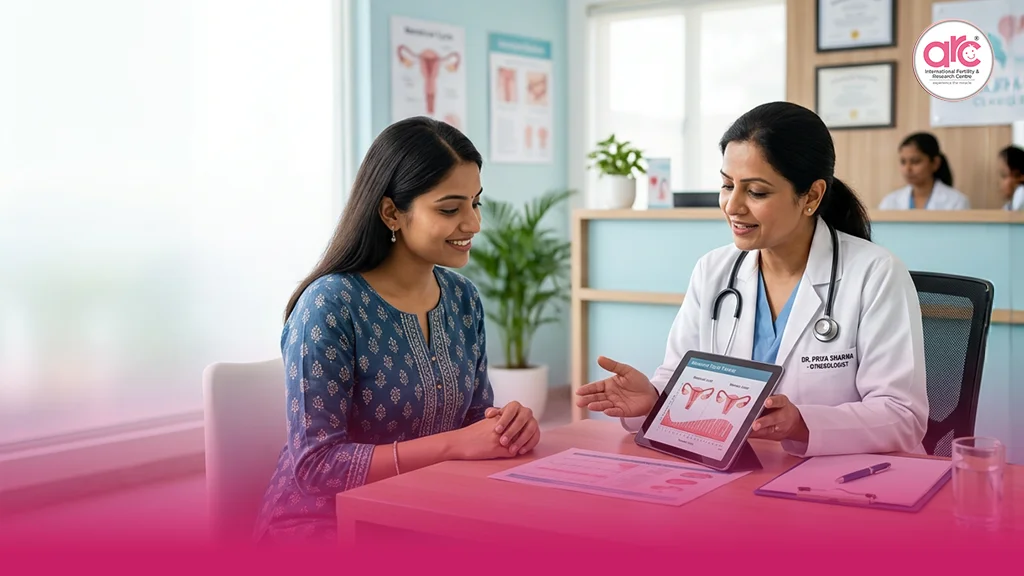
The first PCOS appointment can feel strange.
You walk in carrying months, sometimes years of questions. Irregular cycles. Unexplained weight changes. Skin that will not cooperate. A general sense that something is off, even when routine tests come back fine.
And then the appointment ends. And somehow, you walk out with more questions than you arrived with.
A lot of that confusion is preventable.
Because there are things specialists wish their patients already knew when they first come in, things that would make the conversation faster, deeper and far more useful from the very first minute.
Here are 7 things your doctor wishes you knew about PCOS before your first visit.
PCOS Is Not Just About Your Ovaries
This is the most important shift in thinking to make before you walk through that door.
PCOS is a lifelong health condition that continues far beyond a woman’s childbearing years. It is a complex hormonal disorder that affects menstrual cycles and metabolism, and is often misunderstood and misdiagnosed, significantly affecting a woman’s health and well-being.
The name suggests it is an ovarian condition. But the ovaries are where the symptoms show up, not where the problem begins.
The real drivers are hormonal and metabolic: Elevated androgens, insulin resistance and a disrupted signalling chain between the brain and the reproductive system. Understanding this before your appointment means you will ask better questions and understand the answers more clearly.
Irregular Periods Are a Signal, Not the Whole Story
Most women arrive at their first PCOS appointment focused on their cycle.
That makes sense. Irregular periods are often what triggers the visit.
Women with PCOS can have decreased menstrual cycles or irregular and heavy bleeding. Some women go four to six months without a cycle and when they do have one, it can be extraordinarily heavy.
But your period irregularity is a symptom of something deeper, not the condition itself.
The deeper question your doctor is trying to answer is: “Are you ovulating?” Because irregular periods and absent ovulation are not the same thing and the treatment approach depends on which one is happening.
Come prepared to describe your cycle in as much detail as you can. “How many days between periods? How long do they last? How heavy are they? Is there any pain?” This history matters far more than a single test result.
Insulin Resistance Is Often the Root of the Problem
Metabolic issues like insulin resistance are present in 60 to 80% of women with PCOS.
That is not a small percentage. It is most women with the condition.
And yet insulin resistance is rarely the first thing discussed at a PCOS appointment, because it does not always produce obvious symptoms. You do not necessarily feel it. But it is quietly driving androgen production, disrupting ovulation and making weight management harder than it should be.
If insulin levels can be lowered, symptoms can be significantly improved. Metformin is one medication used for this and is really effective for many people with PCOS.
Before your first visit, ask whether your appointment will include a fasting insulin test alongside the standard blood panel. Many routine PCOS panels test blood sugar, but not insulin directly. That distinction changes what gets found.
PCOS Does Not Mean You Cannot Have Children
This fear walks into almost every first appointment, spoken or unspoken.
Here is what the research says, clearly.
“People with PCOS actually have more eggs than normal, so their fertile years last longer. Because of all the skipped cycles, they have a really big egg reserve. They actually maintain their fertility for a longer period of time and are more likely to be able to get pregnant in their early 40s”.
If ovulation can be made to happen more regularly, the chance of getting pregnant goes up dramatically.
Having PCOS means the road to pregnancy may take longer. But the road is still there.
According to the American Medical Association’s physician guidance on PCOS, the goal of PCOS care is not to treat a disease. It is to manage a condition that responds well to the right combination of lifestyle and medical support.
Your Lifestyle History Is as Important as Your Test Results
Doctors spend a significant portion of a first PCOS appointment building a picture of your daily life, not just reviewing your blood work.
“What do you eat? How do you move? How do you sleep? How stressed are you? Has your weight changed recently? What medications are you on?”
PCOS management is individualised to address symptoms and prevent long-term complications. Lifestyle modification remains first-line therapy.
This is not a polite aside. It is the foundation of the treatment plan.
Come prepared. Write down your typical daily meals, your sleep pattern, your exercise habits or lack of them, and any significant stressors in the last six to twelve months. A doctor who has this information in the first appointment can move directly into a meaningful treatment conversation. Without it, the first visit is often spent gathering basics.
PCOS Affects Mental Health Too And It Is Worth Mentioning
Negative mental health impacts and decreased quality of life are common in PCOS. Depression and anxiety are significantly more prevalent in women with the condition.
This does not come up enough in first appointments because patients often do not connect their low mood or anxiety to their hormonal condition. They assume it is separate.
It usually is not!
The hormonal imbalances in PCOS, particularly elevated androgens and disrupted cortisol patterns directly affect mood, motivation and emotional regulation. And the lived experience of dealing with symptoms like unexplained weight gain, facial hair and infertility carries its own psychological weight that deserves acknowledgement.
If you have been struggling emotionally alongside your physical symptoms, mention it. A good specialist will take it seriously and factor it into your care plan.
Treatment Takes Time and That Is Normal
This is perhaps the most important expectation to set before you walk in.
Diagnosis and treatment of PCOS are often delayed, leading to many patients going without proper management for years.
But even after a diagnosis, treatment is not a quick fix. Hormonal conditions respond slowly to intervention. Insulin sensitivity improves over months, not weeks. Cycles regulate gradually. Weight changes happen incrementally.
Understanding what a realistic timeline looks like and what factors speed it up or slow it down is something every woman with PCOS deserves to understand clearly before she starts treatment. This is covered in detail in the guide on how long PCOS treatment in Chennai takes to show results, a useful read before or after your first appointment.
The women who see the best outcomes are almost always the ones who came into treatment with realistic expectations, consistent habits and the right medical support alongside them.
Before You Walk Into That First Appointment
Knowing 7 things your doctor wishes you knew about PCOS before your first visit does not mean arriving with all the answers.
It means arriving ready for the right conversation.
Write down your cycle history. Note your symptoms, all of them, including the ones that feel unrelated. Be honest about your lifestyle. Ask about insulin testing. And go in knowing that PCOS, while lifelong, is a condition that responds, meaningfully and measurably, to the right care.
At a dedicated fertility hospital in Chennai, the first PCOS appointment is built around exactly this kind of depth. Hormonal profiling, metabolic assessment, a full symptom review that does not stop at irregular periods and a treatment plan that is built around your specific picture, not a generic PCOS protocol.
Because the first appointment sets the direction for everything that follows.
At the best fertility hospital in Chennai, that direction is set carefully, with time, with thoroughness and with a genuine understanding of what PCOS means for each individual woman who walks through the door.
Final Thoughts
PCOS does not have to be confusing.
It does not have to mean years of trial and error before something finally works.
The right information, before your first visit, changes the quality of that visit completely. And the right specialist, who takes the time to understand your full picture, changes the quality of everything that comes after.
You deserve both.