Why Isn’t My Dominant Follicle Rupturing?
If you have been tracking ovulation through scans, one sentence can feel especially frustrating: the dominant follicle is growing, but it has not ruptured. Many women hear this after days of monitoring, timed intercourse, medicines, hope, and waiting. It can feel confusing because follicle growth looks like a good sign. So why does pregnancy not happen if the follicle does not release the egg?
The short answer is that a dominant follicle must do more than grow. It also needs the right hormonal signal to rupture and release the egg. When this final step does not happen, ovulation may be delayed, incomplete, or absent. This can affect the timing of intercourse or IUI and may reduce the chance of conception in that cycle.
At ARC Fertility Hospitals, doctors commonly see women who say, Why isn’t my dominant follicle rupturing? The answer is not the same for everyone. It depends on hormones, ovarian response, age, body weight, underlying conditions, medicines, and sometimes how the cycle is being monitored.
What Should Normally Happen to a Dominant Follicle?
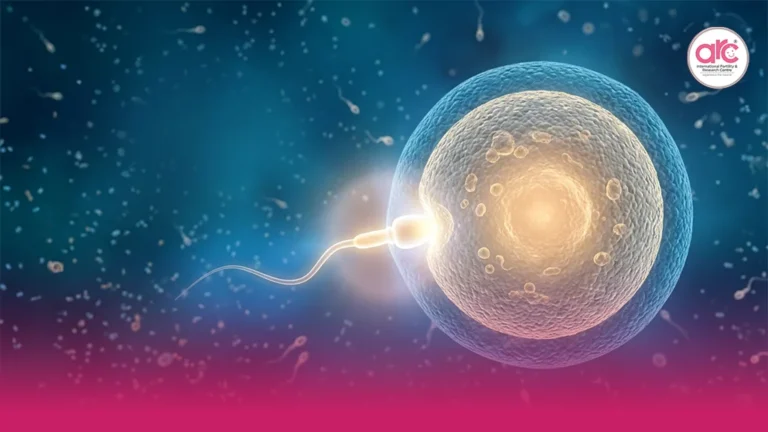
During a menstrual cycle, several small follicles begin to grow in the ovary. Usually, one becomes the dominant follicle. This follicle contains the egg and grows under the influence of hormones such as FSH and estrogen. Around mid-cycle, a natural LH surge tells the follicle to rupture. This is ovulation.
After rupture, the egg moves toward the fallopian tube, where fertilisation may happen if sperm are present. On ultrasound, doctors often look for signs such as follicle collapse, fluid behind the uterus, and later progesterone rise. These signs help confirm that ovulation has actually taken place.
Sometimes, the follicle reaches a good size but remains intact. In other cases, it may continue growing and become a functional cyst. For someone trying to conceive, this can be emotionally exhausting because the body appears to come close to ovulation but does not complete it.
Common Reasons a Dominant Follicle Does Not Rupture
1. The LH surge may be weak or poorly timed
The LH surge is the body’s natural trigger for ovulation. If the surge is insufficient, delayed, or mistimed, the follicle may not rupture even after reaching maturity. This can happen occasionally in otherwise regular cycles, but if it repeats, it needs evaluation.
2. Luteinised unruptured follicle syndrome
In luteinised unruptured follicle syndrome, often called LUF, the follicle behaves partly as if ovulation has happened hormonally, but the egg is not released. Progesterone may rise, periods may come on time, and the cycle may look nearly normal except for ultrasound evidence that the follicle did not rupture. This is one reason follicle monitoring can be more informative than relying only on calendar dates or ovulation predictor kits.
3. PCOS or irregular ovulation patterns
Women with PCOS may develop follicles that grow slowly, stop midway, or fail to rupture. Hormonal imbalance, insulin resistance, and irregular LH patterns can all interfere with ovulation. Some women with PCOS ovulate occasionally, while others need medication to support predictable egg release.
4. Body weight and metabolic factors
Both higher and lower body weight can affect ovulation. A high BMI may influence insulin levels, hormone balance, inflammation, and ovarian response. This does not mean pregnancy is impossible, but it may mean the ovulation process needs closer support. If weight is part of your fertility picture, understanding the link between BMI and pregnancy chances can help you approach the issue without blame or panic.
5. Stress, illness, and disrupted hormone signalling
The reproductive system is sensitive to physical and emotional strain. Severe stress, poor sleep, sudden weight change, intense exercise, thyroid imbalance, high prolactin, or recent illness can disturb the communication between the brain and ovaries. This may affect the LH surge and follicle rupture.
6. Certain medicines
Some painkillers, especially repeated use of NSAIDs around ovulation, may interfere with follicle rupture in some women. Not every pain medicine causes this, and you should not stop prescribed medicines without medical advice. But if non-rupture keeps happening, your fertility specialist may ask about medications taken during the fertile window.
7. Endometriosis, inflammation, or immune-related factors
Endometriosis, pelvic inflammation, previous infections, and immune-related conditions may affect ovarian environment and egg release in some patients. Fertility is rarely about one isolated factor. For women with repeated unexplained difficulty, it may also be useful to understand how autoimmune conditions may contribute to unexplained infertility.
How Do Doctors Confirm Whether the Follicle Ruptured?
A single scan may not always tell the full story. Fertility doctors usually interpret follicle rupture using a combination of findings. These may include serial follicular scans, follicle size, endometrial thickness, free fluid in the pelvis, changes in follicle shape, and blood tests such as LH or progesterone when needed.
If the follicle disappears or collapses and fluid is seen, rupture is likely. If it remains round, tense, and similar in size or keeps enlarging, it may not have ruptured. In some cycles, doctors may repeat scans after 24 to 48 hours to avoid misjudging timing.
Does an Unruptured Follicle Mean I Cannot Get Pregnant?
One unruptured follicle does not mean you cannot get pregnant. Many women have an occasional anovulatory or poorly ovulated cycle. The concern becomes stronger if it happens repeatedly, especially when cycles are being timed carefully or treatment cycles are being planned.
If the egg is not released, natural conception cannot occur from that follicle. In an IUI cycle, timing becomes difficult if rupture does not happen after the trigger or expected ovulation window. In IVF, the approach is different because eggs are retrieved directly from follicles before natural rupture is expected.
What Treatment Options Can Help?
Ovulation induction medicines
If ovulation is irregular, doctors may prescribe medicines such as letrozole or clomiphene citrate to support follicle development. The choice depends on age, ovarian reserve, PCOS status, endometrial response, and previous cycle history. These medicines should be used with monitoring because too many follicles can increase the risk of multiple pregnancy.
Trigger injection
When the follicle reaches an appropriate size, an hCG or GnRH agonist trigger may be advised to imitate the body’s ovulation signal. Rupture is then usually checked through scan timing. If a follicle still does not rupture despite a trigger, doctors may adjust the dose, timing, protocol, or treatment plan in future cycles.
Correcting underlying hormone issues
Thyroid disorders, high prolactin, insulin resistance, and abnormal androgen levels can affect ovulation. Treating these can improve the chance of regular follicle rupture. This is why a fertility evaluation is often more useful than repeatedly trying the same timed cycle without answers.
IUI or IVF depending on the full picture
If follicles grow and rupture with support, IUI may be considered in selected couples, especially when tubes are open and semen parameters are suitable. IVF may be advised when there are additional factors such as blocked tubes, severe male factor infertility, low ovarian reserve, advanced maternal age, endometriosis, repeated failed ovulation cycles, or long-standing infertility. The right option is not based only on one scan; it is based on the couple’s complete fertility profile.
When Should You See a Fertility Specialist?
You should consider consulting a fertility specialist if follicle rupture fails in more than one monitored cycle, your periods are irregular, you are above 35 and have been trying for six months, you are below 35 and have been trying for a year, or you have PCOS, endometriosis, thyroid problems, autoimmune disease, or previous pelvic infection.
Cost is also a real concern for many couples. The practical way to control unnecessary expense is not to delay evaluation until many cycles are lost. A structured plan can help decide whether you need simple monitoring, medicines, IUI, IVF, or only correction of an underlying issue.
What Can You Do Next?
If your dominant follicle is not rupturing, try not to blame yourself. It is not a matter of willpower or positive thinking. It is a biological process that depends on precise hormonal coordination. Keep records of your scan dates, follicle sizes, medicines, trigger timing, cycle length, and any blood tests. This information helps your doctor see patterns rather than treating every cycle as a fresh mystery.
At ARC Fertility Hospitals, fertility evaluation is designed to identify why ovulation is not completing and what can be done safely. Sometimes the solution is simple cycle correction. Sometimes it needs a more planned treatment pathway. Either way, the goal is not to rush you into advanced treatment, but to help you understand your body clearly and choose the next step with confidence.