Overview
When a couple struggles to conceive, the initial focus often falls on ovulation, hormone levels, or female reproductive health.
But fertility is a shared journey.
In fact, male factors contribute to nearly half of all infertility cases.
One diagnosis that often leaves couples feeling shocked is azoospermia, a condition where no sperm are found in the semen sample.
For many men, hearing the words “zero sperm count” can feel like the end of the road.
Naturally, one question follows:
Can a man with zero sperm count have a baby?
In many cases, the answer is yes.
Advances in reproductive medicine have made it possible to retrieve sperm directly from the testes, even when sperm are not present in the ejaculate. One of the most advanced techniques used for this purpose is MicroTESE.
Understanding how this procedure works can help couples make informed decisions about their fertility journey.
What Is Azoospermia?
Azoospermia is a condition in which no sperm are detected in a semen analysis.
There are two main types:
Obstructive Azoospermia
Sperm are being produced normally, but a blockage prevents them from reaching the semen.
Non-Obstructive Azoospermia
Sperm production is severely reduced or occurs only in small areas of the testes.
It is in these more challenging cases that MicroTESE may play an important role.
What Is MicroTESE?
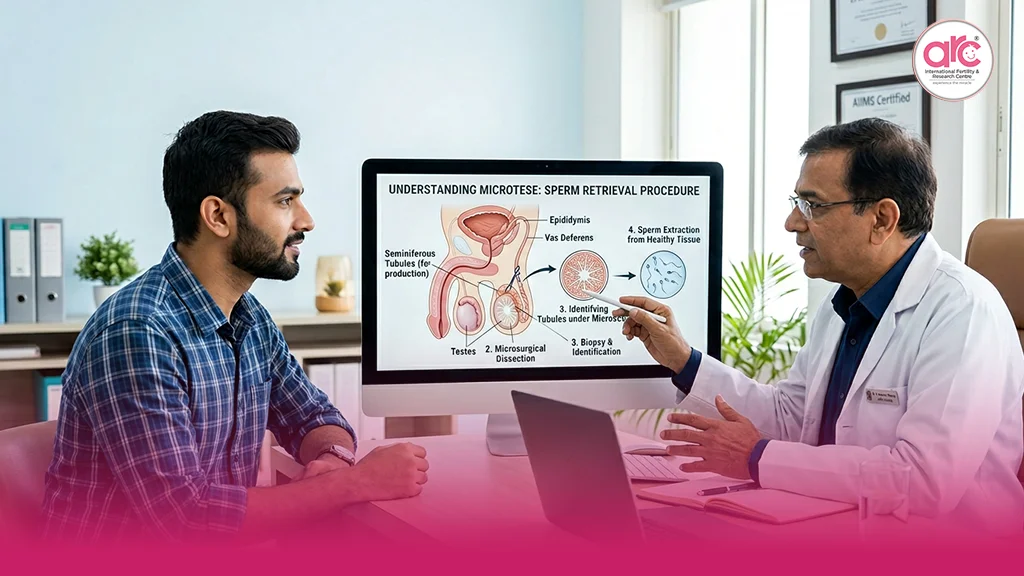
MicroTESE stands for Microsurgical Testicular Sperm Extraction.
It is a highly specialized surgical procedure used to locate and retrieve sperm directly from the testicular tissue.
Unlike traditional sperm retrieval techniques, MicroTESE uses an operating microscope that allows fertility specialists to identify tiny areas within the testes where sperm production may still be occurring.
This precision helps maximize sperm retrieval while minimizing damage to healthy tissue.
For men diagnosed with non-obstructive azoospermia, MicroTESE often provides hope where conventional semen analysis shows no sperm at all.
How Does MicroTESE Work?
The procedure is performed under anesthesia.
Using a high-powered microscope, the surgeon carefully examines the testicular tissue and identifies areas that appear most likely to contain sperm-producing tubules.
Small tissue samples are then collected and immediately examined by embryologists in the laboratory.
If viable sperm are found, they may be:
- Used immediately for IVF with ICSI
- Frozen for future fertility treatment
Because sperm can sometimes be present in isolated areas of the testes, MicroTESE offers higher retrieval success compared to many traditional techniques.
Who May Benefit From MicroTESE?
MicroTESE may be recommended for men with:
- Non-obstructive azoospermia
- Previous unsuccessful sperm retrieval attempts
- Certain genetic causes of male infertility
- Testicular failure with limited sperm production
A detailed fertility evaluation helps determine whether MicroTESE is an appropriate option.
Many fertility specialists also recommend additional diagnostic testing before proceeding with treatment.
What Are the Chances of Finding Sperm?
This is usually the first question couples ask.
The answer depends on the underlying cause of azoospermia.
Factors that may influence success include:
- Hormone levels
- Genetic findings
- Testicular health
- Previous fertility history
While sperm retrieval cannot be guaranteed, MicroTESE has helped many men with severe male infertility successfully retrieve sperm that can later be used during IVF treatment.
How Is Retrieved Sperm Used?
Once sperm are identified, they are commonly used with Intracytoplasmic Sperm Injection (ICSI).
ICSI involves injecting a single healthy sperm directly into an egg during IVF.
This technique has transformed treatment options for couples facing severe male factor infertility. IVF combined with ICSI often allows fertilization even when only a very small number of sperm are available.
If you’d like to understand how sperm quality can influence fertility outcomes, read “How to Make Sperm Stronger for Pregnancy.”
Is MicroTESE Safe?
MicroTESE is generally considered a safe procedure when performed by experienced fertility specialists.
Potential risks may include:
- Mild discomfort
- Swelling
- Bruising
- Temporary recovery time
Because the procedure uses microscopic guidance, unnecessary tissue removal is reduced compared with older techniques.
Most patients return to normal activities within a relatively short period, depending on their individual recovery.
Emotional Impact of Male Infertility
Male infertility often carries an emotional burden that is rarely discussed openly.
Many men experience feelings of:
- Frustration
- Guilt
- Anxiety
- Isolation
A diagnosis of azoospermia can feel overwhelming, particularly when parenthood has always been part of a couple’s future plans.
The encouraging reality is that reproductive medicine has advanced significantly over the past two decades.
Today, many men who were once told they had little chance of biological fatherhood now have treatment options that simply did not exist before.
When Should You Seek Fertility Help?
If pregnancy has not occurred despite regular unprotected intercourse, it may be worth seeking fertility evaluation sooner rather than later.
Early assessment can help identify potential male and female fertility factors and prevent unnecessary delays.
The Final Word
So, can a man with zero sperm count have a baby?
In many cases, yes.
A diagnosis of azoospermia does not automatically mean biological fatherhood is impossible.
Advanced procedures such as MicroTESE have created new opportunities for sperm retrieval, even in men with severe sperm production problems.
When combined with IVF and ICSI, MicroTESE may help many couples move closer to achieving pregnancy.
If you are facing male infertility concerns, consulting specialists at a fertility hospital in Chennai can help identify the underlying cause and determine whether advanced treatments such as MicroTESE may be suitable.
For couples seeking expert fertility care, the best fertility hospital in Chennai can provide comprehensive evaluation, advanced reproductive technology, and personalized treatment planning.
Frequently Asked Questions
Can a man with zero sperm count have children naturally?
It depends on the cause. Some cases involve blockages that may be treatable, while others may require advanced sperm retrieval procedures such as MicroTESE.
Is MicroTESE painful?
The procedure is performed under anesthesia, and most patients experience only mild discomfort during recovery.
Is MicroTESE successful for all men with azoospermia?
Success varies depending on the underlying cause of infertility, but MicroTESE offers one of the most advanced sperm retrieval options available for non-obstructive azoospermia.
Is IVF required after MicroTESE?
In most cases, retrieved sperm are used with IVF and ICSI because sperm numbers are typically very limited.