Overview
Day three of the two-week wait.
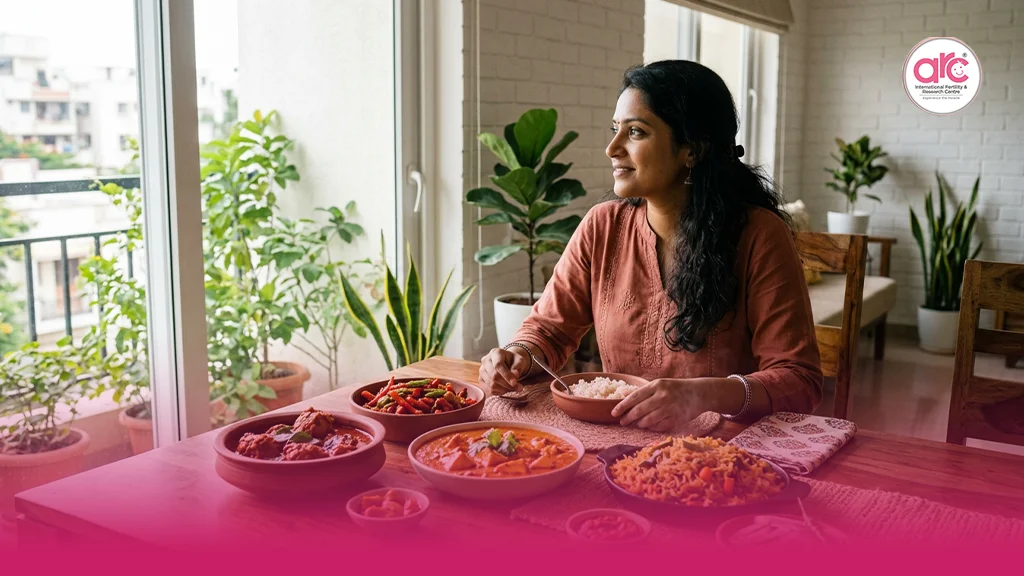
Chicken gravy is on the stove. The aroma of sizzling onions, ginger-garlic paste, whole spices and slow-cooked tomatoes filling the kitchen. It smells like home. It smells like comfort.
And then the thought arrives.
“Should I be eating this right now?”
If you are in the two-week wait after an IVF embryo transfer, that quiet, suspended stretch of days between transfer and pregnancy test, you are probably asking this exact question about everything you eat. Is this safe? Is that going to interfere? Can I eat spicy food during the two-week wait?
It is one of the most searched questions by women navigating IVF in India. And the answer is more nuanced than a simple yes or no.
What Is Actually Happening During the Two-Week Wait?
Before the food conversation, biology matters.
The two-week wait is the period between embryo transfer and the pregnancy blood test, typically 10 to 14 days. During this window, if the embryo implants successfully, it begins embedding into the uterine lining and triggering the hormonal cascade that sustains early pregnancy.
Implantation typically occurs within 6 to 10 days after embryo transfer, depending on embryo stage.
During this time, your body is doing something extraordinary without any external input from you. Your job, nutritionally speaking, is not to accelerate the process. It is to support the environment in which that process is happening.
This distinction matters because it changes how you think about food during the two-week wait. You are not trying to make implantation happen with your diet. You are trying to avoid unnecessary disruption to the environment that already supports it.
Can I Eat Spicy Food During the Two-Week Wait? What the Research Says?
Here is the honest clinical answer.
There is no direct evidence linking spicy food consumption to implantation failure. No randomised controlled trial has shown that eating a spicy meal during the two-week wait reduces IVF success rates.
While there is no direct link of spicy food causing harm to implantation, it is best to approach very spicy food with caution because spicy food might cause gastrointestinal discomfort.
So the concern about spicy food during the two-week wait is not about direct hormonal interference or a chemical effect on the embryo.
It is about what happens in the body as a consequence of digestive distress.
Why Digestive Comfort Matters More Than You Think Post-Transfer?
After embryo transfer, your digestive system is more sensitive than usual.
Rich sauces, very spicy foods and greasy foods might cause bloating, acid reflux or gastrointestinal distress. The medications used during an IVF cycle, particularly progesterone supplements, already slow digestion and can cause bloating, constipation and nausea. Adding significant digestive irritation on top of a system already under hormonal pressure creates unnecessary physical discomfort.
Spicy foods can trigger acid reflux, indigestion and stomach irritation, which can add unnecessary stress to the body. Keeping stress levels low and ensuring physical comfort is vital after an embryo transfer.
That word “stress” is important.
Physical discomfort causes physiological stress. Physiological stress elevates cortisol. And chronically elevated cortisol during the implantation window is something the body simply does not need during an already demanding hormonal process.
This is not about panic. One spicy meal will not derail your IVF cycle. But consistently eating food that causes significant bloating, acidity or digestive distress throughout the two-week wait is worth reconsidering, not because of direct harm, but because your body deserves calm, not turbulence, during this window.
The Practical Guide: What Spice Level Is Actually Okay?
This is where the advice becomes specific and usable.
i) Moderate Spice: Generally Fine
A dal tadka. A mild chicken curry. Rasam with some heat. Moderate spice in home-cooked meals is fine for most women during the two-week wait. These levels of heat do not typically cause significant gastrointestinal disruption in women who are accustomed to eating them.
ii) Very Spicy Food: Approach With Caution
Street food, chaat, extra-spicy gravies, very hot pickles in large quantities, these can trigger acid reflux and significant bloating even in women who eat them regularly. During the two-week wait, when the abdomen is already sensitive post-transfer and medications are affecting digestion, these are worth reducing or avoiding.
iii) Raw and Fermented Very Spicy Condiments
Raw chilli pastes, heavily fermented spicy foods and anything with uncertain hygiene, these are best avoided during the two-week wait for the same reason raw foods are avoided: food safety risk on top of an already sensitive system.
Can I Eat Spicy Food During the Two-Week Wait? The ARC Recommendation
At ARC, the recommendation is this. Eat warm, nourishing, home-cooked food that your digestive system handles comfortably. If moderate spice is part of your normal diet and does not cause you discomfort, continue. If very spicy food typically causes you acidity, bloating or indigestion, the two-week wait is not the time to push through that.
The goal of your two-week wait diet is a calm, well-nourished internal environment. The Mediterranean-style approach: Warm whole grains, lean protein, healthy fats, plenty of vegetables, moderate dairy, provides that foundation reliably.
A balanced diet can help support hormone balance, reduce inflammation and promote healthy blood flow to the uterus, all factors that contribute to a receptive uterine environment.
For a deeper look at which specific foods actively support implantation, particularly healthy fats and their role in uterine receptivity, our guide on whether avocado is good for embryo implantation covers the research behind one of the most evidence-supported food choices for the two-week wait.
What Else to Focus On During the Two-Week Wait?
The food conversation is one part of a larger picture.
Beyond what you eat, gentle physical activity during the two-week wait: Light walking, restorative yoga has been shown to support blood flow to the uterus without creating physical stress on the implanting embryo. Our guide on the best exercises to support implantation walks through exactly what movement is safe and beneficial during this window.
According to the American Society for Reproductive Medicine, no specific dietary restriction has been proven to definitively affect IVF outcomes, but a consistently nourishing, well-balanced approach during the two-week wait supports overall wellbeing and reduces the physiological stress that the body does not need during this critical window.
What to Eat Instead? Simple Two-Week Wait Food Swaps
For the women reaching for the sambar but wanting to be thoughtful about it:
- Instead of very spicy rasam, a mildly spiced lemon rasam or tomato soup
- Instead of heavy chaat, a warm bowl of moong dal with a squeeze of lime
- Instead of extra-spicy pickle, a small serving of mild pickle or fresh coriander chutney
- Instead of street food, home-cooked versions of your favourite foods with controlled spice
- Instead of cold, raw meals, warm, cooked meals that are easier on a sensitive digestive system
None of these require giving up the flavours that feel like home. They require adjusting the intensity, which is a small, manageable shift for a window of two weeks.
When to Call ARC?
Some physical symptoms during the two-week wait are worth a call regardless of what you ate.
Contact your specialist if you experience:
- Significant abdominal bloating or pain that worsens
- Nausea and vomiting that interferes with eating or hydration
- Heavy spotting or bleeding
- Fever or signs of infection
- Reduced urine output, a possible sign of OHSS
These are not diet-related concerns. They are medical ones that need clinical attention promptly.
At a dedicated fertility hospital in Chennai, the team at ARC is reachable through the two-week wait, not just on transfer day. Dietary questions, symptom concerns and general support during this emotionally charged period are part of the ongoing care ARC provides through the entire cycle.
Because the two-week wait is not just a waiting period.
It is a supported one.
At the best fertility hospital in Chennai, that supports clinical, nutritional and emotional, is available to every patient navigating this window at ARC.
Final Thoughts
The chicken gravy is still on the stove.
Keep it warm. Keep it mild. Keep it home-cooked.
That is about as precise as the science gets and for a two-week window that matters this much, thoughtful simplicity is exactly enough.
Frequently Asked Questions (FAQs)
Q1. Is it safe to eat spicy food after embryo transfer?
Moderate spice in home-cooked food is generally safe. There is no evidence it directly harms implantation. Very spicy food is best reduced as it can cause digestive discomfort that adds unnecessary stress to an already sensitive post-transfer body.
Q2. Can spicy food cause IVF to fail?
No direct link exists between spicy food and IVF failure. The concern is indirect. Spicy food can trigger acid reflux, bloating and indigestion that create physical discomfort when the body needs calm during the implantation window.
Q3. What foods should I completely avoid during the two-week wait?
Avoid raw or undercooked meat and eggs, unpasteurised dairy, alcohol, very high caffeine, heavily processed food and very spicy food that causes you personal digestive distress. Focus on warm, home-cooked, nutrient-dense meals.
Q4. Can I eat Indian street food during the two-week wait?
It is best avoided. Street foods like chaat and pani puri combine very high spice with food safety concerns and potential digestive disruption. Home-cooked versions of the same flavours are a safer, more comfortable choice during this window.
Q5. Does diet during the two-week wait affect IVF success?
No single food guarantees success or failure. But a consistently nourishing, anti-inflammatory diet supports hormone balance, reduces uterine inflammation and promotes blood flow, all of which contribute to the best possible environment for implantation.