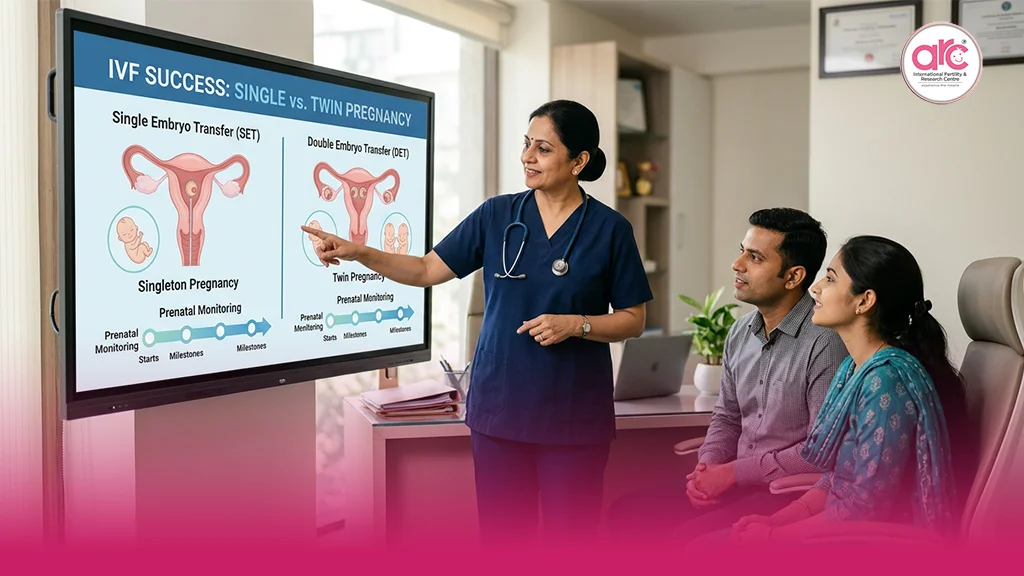
When many couples first hear about IVF, one of the most common questions they ask is, “What are the chances of twins with IVF?” It’s easy to understand why. For years, IVF was closely associated with twin pregnancies, leading many people to believe that having twins is a common or even expected outcome. When discussing what are the chances of twins with IVF, the answer depends largely on the number of embryos transferred and individual fertility factors.
The reality is quite different today.
Advances in IVF technology and embryo transfer techniques have significantly reduced the likelihood of twins. Modern fertility specialists aim to achieve one healthy pregnancy at a time because, although twins can be a joyful outcome, they also carry higher risks for both the mother and babies.
Understanding how twin pregnancies happen during IVF and why doctors often recommend transferring a single embryo can help you make informed decisions about your fertility treatment.
What Are the Chances of Twins with IVF?
The chance of twins with IVF depends largely on how many embryos are transferred during treatment.
If a single embryo transfer (SET) is performed, the chance of twins is generally less than 2%, usually because one embryo unexpectedly splits into identical twins.
If two embryos are transferred, the chance of twins increases considerably because both embryos may implant successfully. However, transferring two embryos does not guarantee twins, just as transferring one embryo does not guarantee a singleton pregnancy.
Today, most fertility specialists recommend transferring a single high-quality embryo whenever appropriate, particularly for younger women and those with good-quality embryos.
Why Were Twins More Common with IVF in the Past?
Years ago, IVF success rates were lower than they are today. To improve the chances of pregnancy, doctors often transferred two or even three embryos during the same cycle.
While this increased pregnancy rates, it also led to more twin and triplet pregnancies.
Modern IVF laboratories now achieve better embryo culture, improved freezing techniques, and more accurate embryo selection. As a result, transferring a single healthy embryo often provides excellent pregnancy rates while reducing the risk of multiple pregnancies.
How Does Embryo Transfer Affect the Chance of Twins?
The number of embryos transferred plays the biggest role in determining whether twins are possible.
Single Embryo Transfer
A single embryo transfer offers the safest balance between achieving pregnancy and reducing pregnancy complications.
Although rare, identical twins can still occur if the transferred embryo naturally divides after implantation.
Double Embryo Transfer
Many couples researching what are the chances of twins with IVF are surprised to learn that modern fertility care now prioritises safer single embryo transfer.
When two embryos are transferred, several outcomes are possible:
- Neither embryo implants.
- One embryo implants, resulting in a singleton pregnancy.
- Both embryos implant, resulting in fraternal twins.
The decision to transfer two embryos is made only after carefully considering factors such as age, embryo quality, previous IVF history, and individual medical circumstances.
Identical Twins vs Fraternal Twins in IVF
IVF can result in either type of twin pregnancy.
Identical twins occur when a single embryo divides into two embryos after fertilisation. This can happen naturally in both IVF and natural conception.
Fraternal twins occur when two separate embryos implant successfully. This is more likely when two embryos are transferred during IVF.
Most IVF-related twin pregnancies are fraternal rather than identical.
Are Twin Pregnancies Riskier?
The Human Fertilisation and Embryology Authority (HFEA) also advises that elective single embryo transfer has helped significantly reduce multiple pregnancy rates while maintaining high IVF success rates. While many couples are excited by the idea of twins, doctors generally consider twin pregnancies to be high-risk pregnancies.
Compared with singleton pregnancies, twins are associated with a higher risk of:
- Premature birth
- Low birth weight
- Gestational diabetes
- Pregnancy-induced hypertension
- Preeclampsia
- Caesarean delivery
- Neonatal intensive care admission
For babies, being born too early may increase the likelihood of breathing difficulties, feeding challenges, and longer hospital stays.
Because of these risks, fertility specialists focus on achieving the birth of one healthy baby whenever possible.
Can You Choose to Have Twins with IVF?
Many couples ask whether they can request the transfer of two embryos to increase their chances of having twins.
In most cases, fertility specialists will recommend the approach that offers the safest outcome rather than the highest chance of twins.
If a patient has a good prognosis—such as younger age, high-quality embryos, or a first IVF cycle—a single embryo transfer is often recommended.
Double embryo transfer may be considered in selected situations, including repeated unsuccessful IVF cycles or specific medical circumstances, but the decision is always individualised.
Does Transferring Two Embryos Guarantee Twins?
No.
Even when two embryos are transferred:
- One embryo may implant.
- Both embryos may implant.
- Neither embryo may implant.
Implantation depends on many factors, including embryo quality, uterine receptivity, maternal age, hormonal balance, and overall reproductive health.
There is no IVF technique that can guarantee a twin pregnancy.
Although what are the chances of twins with IVF is an important concern, embryo quality and maternal age usually have a greater influence on overall IVF success.
Factors That Have a Bigger Impact on IVF Success
Although many people focus on the possibility of twins, several factors have a much greater influence on IVF success.
Maternal Age
Age remains one of the strongest predictors of IVF success because egg quality gradually declines over time.
Embryo Quality
Healthy embryos have a greater chance of implanting successfully and developing into healthy pregnancies.
Uterine Health
A receptive endometrial lining is essential for successful implantation.
IVF Laboratory Standards
Experienced embryologists, advanced laboratory conditions, and careful embryo culture contribute significantly to treatment outcomes.
Personalised Treatment
Every fertility journey is unique. Treatment plans based on individual medical history generally produce better outcomes than a one-size-fits-all approach.
How ARC Fertility Hospitals Approaches Embryo Transfer
At ARC Fertility Hospitals, embryo transfer decisions are guided by scientific evidence and personalised care rather than routine practice.
Rather than transferring multiple embryos simply to increase pregnancy chances, specialists carefully assess maternal age, embryo quality, previous IVF history, uterine health, and overall fertility profile before recommending the most appropriate transfer strategy.
Couples looking for a Fertility Hospital in Chennai often ask whether transferring more embryos automatically improves success. In reality, modern IVF aims to maximise the chance of a healthy live birth while reducing avoidable pregnancy complications.
Those searching for the Best Fertility Hospital in Chennai should look for a centre that balances hope with evidence-based treatment, ensuring every decision supports both maternal and baby health.
Final Takeaway
What are the chances of twins with IVF? While IVF can result in twin pregnancies, the likelihood depends largely on the number of embryos transferred. With modern single embryo transfer practices, the chance of twins is low, and this approach is now considered the safest option for many patients.
Although twins may seem appealing, they also carry higher pregnancy risks. Today’s fertility care focuses on achieving one healthy baby at a time through personalised treatment and careful embryo transfer decisions.
If you’re considering IVF and have questions about embryo transfer, pregnancy success, or multiple pregnancies, speaking with an experienced fertility specialist can help you understand the safest and most effective approach for your individual fertility journey.
Frequently Asked Questions
What are the chances of twins with IVF?
The chance depends mainly on the number of embryos transferred. Single embryo transfer carries a very low risk of twins, while transferring two embryos increases the likelihood.
Can one embryo split into twins during IVF?
Yes. A single embryo can occasionally divide after transfer, resulting in identical twins. This is uncommon.
Is twin pregnancy riskier than a single pregnancy?
Yes. Twin pregnancies have a higher risk of premature birth, low birth weight, gestational diabetes, and pregnancy-related complications.
Can I choose to have twins through IVF?
Not always. Fertility specialists recommend the number of embryos to transfer based on your age, embryo quality, medical history, and overall chance of a healthy pregnancy.
Does transferring two embryos guarantee twins?
No. Both embryos may implant, only one may implant, or neither may implant. There is no guarantee of a twin pregnancy.