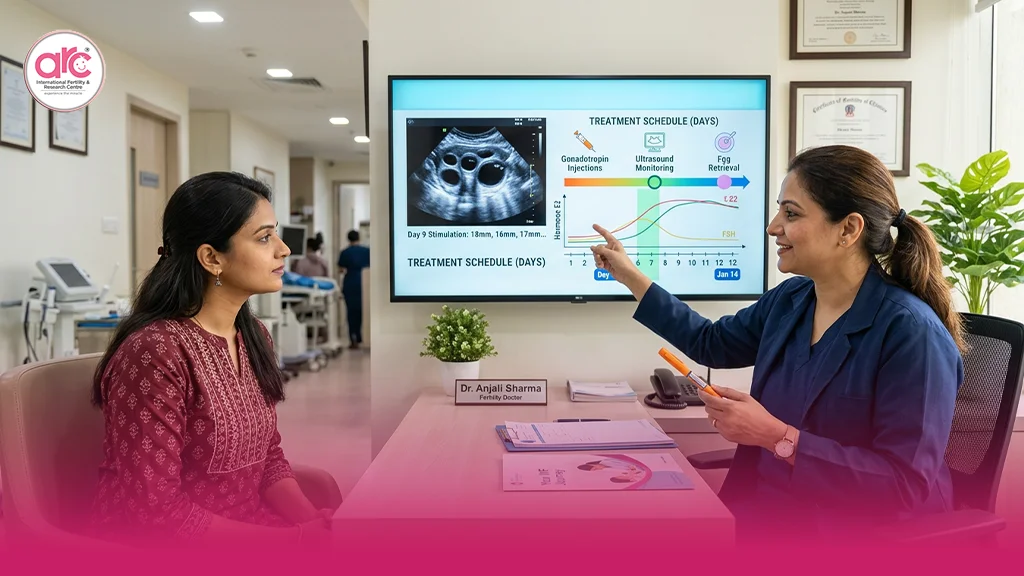
Starting IVF treatment is a significant milestone for many couples. Along with hope and excitement, it’s also natural to feel anxious about the medications involved especially the daily injections. One of the first questions patients often ask is, “Why do I need these injections, and what exactly do they do?”
IVF gonadotropin injections are an essential part of the IVF process. They help stimulate your ovaries to produce multiple mature eggs instead of the single egg that develops during a natural menstrual cycle. This increases the chances of retrieving healthy eggs, creating good-quality embryos, and ultimately achieving a successful pregnancy.
Understanding how these injections work and what to expect can make your IVF journey feel much less overwhelming.
What Are IVF Gonadotropin Injections?
Gonadotropins are fertility medications that contain hormones naturally produced by the body to regulate ovulation. During IVF, these hormones are given as injections to encourage the ovaries to develop multiple follicles, each of which may contain a mature egg.
The most commonly used hormones include:
- Follicle Stimulating Hormone (FSH): Stimulates the growth of ovarian follicles.
- Luteinizing Hormone (LH): Supports follicle development and egg maturation.
Depending on your age, ovarian reserve, hormone levels, and fertility history, your fertility specialist may prescribe FSH alone or a combination of FSH and LH to achieve the best response.
Why Are Gonadotropin Injections Necessary During IVF?
In a natural menstrual cycle, only one egg typically matures and is released. During IVF, the goal is different.
Not every retrieved egg will fertilize successfully, and not every embryo will develop into a healthy pregnancy. By stimulating multiple follicles, IVF provides more mature eggs, giving embryologists a better chance of selecting the healthiest embryos for transfer.
The benefits of gonadotropin injections include:
- Producing multiple mature eggs
- Increasing the number of embryos available
- Improving embryo selection
- Enhancing the overall chances of IVF success
Every IVF treatment plan is personalized because every woman’s ovaries respond differently to fertility medications.
If you’d like to understand this stage in greater detail, read our guide on Ovarian Stimulation in IVF.
When Do IVF Gonadotropin Injections Begin?
Most women begin gonadotropin injections on Day 2 or Day 3 of their menstrual cycle.
The injections are usually taken daily for 8 to 12 days, although the duration varies depending on how your ovaries respond.
During this period, your fertility specialist will closely monitor your progress through:
- Transvaginal ultrasound scans
- Blood hormone tests
- Follicle measurements
These regular appointments allow medication doses to be adjusted if necessary and help determine the ideal timing for the trigger injection before egg retrieval.
How Are the Injections Given?
Most IVF gonadotropin medications are administered as subcutaneous injections, meaning they are injected just beneath the skin.
The most common injection sites are:
- Lower abdomen
- Upper thigh
Although many patients feel nervous before their first injection, the needles are very fine, and most women describe the discomfort as minimal.
Your fertility team will teach you exactly how to prepare and administer the injections safely at home. After the first few days, many patients become comfortable with the routine.
Are IVF Gonadotropin Injections Painful?
This is one of the most common concerns among first-time IVF patients.
While everyone experiences injections differently, most women report only mild discomfort that lasts for a few seconds. Some may notice slight redness or bruising around the injection site, but these effects usually disappear quickly.
Using the correct injection technique and rotating injection sites can help minimize discomfort throughout the treatment cycle.
Common Side Effects
Like any medication, gonadotropin injections may cause temporary side effects. Fortunately, they are generally mild and manageable.
Common side effects include:
- Mild bloating
- Abdominal fullness
- Breast tenderness
- Headache
- Mood changes
- Mild bruising at the injection site
These symptoms occur because the ovaries are actively responding to stimulation and typically improve after egg retrieval.
It’s important to follow your medication schedule exactly as prescribed and attend every monitoring appointment to ensure a safe and effective response.
Tips to Make IVF Injections Easier
Daily injections may seem intimidating initially, but a few simple habits can make the experience much smoother.
- Take your injections at the same time every day.
- Rotate injection sites to reduce soreness.
- Stay well hydrated throughout treatment.
- Follow your medication schedule carefully.
- Don’t skip monitoring appointments.
- Contact your fertility clinic if you accidentally miss a dose or experience unusual symptoms.
Remember, your fertility care team is there to support you throughout the entire process. Asking questions and seeking reassurance is always encouraged.
Is There a Risk of Ovarian Hyperstimulation Syndrome (OHSS)?
One of the potential risks associated with ovarian stimulation is Ovarian Hyperstimulation Syndrome (OHSS). This condition occurs when the ovaries respond too strongly to fertility medications, leading to enlarged ovaries and fluid buildup in the abdomen.
Fortunately, severe OHSS is uncommon. Most cases are mild and resolve on their own with rest, hydration, and close medical supervision.
Your fertility specialist will carefully monitor follicle growth and hormone levels throughout treatment. If there’s any sign that your ovaries are responding excessively, your medication dosage or treatment plan can be adjusted to reduce the risk.
Regular monitoring is one of the key reasons why IVF medications should always be taken under the guidance of an experienced fertility team.
What Happens After the Injections?
Once your follicles have reached the ideal size, you’ll receive a trigger injection. This medication helps complete the final stage of egg maturation before retrieval.
Approximately 34 to 36 hours later, your doctor will perform the egg retrieval procedure under mild sedation. The collected eggs are then fertilized in the embryology laboratory using your partner’s or donor sperm.
The resulting embryos are carefully monitored for several days before the healthiest embryo is selected for transfer.
If you’d like to understand the complete IVF journey, read our detailed guide on IVF Treatment in Chennai – Procedure & How It Works
Why Personalized Treatment Matters
No two women respond to fertility medications in exactly the same way.
Factors such as age, ovarian reserve, hormone levels, body weight, and previous fertility history all influence how the ovaries respond to gonadotropin injections. That’s why IVF treatment should always be tailored to the individual rather than following a standard protocol.
If you’re seeking treatment at a fertility hospital in Chennai, choosing a center that offers personalized ovarian stimulation protocols, advanced monitoring, and experienced fertility specialists can help ensure both safety and better treatment outcomes.
The Bottom Line
IVF gonadotropin injections are one of the most important steps in the IVF journey. While the idea of daily injections may seem intimidating initially, they play a vital role in helping the ovaries produce multiple healthy eggs, increasing the chances of successful fertilization and embryo development.
With proper guidance, regular monitoring, and a personalized treatment approach, most women complete this phase safely and with confidence.
At ARC Fertility Hospitals, every IVF treatment plan is designed around each patient’s unique fertility profile to provide compassionate, evidence-based care throughout the journey. If you’re looking for the best fertility hospital in Chennai, choosing a center with experienced fertility specialists, advanced embryology laboratories, and individualized treatment can make a meaningful difference in your path to parenthood.
If you’re considering IVF or have questions about fertility medications, consulting a fertility specialist is the first step toward understanding your options and building a treatment plan that’s right for you.
Frequently Asked Questions
1. What are IVF gonadotropin injections?
IVF gonadotropin injections are fertility medications containing hormones such as FSH and LH that stimulate the ovaries to produce multiple mature eggs during an IVF cycle.
2. How long do I need to take gonadotropin injections?
Most women take gonadotropin injections for 8 to 12 days, depending on how their ovaries respond to the medication.
3. Are IVF gonadotropin injections painful?
The injections use very fine needles and are generally associated with only mild discomfort. Most patients become comfortable administering them after the first few days.
4. What are the common side effects of gonadotropin injections?
Common side effects include bloating, abdominal fullness, breast tenderness, mild bruising at the injection site, headaches, and temporary mood changes.
5. Are gonadotropin injections safe?
Yes. Gonadotropin injections are widely used in IVF and are considered safe when prescribed and monitored by experienced fertility specialists. Regular ultrasound scans and blood tests help ensure that the ovaries respond appropriately while minimizing the risk of complications such as OHSS.