
Overview
The pain arrives before the period does.
A deep, heavy aching in the lower abdomen that is nothing like ordinary period cramps. More diffuse, more persistent, sometimes radiating into the lower back and thighs before the bleeding even begins.
For women living with adenomyosis, this is the monthly reality, a condition where endometrial tissue infiltrates the muscular wall of the uterus itself, causing it to inflame, swell and contract with an intensity that painkillers often barely touch.
Medical treatment matters. But what you eat consistently, day after day, can meaningfully change the inflammatory environment inside the body that drives the pain.
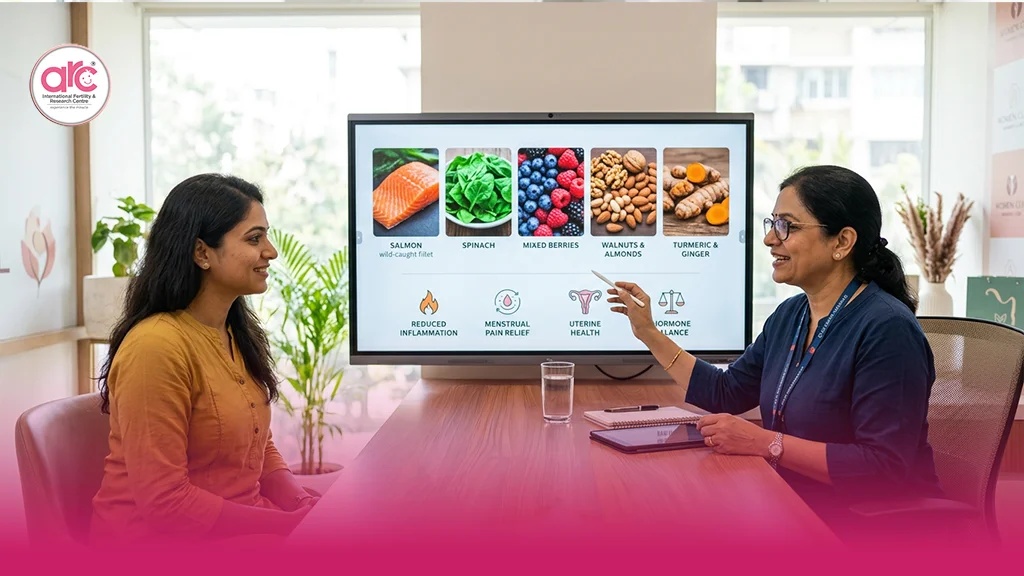
Here are 5 foods to relieve adenomyosis cramps and pain naturally, each one selected for specific anti-inflammatory, hormonal or tissue-protective mechanisms backed by clinical evidence.
Why Inflammation Is at the Centre of Adenomyosis Pain?
Before the food list, it is the biology worth considering.
Adenomyosis is a gynaecological condition characterised by the infiltration of endometrial tissue into the myometrium layer of the uterus. This displaced tissue behaves exactly as uterine lining does. It responds to estrogen, builds up, inflames and attempts to shed each cycle. But trapped inside the uterine muscle wall, it has nowhere to go.
The result is chronic, cyclical inflammation. And inflammation, specifically the production of inflammatory prostaglandins in the uterine tissue, is the primary driver of the pain.
An anti-inflammatory diet rich in plant-based foods and omega-3 fatty acids may help manage adenomyosis symptoms by reducing inflammation and modulating the gut microbiome.
Diet cannot remove the displaced tissue. But it can reduce the inflammatory burden that makes the pain so severe and for many women, that reduction is meaningful and measurable.
Food 1: Oily Fish and Omega-3 Rich Seeds
This is the most powerful anti-inflammatory food category available for adenomyosis pain management.
Foods rich in omega-3 fatty acids such as salmon, mackerel and sardines are particularly beneficial due to their anti-inflammatory properties. Omega-3 fatty acids work by shifting the body’s prostaglandin balance, away from the inflammatory prostaglandin E2 that drives uterine cramping and toward the less inflammatory prostaglandin E3 that reduces it.
In South Indian cooking, sardines (mathi meen) and mackerel (ayala) are some of the most accessible and affordable oily fish available. Eating them 2-3 times a week provides a consistent anti-inflammatory signal.
For vegetarian or plant-based alternatives: Flaxseeds, chia seeds and hemp seeds are the most concentrated plant sources of omega-3. A tablespoon of ground flaxseed stirred into curd or sprinkled over rice provides a practical daily dose.
Food 2: Turmeric With Black Pepper
Turmeric contains curcumin, a compound with strong anti-inflammatory and antioxidant properties that can reduce pain and inflammation. Turmeric’s active compound curcumin has strong anti-inflammatory properties that may reduce pain and inflammation in adenomyosis.
But turmeric consumed as a cooking spice alone delivers very low curcumin bioavailability. The key is pairing it with black pepper. Piperine, the active compound in pepper, increases curcumin absorption by up to 2,000%.
In Indian cooking, this combination already exists naturally. Most spice blends, dals and vegetable preparations use both turmeric and black pepper together. The habit is already there. What changes is intentionality, using a generous pinch of turmeric with freshly ground black pepper in at least one meal every day, rather than a cursory addition.
Golden milk (haldi doodh with a pinch of black pepper) is particularly effective consumed before bed on the days leading up to menstruation, when inflammation is building toward its cycle peak.
Food 3: Cruciferous Vegetables for Estrogen Balance
Adenomyosis is an estrogen-sensitive condition. Similar to fibroids, adenomyosis is sensitive to excess estrogen and one of the best ways to combat painful symptoms is to limit estrogen excess.
Cruciferous vegetables (broccoli, cauliflower, cabbage, Brussels sprouts) contain a compound called indole-3-carbinol that supports liver-estrogen metabolism. The liver processes and eliminates excess estrogen from the body. When this pathway works efficiently, circulating estrogen levels are lower and the estrogen-driven inflammatory cycle that drives adenomyosis activity is less intense.
Cruciferous vegetables including broccoli, kale, brussels sprouts and cauliflower aid in balancing estrogen by supporting its removal from the body.
In South Indian cooking, cabbage thoran, cauliflower sabzi and broccoli stir fry are all practical, daily-meal-ready options. Aim for one serving of cruciferous vegetables each day, steamed, sautéed or lightly stir-fried with minimal oil to preserve the beneficial compounds.
Food 4: Ginger for Prostaglandin Reduction
Ginger is one of the most researched natural anti-inflammatory agents for menstrual pain and it works through a mechanism directly relevant to adenomyosis.
Ginger inhibits cyclooxygenase and lipoxygenase, the same enzyme pathways that pharmaceutical NSAIDs like ibuprofen target to reduce prostaglandin production. Several studies have found ginger supplementation as effective as ibuprofen for reducing primary dysmenorrhoea pain scores.
Vitamins B1, B6, E and compounds found in ginger can help reduce menstrual pain in women with conditions involving uterine inflammation.
In practical South Indian terms: Fresh ginger added to chai, grated into rasam, used in curries and consumed as warm ginger water with honey in the mornings during the painful days of the cycle all deliver meaningful anti-inflammatory benefits.
A teaspoon of freshly grated ginger in warm water, taken twice daily, 3-4 days before and during menstruation, is the most targeted approach for pain management.
Food 5: Leafy Green Vegetables for Iron and Magnesium
This final food category addresses two nutritional deficiencies that amplify adenomyosis pain.
Iron: Heavy menstrual bleeding, one of the defining symptoms of adenomyosis, depletes iron stores consistently. Iron deficiency (anaemia) causes fatigue, worsened cramping and reduced pain tolerance. Leafy greens (spinach, moringa leaves, fenugreek leaves) provide non-haem iron that, combined with vitamin C from lemon juice, absorbs meaningfully. Eating spinach dal with a squeeze of lime, or moringa sambar daily, supports iron replenishment that heavy periods continuously drain.
Magnesium: Magnesium relaxes smooth muscle, including the smooth muscle of the uterine wall. Low magnesium levels are associated with more severe uterine cramping. Dark leafy greens are among the richest dietary sources of magnesium alongside pumpkin seeds and almonds.
Leafy greens including spinach, kale and moringa contain antioxidants that reduce inflammation and vitamins E and B complex that play a significant role in reducing menstrual pain.
Diet Is One Layer; Medical Treatment Is Another
These five foods work. Consistently, over weeks and months, they reduce the inflammatory load that makes adenomyosis pain so exhausting.
But they cannot reduce fibrotic tissue. They cannot thin the uterine wall where adenomyosis has embedded. And they cannot replace the medical evaluation that determines whether treatment: hormonal, surgical or assisted reproductive is needed.
For women experiencing heavy periods alongside adenomyosis pain, our guide on adenomyosis, heavy periods and where to get the right treatment covers the complete treatment landscape. And for Tamil-speaking patients navigating the distinction between adenomyoma and adenomyosis, our guide on adenomyoma vs adenomyosis in Tamil explains the difference clearly.
According to the eBioMedicine 2025 systematic review on adenomyosis, while there are currently no approved pharmacological therapies specifically targeting adenomyosis, dietary and lifestyle modifications are increasingly recognised as complementary approaches to symptom management alongside conventional medical care.
At a dedicated fertility hospital in Chennai, the adenomyosis consultation at ARC addresses both layers, the dietary and lifestyle foundation that reduces inflammation and the medical evaluation that determines what treatment is needed beyond that foundation.
At the best fertility hospital in Chennai, ARC approaches adenomyosis as the complex, often underdiagnosed condition it is, taking the pain seriously, investigating it properly and building a management plan that works with your body rather than simply managing symptoms month to month.
Final Thoughts
The pain does not have to define every cycle.
Food will not cure adenomyosis.
But it can change the environment inside your body, quietly, consistently, in ways that make the pain less loud.
Start with what is on your plate.
Then bring the rest to ARC.
Frequently Asked Questions (FAQs)
Q1. Can diet alone cure adenomyosis?
No! Diet cannot remove or reverse adenomyosis tissue. But an anti-inflammatory diet consistently reduces the inflammatory burden that drives pain intensity, making it a meaningful complement to medical treatment.
Q2. Which is the single most effective anti-inflammatory food for adenomyosis?
Oily fish rich in omega-3 fatty acids (sardines, mackerel, salmon), have the most consistent anti-inflammatory evidence for conditions involving uterine inflammation. Combined with turmeric and black pepper, these two categories together provide the most targeted dietary relief.
Q3. Should I avoid dairy if I have adenomyosis?
Some women with adenomyosis report symptom improvement when reducing full-fat dairy, as certain dairy products may increase estrogen exposure. This is not universally supported by research, but if you notice worsening symptoms after dairy, a trial reduction for 6-8 weeks is worth discussing with your specialist.
Q4. How long before dietary changes improve adenomyosis pain?
Most women notice measurable improvement in pain intensity after 6-8 weeks of consistent anti-inflammatory dietary changes. The effect is cumulative. It builds over months of consistent practice rather than appearing immediately.
Q5. Can adenomyosis affect fertility even if pain is managed naturally?
Yes, while dietary management can reduce pain and inflammation, adenomyosis can affect uterine structure and implantation regardless of symptom severity. Women with adenomyosis who are trying to conceive should seek specialist fertility evaluation alongside dietary management.