When pregnancy does not happen as expected, the first feeling is often confusion. Many women wonder whether they waited too long, whether a missed diagnosis is involved, or whether fertility treatment automatically means IVF. In reality, Assisted Reproductive Technology (ART): Types (IVF, IUI, ICSI), Process & Success Rates is a broad area, and the right treatment depends on age, ovarian reserve, sperm health, fallopian tube status, duration of infertility and previous pregnancy history.
ART is not one single treatment. It is a group of medical techniques designed to support fertilisation, embryo development or conception when natural pregnancy is difficult. For some couples, a simpler treatment such as IUI may be enough. For others, IVF or ICSI may offer a more appropriate route. The aim is not to rush into the most advanced option, but to choose the method that matches the medical reason behind the delay.
What Is Assisted Reproductive Technology?
Assisted Reproductive Technology refers to fertility treatments where eggs, sperm or embryos are medically handled to improve the chance of pregnancy. In everyday fertility conversations, ART usually includes IVF and ICSI, while IUI is often discussed alongside ART because it is a commonly used fertility treatment and may be recommended before IVF in selected cases.
At ARC Fertility Hospitals, fertility evaluation usually begins with understanding both partners, not only the woman. Ovulation pattern, ovarian reserve, uterus health, tubal patency, semen quality, age and lifestyle factors are all considered before a treatment plan is discussed. This matters because two women with the same symptom, such as irregular cycles, may need very different approaches.
IUI: A Simpler First Step for Selected Couples
Intrauterine insemination, or IUI, is a treatment where prepared sperm is placed directly inside the uterus around the time of ovulation. It may be considered when the fallopian tubes are open, ovulation is happening or can be induced, and sperm parameters are reasonably suitable.
IUI can be helpful in mild male factor infertility, unexplained infertility, ovulation-related concerns and situations where timing intercourse is difficult. It is less invasive than IVF, but it also has limitations. If the tubes are blocked, sperm count is severely low, ovarian reserve is reduced, or age-related fertility decline is significant, doctors may advise moving to IVF rather than spending many cycles on IUI.
For women comparing clinics and treatment options, choosing a Fertiliy hospital in Chennai with structured fertility assessment can help avoid both undertreatment and overtreatment.
IVF: When Fertilisation Happens Outside the Body
In vitro fertilisation, or IVF, is one of the most recognised forms of ART. In IVF, the ovaries are stimulated with medications to develop multiple eggs. These eggs are collected through a minor procedure and fertilised with sperm in a laboratory. The resulting embryos are observed, and a suitable embryo is transferred into the uterus.
IVF may be advised for blocked fallopian tubes, moderate to severe male factor infertility, advanced maternal age, endometriosis-related infertility, low ovarian reserve, repeated IUI failure or unexplained infertility after appropriate evaluation. It is also used in fertility preservation and donor gamete treatments when medically indicated.
Many women feel anxious about IVF because they imagine it as a long, painful or emotionally overwhelming process. While it does involve injections, monitoring scans, egg retrieval and waiting periods, a well-explained IVF plan can reduce fear. Most women find the uncertainty harder than the procedures themselves. Clear counselling about each step, possible cycle cancellation, embryo development and transfer timing can make the journey feel more manageable.
ICSI: A More Precise Fertilisation Technique
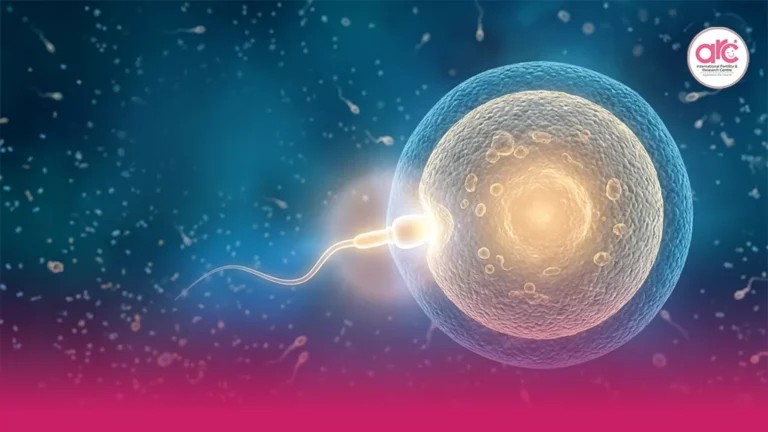
Intracytoplasmic sperm injection, or ICSI, is often used along with IVF. In ICSI, a single sperm is injected directly into an egg in the laboratory. This technique is especially useful when sperm count, movement or shape is significantly affected, or when previous IVF fertilisation has been poor.
It is important to understand that ICSI is not a separate shortcut to pregnancy. It improves the way fertilisation is attempted in the lab, but pregnancy still depends on egg quality, sperm quality, embryo development, uterine receptivity and age-related factors. This is why a doctor may recommend ICSI for one couple and standard IVF insemination for another.
The ART Process: What Usually Happens?
Although protocols vary, most fertility treatment begins with a detailed consultation and testing. Blood tests may assess ovarian reserve and hormones. Ultrasound helps evaluate the ovaries and uterus. Semen analysis checks male fertility parameters. Tubal testing may be advised when IUI is being considered.
Once the diagnosis is clearer, the doctor discusses the most suitable treatment. In IUI, ovulation may be tracked naturally or supported with medicines, followed by sperm preparation and insemination. In IVF or ICSI, ovarian stimulation is monitored with scans and blood tests, eggs are retrieved, fertilisation is performed in the lab, and embryo transfer is planned based on embryo and uterine factors.
Some women complete an IVF cycle with a fresh embryo transfer. Others may be advised to freeze embryos and transfer later, especially if hormone levels, uterine lining, ovarian response or medical safety factors suggest waiting. This is not a failure; sometimes a delayed transfer is chosen to create a better environment for implantation.
What Affects ART Success Rates?
Success rates are one of the most searched and most misunderstood parts of fertility care. No responsible fertility specialist can promise pregnancy in one cycle. ART success depends on several factors, especially the woman’s age, egg reserve, egg quality, sperm quality, embryo quality, uterine health, lifestyle, medical conditions and previous treatment history.
In general, IVF offers higher chances per cycle than IUI in many infertility situations, but it is also more intensive and costly. IUI may be reasonable when the diagnosis is mild and time is not a major limiting factor. ICSI may improve fertilisation chances in specific male factor cases, but it does not remove all biological limits.
If you are trying to understand how age and treatment factors may influence your chances, an IVF success rate calculator can be a useful starting point. It should not replace consultation, but it can help you ask better questions during your fertility visit.
Cost, Time and Emotional Readiness
Cost concerns are valid. IUI is usually less expensive per cycle, but repeated unsuccessful cycles can add emotional and financial strain. IVF has a higher upfront cost because it includes medications, monitoring, egg retrieval, laboratory procedures and embryo transfer. ICSI may add lab-related cost when recommended.
The timeline also differs. IUI often fits within one menstrual cycle. IVF stimulation and egg retrieval usually happen over a few weeks, though embryo transfer may occur in the same cycle or a later cycle. The waiting period after transfer can be emotionally difficult, and women should be encouraged to seek support rather than silently carry the stress.
For women looking for the Best Fertiliy hospital in Chennai, the decision should go beyond advertisements or success claims. Look for transparent counselling, individualised protocols, ethical communication, laboratory strength, and doctors who explain why a treatment is being recommended.
ART Treatment Comparison at a Glance
| Treatment | How It Works | Often Considered When | Key Limitation |
|---|---|---|---|
| IUI | Prepared sperm is placed inside the uterus around ovulation. | Tubes are open, ovulation is possible, and sperm parameters are suitable. | Lower success per cycle compared with IVF in many diagnosed infertility cases. |
| IVF | Eggs are collected and fertilised with sperm in a laboratory before embryo transfer. | Blocked tubes, endometriosis, unexplained infertility, age concerns or failed IUI. | Requires injections, monitoring, procedures and higher financial planning. |
| ICSI | A single sperm is injected directly into an egg during IVF. | Significant male factor infertility or previous poor fertilisation. | Helps fertilisation but cannot guarantee embryo quality or pregnancy. |
How to Choose the Right ART Option
The right ART path is not decided by popularity. It is decided by diagnosis, urgency and realistic chances. A 28-year-old woman with open tubes and mild ovulation difficulty may be managed differently from a 39-year-old woman with low ovarian reserve. Similarly, a couple with severe male factor infertility may need ICSI sooner than a couple with unexplained infertility and reassuring test results.
A good fertility plan should answer three questions clearly: What is the likely reason pregnancy has not happened? Which treatment addresses that reason best? How many attempts are reasonable before changing strategy? When these questions are answered honestly, ART becomes less frightening and more structured.
Assisted reproduction is not about replacing hope with technology. It is about using medical understanding to give hope a clearer direction. With the right evaluation, careful counselling and realistic expectations, women and couples can make fertility decisions with more confidence and less confusion.
Frequently Asked Questions
Get answers to common questions about IVF treatment at ARC Fertility
Is IUI considered Assisted Reproductive Technology?
IUI is commonly discussed with fertility treatments, although strict definitions of ART often focus on procedures where eggs or embryos are handled outside the body, such as IVF and ICSI. Clinically, IUI may still be recommended as an earlier treatment option when tubes are open, ovulation is possible and sperm quality is suitable.
How do I know whether I need IUI, IVF or ICSI?
The choice depends on your age, ovarian reserve, fallopian tube status, semen analysis, ovulation pattern, uterus health and previous treatment history. IUI may suit milder cases, IVF may be needed for blocked tubes or repeated treatment failure, and ICSI is usually considered when sperm-related fertilisation problems are significant.
Does IVF guarantee pregnancy?
No. IVF can improve the chance of pregnancy in many infertility situations, but it cannot guarantee success. Outcomes depend on egg quality, sperm quality, embryo development, uterine receptivity, age and underlying medical conditions. A responsible fertility plan should always explain both possibilities and limitations.
Is ICSI better than IVF for everyone?
Not necessarily. ICSI is a fertilisation technique used within an IVF cycle and is especially helpful in certain male factor infertility cases or previous poor fertilisation. If sperm parameters are normal, standard IVF may be appropriate. Your doctor will recommend ICSI only when it adds meaningful benefit.
How long does an IVF cycle usually take?
An IVF cycle commonly involves ovarian stimulation and monitoring over a few weeks, followed by egg retrieval, fertilisation and embryo transfer planning. Some patients have a fresh transfer, while others may be advised to freeze embryos and transfer later depending on medical and uterine factors.
Why do ART success rates vary so much between women?
Success rates vary because fertility is influenced by multiple factors, especially age, ovarian reserve, egg and sperm quality, embryo quality, uterine health and diagnosis. Two women undergoing the same treatment may have different outcomes because their biological and medical situations are different.
When should a woman consider seeing a fertility specialist?
If you are under 35 and have been trying for 12 months, or 35 and above and trying for 6 months, it is sensible to seek fertility evaluation. You should consult earlier if you have irregular periods, known endometriosis, previous pelvic infection, recurrent miscarriage, low ovarian reserve concerns or a known male factor issue.