Overview
When you start PCOS treatment, something subtle shifts.
Not immediately in the mirror.
Not always on the scale.
The shift happens internally. Quietly. Gradually.
After months or years of irregular cycles, you begin watching your body more closely. You’re not just waiting for a period anymore. You’re looking for proof that ovulation is actually happening.
That vigilance is understandable.
At a fertility hospital in Chennai, one of the most common questions after starting PCOS treatment is simple but loaded.
How will I know if I’m finally ovulating?
Why Ovulation Feels Different After PCOS
PCOS disrupts ovulation by interfering with hormonal signals. Androgen excess, insulin resistance, and irregular follicle development all contribute to cycles where eggs don’t release predictably.
Treatment aims to correct that imbalance. Once medication, lifestyle changes, or ovulation induction begin working, ovulation often returns before cycles look “perfect” on paper.
This means signs can be present even if periods are still adjusting.
Learning to recognise these signs helps you understand whether treatment is working, not just whether bleeding occurs.
Basal Body Temperature: The Quiet Confirmation
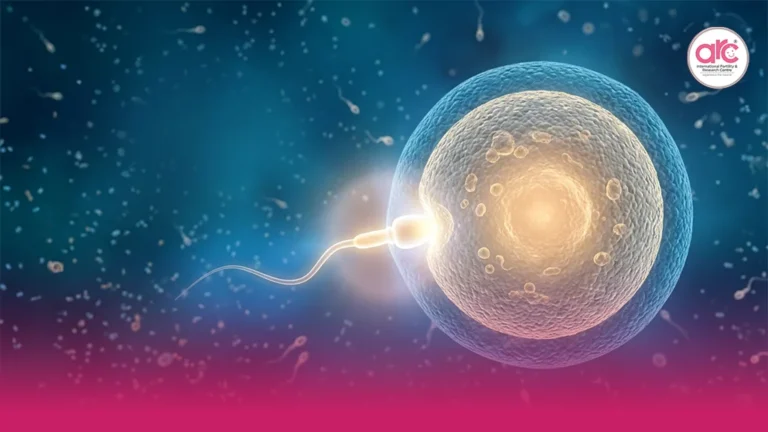
Basal Body Temperature, or BBT, is one of the most reliable indicators that ovulation has already happened.
After ovulation, progesterone rises. Progesterone increases body temperature slightly, usually by about 0.3 to 0.5°C.
What you’re looking for is not a single spike, but a sustained rise that lasts at least three days.
In PCOS, charts used to look erratic. After effective treatment, patterns often become clearer.
BBT does not predict ovulation. It confirms it. That confirmation can be reassuring when cycles were previously unpredictable.
Cervical Mucus: The Body’s Fertility Signal
Cervical mucus often changes before ovulation.
As estrogen rises, mucus becomes clearer, stretchier, and more slippery. Many women describe it as resembling raw egg whites.
This type of mucus supports sperm survival and movement. Its return is a strong sign that estrogen levels are improving and ovulation is approaching.
After PCOS treatment, this change can feel unfamiliar if you’ve never noticed it before.
Dry or sticky mucus turning slippery is not coincidence. It is hormonal communication.
LH Surges: Useful, With Caution
Ovulation predictor kits measure LH, the hormone that triggers egg release.
In PCOS, LH can be elevated at baseline, which makes these kits unreliable before treatment.
After treatment, LH patterns may normalise. You may start seeing a clearer surge rather than constant positives.
Still, LH kits should be used alongside other signs, not alone.
A surge without ovulation can happen. A confirmed temperature rise after a surge tells you ovulation likely followed.
Mid-Cycle Sensations You May Notice
Some women feel ovulation physically.
This may include mild one-sided lower abdominal pain, pelvic heaviness, or increased awareness of the ovaries.
After PCOS treatment, these sensations may appear for the first time or become more noticeable.
They are not required for ovulation, but when they align with other signs, they add context.
Pain should always be mild. Severe pain warrants medical advice.
Changes in Cycle Length and Rhythm
One of the most encouraging signs after PCOS treatment is a shortening or regularising of cycle length.
Cycles moving closer to 26–35 days often indicate ovulation is becoming consistent.
You may still skip cycles occasionally. That does not mean treatment has failed. Hormonal systems recalibrate gradually.
The best fertility hospital in Chennai often reminds patients that ovulation returning once is progress. Consistency comes later.
Post-Ovulation Symptoms That Matter
After ovulation, progesterone dominates.
You may notice:
- Breast tenderness
- A sense of calm or fatigue
- Mild bloating
- Better sleep for some women
These luteal-phase symptoms were often absent in untreated PCOS cycles. Their return suggests progesterone is finally being produced.
Progesterone presence matters as much as egg release itself.
Why Periods Alone Are Not Proof
This is where many women get misled.
Bleeding does not always mean ovulation occurred.
Withdrawal bleeds or hormonally induced periods can happen without an egg ever being released.
That’s why tracking ovulation signs matters more than counting bleeding days.
Ovulation is the goal. Periods are the aftermath.
When Signs Are Subtle or Confusing
Not every woman experiences textbook symptoms.
Some ovulate quietly. Some notice only one sign. Some cycles are clearer than others.
If you’re unsure whether ovulation has truly returned, ultrasound monitoring or blood tests can confirm what your body is doing internally.
This is especially important when timing intercourse or fertility treatment precisely.
How Long Before These Signs Appear
Ovulation does not always return immediately after starting PCOS treatment.
Some women notice changes within weeks. Others take a few months as insulin sensitivity, androgen levels, and ovarian response improve.
If you are unsure how long the process takes, see What Is PCOS Treatment and How Long Does It Take to See Results? for a realistic timeline.
What These Signs Really Mean
Seeing ovulation signs after PCOS treatment is more than a fertility milestone.
It means your hormones are communicating again.
It means the ovaries are responding.
It means the system is reawakening.
This progress often comes before pregnancy does. That gap can feel frustrating, but it is still movement in the right direction.
A Grounding Truth to Hold Onto
Ovulation after PCOS treatment rarely arrives dramatically.
It arrives quietly. Through temperature shifts. Through mucus changes. Through cycles that begin to make sense again.
Noticing these signs does not guarantee immediate pregnancy. But it does tell you something important.
Your body is responding.
And for many women who once felt stuck in hormonal chaos, that response is the first real sign that fertility is no longer working against them.
It is finally beginning to cooperate.