
When you’re planning a pregnancy, it’s natural to focus on ovulation, healthy eating, and taking prenatal vitamins. But there’s another aspect of reproductive health that’s often overlooked sexually transmitted infections (STIs). Among them, chlamydia is one of the most common, and because it frequently causes no symptoms, many people don’t realise they have it until fertility becomes a concern.
So, can chlamydia cause infertility? The short answer is yes but not everyone with chlamydia becomes infertile. The greatest risk occurs when the infection goes undiagnosed or untreated for a long time. Early diagnosis and timely treatment can prevent many of the complications associated with chlamydia and protect your fertility.
If you’ve had chlamydia in the past or are worried about its impact on your chances of pregnancy, understanding how the infection affects reproductive health can help you make informed decisions.
What Is Chlamydia?
Chlamydia is a bacterial infection caused by Chlamydia trachomatis. It spreads through unprotected vaginal, anal, or oral sex and is one of the most frequently diagnosed sexually transmitted infections worldwide.
What makes chlamydia particularly concerning is that most people experience few or no symptoms. Without noticeable warning signs, the infection may remain untreated for months or even years, allowing it to spread within the reproductive tract.
Fortunately, chlamydia is usually treated effectively with antibiotics when detected early. The challenge is identifying the infection before it causes lasting damage.
How Can Chlamydia Affect Fertility?
Chlamydia itself does not directly cause infertility overnight. Instead, the infection may trigger inflammation that gradually damages reproductive organs if left untreated.
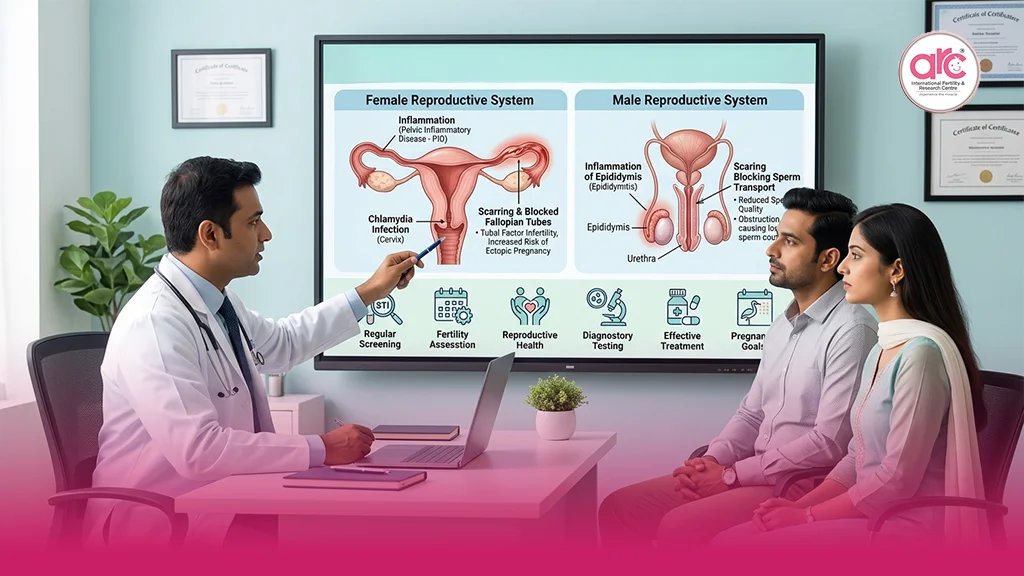
In women, the infection usually starts in the cervix. If it travels upward into the uterus and fallopian tubes, it can lead to Pelvic Inflammatory Disease (PID). This inflammation may result in scar tissue or blocked fallopian tubes, making it difficult for sperm and egg to meet naturally.
Healthy fallopian tubes are essential because they:
- Capture the egg after ovulation
- Allow fertilisation to occur
- Transport the embryo safely to the uterus
When these tubes become scarred, the chances of natural conception decrease, and the risk of ectopic pregnancy also increases.
The reassuring news is that early treatment significantly lowers the risk of permanent reproductive damage.
Can Chlamydia Affect Male Fertility?
Yes. Although female fertility receives more attention, untreated chlamydia can also affect men.
The infection may spread to the epididymis—the tube where sperm mature and are stored—causing inflammation known as epididymitis. Some men experience:
- Testicular pain or swelling
- Pain during urination
- Penile discharge
- Discomfort during ejaculation
Persistent inflammation may affect sperm transport and, in some cases, sperm quality.
Because male infertility often develops silently, fertility specialists usually recommend a semen analysis when couples experience difficulty conceiving.
Symptoms You Should Not Ignore
One of the biggest challenges with chlamydia is that it often causes no symptoms at all.
When symptoms do appear, women may notice:
- Unusual vaginal discharge
- Burning while passing urine
- Bleeding between periods
- Pain during intercourse
- Lower abdominal or pelvic pain
Men may experience:
- Burning during urination
- Discharge from the penis
- Pain or swelling in one or both testicles
These symptoms can resemble other infections, so laboratory testing is the only reliable way to confirm the diagnosis.
Can You Still Get Pregnant After Chlamydia?
Yes.
Many women who receive treatment before significant reproductive damage occurs go on to conceive naturally.
However, if the infection has caused scarring of the fallopian tubes, fertility may be affected. The extent of damage varies from person to person, which is why fertility assessment becomes important rather than assuming the worst.
At ARC Fertility Hospitals, fertility specialists evaluate each couple individually instead of making decisions based solely on a past infection.
How Do Doctors Check Whether Chlamydia Has Affected Fertility?
If you’ve been trying to conceive without success, your doctor may recommend a fertility evaluation to understand whether chlamydia has caused any lasting effects.
Investigations may include:
- Medical and reproductive history
- Pelvic ultrasound
- Hormone testing
- Ovarian reserve assessment
- Semen analysis for the male partner
- Hysterosalpingography (HSG) to check whether the fallopian tubes are open
- Additional tests when clinically appropriate
Rather than focusing on one factor alone, fertility specialists evaluate ovulation, sperm health, tubal function, and uterine health together.
If you’re unsure where to begin, reading our guide on Pelvic Inflammatory Disease Symptoms: Why Women Should Not Ignore Them can help you understand how untreated infections may affect reproductive health.
Does Chlamydia Mean You Will Need IVF?
Not necessarily.
Treatment depends on how much the infection has affected fertility.
If the infection is diagnosed early and the fallopian tubes remain healthy, many couples conceive naturally after completing antibiotics.
If fertility treatment is needed, the recommendation depends on several factors.
IUI may be considered when:
- At least one fallopian tube is open
- Ovulation is occurring normally
- Sperm quality is suitable
- There are no major tubal abnormalities
IVF may be recommended when:
- Both fallopian tubes are blocked
- Severe tubal damage is present
- Other infertility factors coexist
- Pregnancy has not occurred despite previous treatments
IVF bypasses damaged fallopian tubes because fertilisation takes place in the laboratory before the embryo is transferred into the uterus.
Choosing between IUI and IVF depends on age, ovarian reserve, sperm quality, duration of infertility, and overall reproductive health not simply a history of chlamydia.
Can Chlamydia Be Prevented?
Yes, and prevention plays an important role in protecting future fertility.
Simple steps include:
- Practising safe sex using condoms
- Undergoing STI screening when appropriate
- Seeking medical care for unusual discharge or pelvic pain
- Completing the full course of antibiotics if diagnosed
- Ensuring both partners receive treatment to prevent reinfection
- Avoiding unprotected intercourse until treatment is complete
These measures not only reduce the spread of infection but also lower the risk of fertility-related complications.
When Should You See a Fertility Specialist?
You should consider a fertility evaluation if:
- You’ve been trying to conceive for 12 months without pregnancy (or 6 months if you’re 35 or older)
- You have a history of chlamydia or pelvic inflammatory disease
- You’ve experienced an ectopic pregnancy
- Your periods are irregular
- You have persistent pelvic pain
- Your partner has known sperm concerns
Many couples begin their search for the Best Fertility Hospital in Chennai when pregnancy doesn’t happen as expected. The most valuable consultation is one that explains the cause of infertility clearly before discussing treatment options.
At ARC, patients looking for a Fertility Hospital in Chennai receive a personalised evaluation that considers both partners, helping identify whether the challenge lies with ovulation, sperm health, fallopian tubes, the uterus, or multiple factors working together.
Final Thoughts
A diagnosis of chlamydia can feel worrying, especially if you’re hoping to start a family. But it’s important to remember that having chlamydia does not automatically mean you will become infertile. The greatest risk comes from untreated infection, not the diagnosis itself.
Early testing, appropriate antibiotics, and timely fertility evaluation when needed can make a significant difference. If you’ve had chlamydia in the past or have been trying to conceive without success, don’t rely on assumptions or internet myths. Understanding your reproductive health through proper medical evaluation is the best way to move forward with confidence.
With the right guidance and personalised care, many couples with a history of chlamydia go on to achieve healthy pregnancies naturally or with fertility treatment when appropriate.