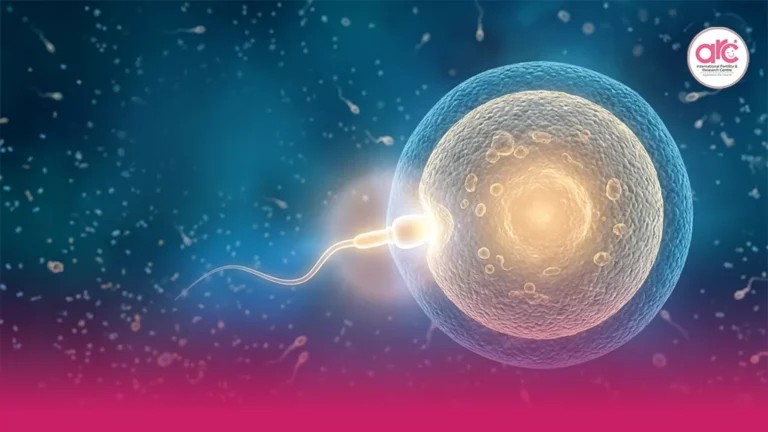
What are the signs of poor egg quality during IVF stimulation?
One of the most difficult parts of IVF is waiting for information. Every scan, every blood test, and every call from the clinic can feel emotionally loaded. Many women naturally wonder: What are the signs of poor egg quality during IVF stimulation?
The honest answer is this: egg quality cannot be seen directly during stimulation. A woman may feel bloated, tired, emotional, or completely normal, and none of these symptoms reliably prove whether her eggs are healthy or unhealthy. Doctors can only estimate egg quality by looking at patterns such as ovarian reserve, follicle growth, hormone response, egg maturity, fertilisation, and embryo development.
At ARC Fertility Hospitals, fertility specialists usually explain this distinction clearly because it prevents unnecessary panic. A slow response does not always mean poor egg quality, and a good number of follicles does not always guarantee good embryos. IVF monitoring is about connecting many clues, not judging one scan or one blood value in isolation.
Why egg quality matters in IVF
Egg quality refers to an egg’s ability to mature properly, fertilise, divide normally, and support embryo development. It is strongly linked with age, but age is not the only factor. Endometriosis, previous ovarian surgery, genetic factors, smoking, severe oxidative stress, and some medical conditions may also influence egg health.
During IVF stimulation, medications encourage the ovaries to grow multiple follicles. Each follicle may contain an egg, but not every follicle gives a mature egg, and not every mature egg fertilises. This is why doctors look beyond follicle count and focus on the full treatment picture.
If you are choosing a Fertiliy hospital in Chennai, it helps to ask how the team monitors ovarian response, adjusts medication, and counsels patients when the egg yield or embryo development is lower than expected.
Signs doctors may watch during stimulation
1. Low follicle count despite adequate medication
A low number of growing follicles may suggest reduced ovarian reserve. Ovarian reserve is not exactly the same as egg quality, but the two can overlap, especially with increasing age. If only one or two follicles grow when more were expected, your doctor may review AMH, AFC, previous response, medication dose, and whether continuing the cycle is worthwhile.
2. Slow or uneven follicle growth
Follicles usually grow gradually during stimulation. Sometimes they grow slowly or very unevenly, with one dominant follicle growing ahead while others lag behind. This may make timing the trigger injection more complex. Uneven growth does not automatically mean poor egg quality, but it can affect how many eggs are mature at retrieval.
3. Hormone levels that do not match follicle development
Estradiol levels often rise as follicles grow. If estradiol is lower than expected for the number and size of follicles, doctors may consider whether some follicles are not functioning optimally. However, hormone values vary between patients and protocols, so this sign must be interpreted carefully.
4. Fewer mature eggs after retrieval
The clearest clues often appear after egg retrieval, not during stimulation. For example, if many follicles were seen but only a few mature eggs were collected, this may suggest issues with follicle synchrony, timing, ovarian biology, or egg maturity. Your doctor may adjust the next cycle’s stimulation protocol or trigger strategy based on this information.
5. Poor fertilisation or slow embryo development
Egg quality is often reflected in what happens after fertilisation. If eggs do not fertilise as expected, or embryos stop developing early, egg quality may be one possible reason. Sperm factors can also contribute, so it is important not to place the entire emotional burden on the woman. IVF is a combined reproductive process, and both egg and sperm quality matter.
Symptoms are not reliable signs of egg quality
Many women search for meaning in every body sensation during IVF. Breast tenderness, mild cramps, mood changes, bloating, headaches, and fatigue are usually related to hormone medication and ovarian stimulation. They do not confirm whether egg quality is good or poor.
Likewise, feeling “nothing” does not mean the cycle is failing. Some women have strong medication side effects; others have very few. The more useful information comes from ultrasound scans, blood tests, retrieval results, fertilisation reports, and embryo grading.
Can poor egg quality be improved during the same cycle?
Once stimulation has started, there is limited time to change egg biology significantly. Your doctor may adjust medication doses, modify timing, or change the trigger plan, but egg development begins months before an IVF cycle. This is why pre-treatment evaluation matters.
Before a future cycle, your fertility specialist may discuss lifestyle measures, managing thyroid or insulin resistance, treating endometriosis when appropriate, reviewing supplements, optimising sperm health, and selecting a different stimulation protocol. These steps do not guarantee success, but they may improve the overall treatment environment.
Patients also ask about daily habits during the waiting phases of treatment. For example, if you are unsure about alcohol after transfer, this guide on alcohol during the two-week wait explains why cautious choices are usually recommended while you wait for pregnancy testing.
When should you discuss concerns with your doctor?
You should speak with your fertility doctor if you have had repeated low egg yield, poor fertilisation, embryos arresting before blastocyst stage, repeated failed IVF cycles, advanced maternal age, very low AMH, or a history of ovarian surgery. These situations do not mean pregnancy is impossible, but they do call for a more personalised plan.
Sometimes the discussion may include ICSI, embryo culture strategy, genetic testing in selected cases, donor eggs, fertility preservation for future planning, or whether another IVF attempt with a revised protocol is reasonable. The right path depends on age, ovarian reserve, sperm parameters, previous cycle data, finances, and emotional readiness.
If you are comparing the Best Fertiliy hospital in Chennai for IVF care, look for a centre that explains results without blame, reviews both partners carefully, and gives realistic options instead of making promises.
Practical summary of possible signs
The table below shows how doctors may interpret common IVF stimulation findings. These are not final diagnoses, but they can help you understand the conversation with your specialist.
Possible indicators and what they may mean
| Finding during IVF care | What it may suggest | What your doctor may review |
|---|---|---|
| Low follicle number | Possible reduced ovarian reserve | AMH, AFC, age, previous stimulation response |
| Slow or uneven follicle growth | Follicles may not mature together | Medication dose, scan pattern, trigger timing |
| Low estradiol for follicle size | Follicle activity may be lower than expected | Blood trends, ultrasound findings, protocol response |
| Few mature eggs at retrieval | Egg maturity or follicle synchrony may be affected | Trigger type, retrieval timing, future protocol changes |
| Poor fertilisation or embryo arrest | Egg quality, sperm quality, or both may contribute | Semen analysis, ICSI need, lab outcomes, embryo development |
Conclusion
Poor egg quality during IVF stimulation is not something you can diagnose through symptoms at home. The most meaningful clues come from medical monitoring and laboratory outcomes. Even then, one difficult cycle does not define your entire fertility future.
If your IVF response is lower than expected, ask your doctor to explain what happened, what was learned, and what can be changed. A thoughtful review of the cycle often gives more clarity than fear-based assumptions. With the right evaluation, many women can move forward with a plan that is medically sound, emotionally realistic, and suited to their individual fertility picture.
Frequently Asked Questions
Get answers to common questions about IVF treatment at ARC Fertility
Can I feel poor egg quality during IVF stimulation?
No. There are no reliable physical symptoms that confirm poor egg quality during IVF stimulation. Bloating, mood changes, tiredness, and cramps are usually related to fertility medications and hormone changes. Egg quality is assessed indirectly through scan findings, hormone trends, egg maturity, fertilisation, and embryo development.
Does a low number of follicles always mean poor egg quality?
Not always. A low follicle count may suggest reduced ovarian reserve, but it does not automatically prove that the eggs are poor quality. Some women with fewer eggs may still produce usable embryos. Your doctor will interpret follicle count along with age, AMH, AFC, previous IVF response, and laboratory results.
When do doctors know more about egg quality in an IVF cycle?
Doctors usually learn more after egg retrieval and fertilisation. The number of mature eggs, fertilisation rate, embryo development, and blastocyst formation give more useful clues than symptoms during stimulation. Even then, egg quality is only one part of the picture because sperm quality and lab factors also matter.
Can medication improve egg quality during IVF stimulation?
Medication can help follicles grow and may improve the number of eggs retrieved, but it cannot instantly change egg quality within a few days. Egg development begins months before retrieval. If a cycle shows concerns, your doctor may adjust future protocols, review health factors, and discuss pre-treatment optimisation.
Is IVF worth trying if I have low AMH or suspected poor egg quality?
It depends on your age, ovarian reserve, previous treatment history, sperm factors, and personal goals. Low AMH may mean fewer eggs are expected, but it does not always rule out IVF. A fertility specialist can help you understand whether IVF, modified stimulation, ICSI, fertility preservation, or other options are appropriate.
Can poor egg quality cause failed fertilisation?
Yes, poor egg quality can contribute to failed or low fertilisation, but it is not the only possible cause. Sperm quality, egg maturity, timing, and fertilisation method also matter. If fertilisation is unexpectedly low, your doctor may review both partners and consider whether ICSI or other changes are needed in a future cycle.
Should I cancel an IVF cycle if follicle growth is slow?
Not necessarily. Slow follicle growth does not always mean the cycle has failed. Your doctor may continue monitoring, adjust medication, or change timing depending on your response. Cycle cancellation is considered only when the likely benefit is low or when continuing is not medically or financially reasonable for that patient.