How many days after ovulation does implantation occur?
For many women trying to conceive, the days after ovulation can feel unusually long. Every cramp, twinge, mood change, or spot of discharge may raise the same question: could this be implantation? In most cycles, implantation occurs about 6 to 10 days after ovulation. Some women may implant slightly earlier or later, roughly between 5 and 12 days after ovulation, but the most common window is around day 8 or 9 after ovulation.
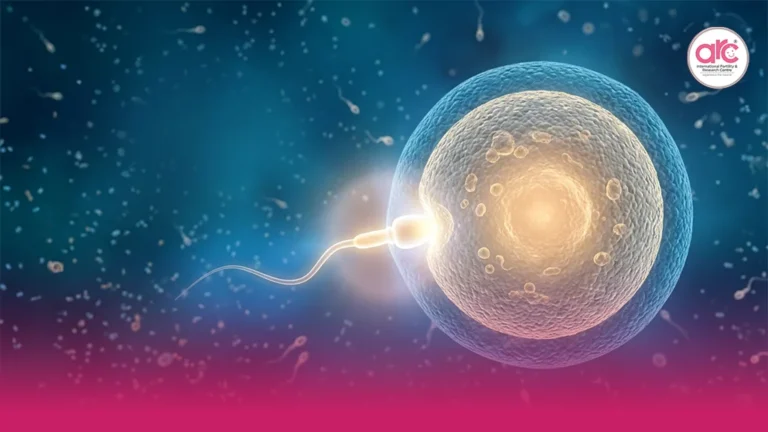
To understand this clearly, it helps to remember that implantation does not happen immediately after sex or even immediately after fertilization. After ovulation, the egg can be fertilized in the fallopian tube if sperm are present. The fertilized egg then divides over several days while travelling toward the uterus. By the time it reaches the uterine cavity, it has developed into a blastocyst, and only then can it attach to the uterine lining.
At ARC Fertility Hospitals, doctors often explain this timeline because it helps reduce unnecessary panic. A negative pregnancy test too early does not always mean pregnancy has not occurred. It may simply mean implantation has not happened yet, or the pregnancy hormone has not risen enough to be detected.
The usual implantation timeline after ovulation
A typical timeline may look like this:
Day 0: Ovulation occurs. The ovary releases an egg, and this egg remains available for fertilization for about 12 to 24 hours.
Day 1 to 3 after ovulation: If fertilization happens, the embryo begins dividing while moving through the fallopian tube.
Day 4 to 5 after ovulation: The developing embryo usually reaches the uterus. It may still need time before it is ready to attach.
Day 6 to 10 after ovulation: Implantation most commonly occurs. The embryo attaches to the endometrium, which is the inner lining of the uterus.
Day 10 to 14 after ovulation: The body begins producing more hCG, the hormone detected by pregnancy tests. This is why testing closer to the expected period is more reliable.
This is also why the “two-week wait” feels confusing. The body may be preparing for a period and, at the same time, a very early pregnancy can create similar symptoms. Tracking ovulation carefully can help, but it cannot confirm implantation by itself. If you monitor temperature patterns, you may find this explanation of basal body temperature after ovulation useful for understanding what your chart can and cannot tell you.
Can you feel implantation happening?
Some women report mild pulling, light cramping, or a brief sensation low in the abdomen around the implantation window. Others feel absolutely nothing and still become pregnant. Both situations are normal. Implantation is a microscopic process, so strong pain is not expected. If pain is severe, one-sided, persistent, or associated with heavy bleeding or dizziness, it should be medically assessed rather than assumed to be implantation.
Light spotting may occur in some women, but it is not a dependable sign. Implantation spotting, when it happens, is usually very light, short-lived, and pinkish or brownish rather than heavy red bleeding. However, spotting before a period can also happen because of hormonal changes, cervical irritation, low progesterone, polyps, infection, or simply normal cycle variation. If spotting is frequent, the guide on spotting before your period is due can help you understand when it needs attention.
When should you take a pregnancy test?
The most practical time to test is around 12 to 14 days after ovulation, or from the first day of a missed period. Testing at 7 or 8 days after ovulation often leads to confusion because even if implantation has started, hCG may still be too low to detect.
Home pregnancy tests vary in sensitivity, and urine concentration also matters. A first-morning urine sample may give a clearer result. If the result is negative but your period does not arrive, repeat the test after 48 hours. In fertility treatment cycles, especially after IUI or IVF, it is better to follow the clinic’s advised test date because trigger injections and medications can affect interpretation.
Does implantation timing change in IUI or IVF?
In IUI, fertilization still happens inside the body, so the implantation window is similar to a natural cycle. The main difference is that sperm are placed closer to the time of ovulation, improving the chance of sperm meeting the egg. Implantation still usually occurs several days later, not immediately after the procedure.
In IVF, the timeline depends on the stage of the embryo transferred. A day-5 blastocyst may begin implanting within 1 to 3 days after embryo transfer, while a day-3 embryo generally needs more time to develop before implantation. This is why IVF clinics provide a specific beta hCG blood test date. Testing too early can create emotional distress and misleading results.
Many women also wonder whether IVF is needed if implantation has not happened for a few cycles. The answer depends on age, ovulation pattern, semen parameters, fallopian tube status, ovarian reserve, and how long you have been trying. For some couples, timed intercourse or IUI may be appropriate. For others, especially with blocked tubes, severe male factor infertility, advanced maternal age, or repeated failed cycles, IVF may be advised sooner.
What affects whether implantation happens?
Implantation depends on two broad factors: embryo quality and uterine receptivity. Embryo quality is influenced by egg quality, sperm quality, chromosome health, and the fertilization process. Uterine receptivity depends on the thickness and pattern of the endometrium, hormone balance, progesterone support, uterine shape, inflammation, fibroids, polyps, adhesions, and general reproductive health.
Age is also important. As women get older, the number and quality of eggs usually decline, especially after the mid-30s. This can affect embryo quality and reduce the chance that an embryo will implant and continue developing. This does not mean pregnancy is impossible, but it does mean timely evaluation matters.
At a fertility consultation, doctors may review cycle history, ultrasound findings, ovulation evidence, AMH or ovarian reserve markers, thyroid and prolactin levels, semen analysis, and tubal assessment when needed. The goal is not to rush everyone into advanced treatment, but to find the reason time is passing without pregnancy.
When should you consult a fertility specialist?
If you are under 35 and have been trying for 12 months without pregnancy, a fertility evaluation is recommended. If you are 35 or older, it is better to seek help after 6 months. You should consult earlier if you have irregular periods, known PCOS, endometriosis, previous pelvic infection, recurrent miscarriage, very painful periods, or a male partner with known sperm concerns.
Cost is a very real concern for many couples. A good fertility plan should avoid unnecessary tests, explain why each investigation is being done, and discuss realistic options before treatment begins. Sometimes a simpler approach is enough. Sometimes IVF may offer a clearer path. What matters is that the decision is based on diagnosis, age, duration of infertility, and emotional readiness, not pressure or fear.
ARC Fertility Hospitals supports couples with structured evaluation, counselling, and individualized fertility treatment planning. If you are searching for the Best Fertility Hospital in Chennai, it is helpful to look for a centre that explains your timeline, test results, treatment options, and chances honestly. Similarly, when choosing a Fertility Hospital in Chennai, ask how the team decides between timed intercourse, IUI, IVF, fertility preservation, or further diagnostic testing.
A calm way to think about the implantation window
The short answer is that implantation usually happens 6 to 10 days after ovulation. But the more useful answer is this: implantation is only one part of a larger fertility process. A single cycle can be uncertain even when everything is normal. Try not to judge your chances based only on symptoms during the two-week wait. Mild cramps, no cramps, spotting, no spotting, breast tenderness, or tiredness can all occur in both pregnancy and premenstrual days.
If your period is late, test at the right time. If cycles are repeatedly unsuccessful, seek evaluation rather than blaming yourself. Fertility care works best when it combines medical clarity with emotional patience, because the waiting is not just biological; it is deeply personal too.