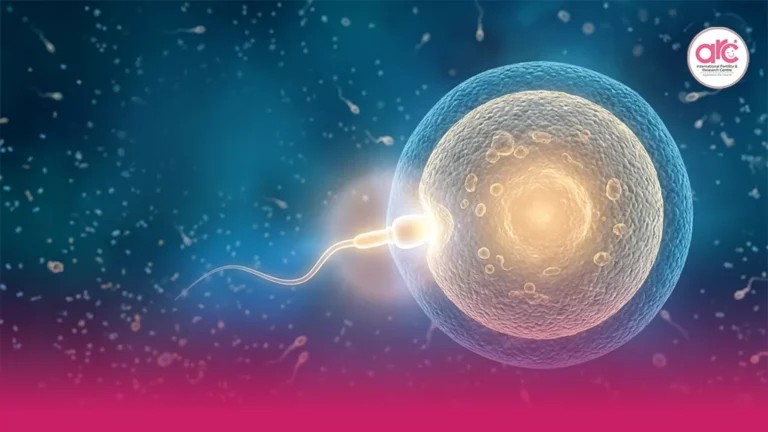
High FSH Levels by Age Chart: What High FSH Means for Egg Reserve & Pregnancy
Seeing a “high FSH” result on a fertility report can feel unsettling, especially when you are trying to understand whether pregnancy is still possible. Many women read the number first and immediately fear the worst. But FSH is not a verdict. It is one part of a larger fertility picture that includes age, AMH, antral follicle count, menstrual pattern, ovulation, sperm quality, uterine health and previous pregnancy history.
FSH, or follicle-stimulating hormone, is produced by the pituitary gland. Its job is to stimulate follicles in the ovaries to grow during the early part of the menstrual cycle. When the ovaries respond less easily, the brain may release more FSH to encourage follicle development. That is why a higher FSH level can sometimes suggest reduced ovarian reserve. It does not mean there are no eggs, and it does not automatically mean pregnancy cannot happen.
At ARC Fertility Hospitals, fertility testing is interpreted as a pattern, not as one isolated number. A woman with borderline FSH but good follicle count may need a different plan from someone with high FSH, low AMH and irregular cycles. The purpose of testing is not to frighten you; it is to choose the most sensible next step without losing valuable time.
What Is Considered a High FSH Level?
FSH is usually checked on day 2 or day 3 of the menstrual cycle, because that gives a clearer baseline reading. Laboratories may use slightly different reference ranges, so the result should always be reviewed with a fertility specialist. In general, lower early-cycle FSH suggests the ovaries are responding with less hormonal pressure. Higher levels may suggest the ovaries need stronger stimulation signals.
A mildly raised FSH may still be compatible with natural conception, IUI or IVF depending on other factors. A persistently high FSH, especially along with low AMH or fewer visible follicles on ultrasound, may point towards diminished ovarian reserve. The important word is “persistently.” One unusual cycle, stress, illness or lab variation can sometimes affect results, so doctors may repeat testing when needed.
High FSH by Age: Why Age Changes the Meaning
Age matters because egg quantity and egg quality are not the same thing. FSH gives clues about ovarian response, while age remains one of the strongest indicators of egg quality. A high FSH result at 28 may require careful investigation because it is earlier than expected. A similar result at 41 may reflect age-related ovarian reserve decline, which is more common but still deserves timely planning.
This is why comparing your number with someone else’s can be misleading. Two women can have the same FSH level but very different treatment options because of age, AMH, follicle count, cycle regularity and partner sperm parameters. Even couples who appear healthy can face delays, which is why it helps to understand why conception may still take time despite regular cycles and normal general health.
Does High FSH Mean Poor Egg Reserve?
High FSH can be a signal of reduced ovarian reserve, but it is not the only test used. Fertility specialists commonly combine FSH with AMH and antral follicle count. AMH reflects the pool of small developing follicles, while ultrasound shows how many recruitable follicles are visible at the start of the cycle. Together, these tests help estimate how the ovaries may respond to fertility medication.
It is also important to understand what ovarian reserve does and does not tell you. It gives an idea of egg quantity and likely response to stimulation. It does not perfectly measure egg quality, and it does not predict pregnancy with absolute certainty. Some women with low reserve may still conceive, while some women with reassuring numbers may need treatment for other reasons such as blocked tubes, endometriosis, male factor infertility or implantation-related concerns.
Can You Get Pregnant With High FSH?
Yes, pregnancy may still be possible with high FSH, but the approach depends on the complete evaluation. If ovulation is happening and the fallopian tubes and sperm parameters are normal, a doctor may discuss timed intercourse or IUI in selected cases. However, if age is advancing, reserve is low or previous attempts have failed, IVF may be considered sooner because it allows doctors to retrieve eggs, fertilise them in the lab and understand embryo development more clearly.
High FSH can sometimes mean fewer eggs may be collected during IVF stimulation. This does not mean treatment is useless, but it does mean expectations must be realistic. The protocol, medication dose and timing may be personalised. Some women may need more than one stimulation cycle, while others may be counselled about alternative options if response is very poor. The goal is never to promise success, but to make decisions based on evidence, time and emotional readiness.
How Doctors Evaluate High FSH Before Treatment
A fertility doctor will usually look beyond the FSH number. Evaluation may include cycle history, day 2 or day 3 hormone tests, AMH, transvaginal ultrasound for antral follicle count, thyroid and prolactin tests when indicated, semen analysis and assessment of the uterus and tubes. If IVF is being planned, the uterine lining is also monitored during treatment because implantation needs both a suitable embryo and a receptive endometrium.
In some IVF cycles, doctors may identify additional issues such as a persistently thin lining. When appropriate, your specialist may discuss supportive options for thin endometrium during IVF, but this is considered only after careful assessment and is separate from treating high FSH itself.
IUI or IVF: Which Is Better With High FSH?
This is one of the most common questions women ask after seeing an abnormal reserve marker. IUI may be reasonable when the woman is younger, tubes are open, ovulation is present, sperm parameters are acceptable and FSH is only mildly raised. IVF may be preferred when age is higher, reserve is clearly low, there are tubal or sperm factors, or time is a major concern.
The decision is not about choosing the “strongest” treatment immediately. It is about choosing the treatment that gives meaningful information and does not waste months. For a 26-year-old with a temporary borderline result, repeating tests may be sensible. For a 39-year-old with high FSH and low AMH, waiting too long may reduce options. This is where personalised counselling becomes very important.
Cost, Time and Emotional Concerns
High FSH often brings two worries together: “Will this work?” and “How much will this cost?” The answer depends on the treatment path. Basic fertility evaluation costs less than IVF, while IVF cost varies based on medications, investigations, lab procedures and whether additional techniques are required. Women with reduced ovarian response may sometimes need adjusted medication plans or repeated cycles, which can affect total expense.
Emotionally, high FSH can feel like a countdown. But panic rarely helps decision-making. What helps is clarity: confirm the result, understand the full reserve picture, identify other fertility factors and discuss realistic options. If you are looking for a Fertiliy hospital in Chennai, choose a team that explains your reports patiently rather than reducing your future to one number. Many women also seek the Best Fertiliy hospital in Chennai when they want both medical depth and compassionate counselling during this uncertain stage.
High FSH Levels by Age: General Interpretation Chart
The chart below is a broad educational guide, not a diagnosis. FSH should ideally be interpreted on day 2 or day 3 of the cycle along with AMH, ultrasound findings and clinical history.
| Age Group | What Higher FSH May Suggest | Practical Next Step |
|---|---|---|
| Under 30 | High FSH is less expected and may suggest early reduced ovarian reserve if confirmed. | Repeat testing if advised, check AMH and antral follicle count, and review cycle history. |
| 30–34 | A raised level may indicate declining ovarian response earlier than average. | Complete fertility evaluation, especially if trying for more than 6–12 months. |
| 35–39 | High FSH may reflect age-related reserve decline and fewer recruitable follicles. | Seek timely specialist guidance; IVF may be discussed depending on other findings. |
| 40 and above | High FSH is more common and may be linked with reduced egg quantity and quality. | Discuss realistic options, ovarian response expectations and treatment timelines promptly. |
When Should You See a Fertility Specialist?
You should consider consultation if your FSH is repeatedly high, your AMH is low, your cycles are becoming irregular, you are over 35 and trying for six months, or you have had repeated unsuccessful attempts. Earlier evaluation is also wise if there is a history of ovarian surgery, endometriosis, chemotherapy, autoimmune disease or early menopause in the family.
High FSH does not close the door on pregnancy, but it does ask for timely attention. The most helpful next step is not searching endlessly for a perfect number. It is understanding what your body is showing now, what options are still available, and how to move forward with a plan that respects both medical reality and emotional wellbeing.
Frequently Asked Questions
Get answers to common questions about IVF treatment at ARC Fertility
Does high FSH always mean I cannot get pregnant?
No. High FSH may suggest reduced ovarian reserve, but it does not automatically mean pregnancy is impossible. Your age, AMH, antral follicle count, ovulation, sperm quality and uterine health all matter. A fertility specialist can interpret the result in context and guide the next step.
When should FSH be tested for fertility assessment?
FSH is usually tested on day 2 or day 3 of the menstrual cycle because this gives a clearer baseline reading. Testing on a different cycle day may be harder to interpret, so your doctor may repeat the test if the timing was not ideal.
Is AMH better than FSH for checking egg reserve?
AMH and FSH provide different information. AMH helps estimate the pool of small follicles, while FSH reflects how much stimulation the ovaries may need early in the cycle. Doctors often use both tests along with an ultrasound antral follicle count for a more complete view.
Can IVF work if my FSH is high?
IVF may still be an option with high FSH, but ovarian response may be lower in some women. This means fewer eggs may be retrieved. Your doctor may personalise the stimulation protocol and discuss realistic expectations based on age, AMH, follicle count and previous response.
Should I try IUI before IVF if my FSH is high?
It depends on your age, duration of trying, tube status, sperm parameters and how high the FSH is. IUI may be considered in selected younger women with mild changes, but IVF may be advised sooner if ovarian reserve is clearly low or time is a concern.
Can lifestyle changes reduce high FSH levels?
Healthy habits can support overall reproductive health, but they usually cannot reverse age-related ovarian reserve decline. Avoiding smoking, maintaining a healthy weight, managing medical conditions and reducing unnecessary delays are helpful, but treatment decisions should be based on proper fertility evaluation.
Should I repeat my FSH test if it is high once?
Often, yes. A single high FSH result may need confirmation, especially if it does not match your AMH, ultrasound or menstrual history. Your fertility specialist may repeat the test in another cycle and combine it with other investigations before making treatment decisions.