Trying to conceive often comes with excitement, hope, and plenty of questions. One of the most common is: How early can a pregnancy test be positive? While it’s tempting to test as soon as possible, understanding how pregnancy develops can help you avoid unnecessary stress and disappointment.
At ARC Fertility Hospitals, we often meet women who begin testing just a few days after ovulation, only to feel discouraged by a negative result. In many cases, the test wasn’t wrong—it was simply too early. Pregnancy tests depend on a hormone called human chorionic gonadotropin (hCG), and your body needs time to produce enough of it for a test to detect.
Understanding when implantation occurs, how hCG rises, and when to test can make the waiting period a little less confusing and help you interpret your results with confidence.
How Does a Pregnancy Test Work?
A home pregnancy test detects hCG, a hormone that is produced only after a fertilized egg implants into the lining of the uterus.
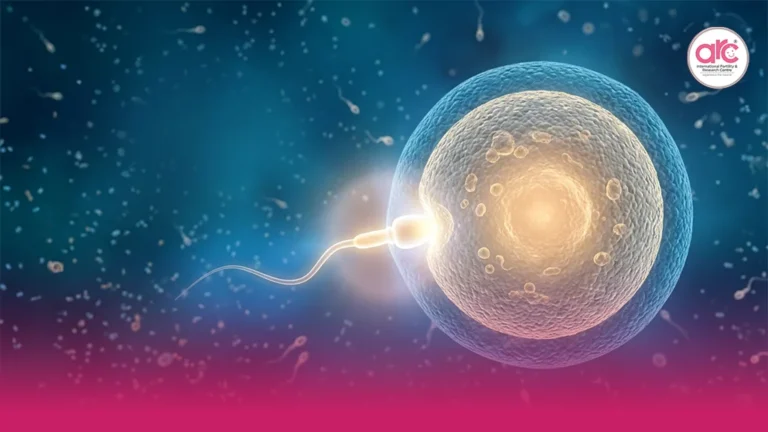
Pregnancy doesn’t begin the moment the egg is fertilized. After fertilization in the fallopian tube, the embryo spends several days dividing and travelling towards the uterus. Only after it attaches to the uterine lining does the body begin producing hCG.
This is why even the most sensitive pregnancy test cannot detect pregnancy immediately after ovulation or fertilization. Without implantation, there isn’t enough hCG for the test to identify.
When Does Implantation Usually Happen?
Implantation usually occurs between 6 and 10 days after ovulation (DPO), although the exact timing varies from woman to woman.
If implantation happens on the earlier side, hCG production begins sooner, and a pregnancy test may turn positive earlier. If implantation occurs later, it may take a few extra days before enough hCG builds up to be detected.
This natural variation explains why two women who ovulate on the same day can receive positive pregnancy tests on different days.
So, How Early Can a Pregnancy Test Be Positive?
Technically, some highly sensitive pregnancy tests may show a faint positive as early as 8 to 10 days after ovulation. However, this is not the norm.
For most women, hCG levels are still too low at this stage. Testing this early often leads to a negative result, even if pregnancy has already begun.
The most reliable time to take a home pregnancy test is from the first day of your missed period. By then, hCG has usually risen enough to give an accurate result.
If you’re undergoing fertility treatment such as IUI or IVF, your fertility specialist may recommend a blood beta-hCG test on a specific day rather than relying on a home pregnancy test.
Why Testing Too Early Often Leads to Confusion
The two-week wait can feel endless. It’s understandable to want answers as soon as possible.
Unfortunately, testing every day after ovulation rarely provides clarity.
A negative test at 8 or 9 DPO doesn’t necessarily mean you’re not pregnant—it may simply mean implantation hasn’t happened yet or hCG hasn’t reached detectable levels.
Likewise, certain fertility medications that contain hCG can temporarily produce a false-positive result if testing is done too soon after treatment.
Waiting a few extra days often provides a much clearer answer and can save you unnecessary emotional stress.
Can You Have Pregnancy Symptoms Before a Positive Test?
Some women notice changes before a pregnancy test becomes positive, while others experience no symptoms at all.
Possible early symptoms include:
- Mild cramping
- Breast tenderness
- Fatigue
- Bloating
- Increased sensitivity to smells
- Mood changes
- Light implantation spotting
However, these symptoms are also caused by progesterone, the hormone that naturally rises after ovulation.
This is why symptoms alone cannot confirm pregnancy. Many women experience identical symptoms in cycles where they are not pregnant.
If you’ve been wondering whether symptoms like mild cramping are normal during the implantation window, you may also find our guide on Is cramping on one side 7 days after ovulation a sign of implantation? helpful.
What If Your Test Is Negative but Your Period Hasn’t Started?
A negative pregnancy test isn’t always the final answer.
If you tested early and your period hasn’t arrived, wait another 48 hours before testing again. hCG levels usually double every two to three days during early pregnancy, making later tests more reliable.
If repeated tests remain negative and your period is still delayed, consider speaking with your doctor. A delayed period can also result from stress, hormonal changes, irregular ovulation, thyroid disorders, PCOS, or other medical conditions.
When Should You Consider a Fertility Evaluation?
Occasionally getting a negative pregnancy test is completely normal.
However, if you’ve been trying to conceive for 12 months if you’re under 35, or 6 months if you’re 35 or older, it’s a good idea to seek professional advice.
A fertility evaluation looks beyond pregnancy tests. It helps identify factors such as:
- Whether ovulation is occurring regularly
- Egg reserve and ovarian function
- Fallopian tube health
- Uterine conditions
- Male fertility factors through semen analysis
Choosing a trusted Fertility Hospital in Chennai allows couples to receive a complete fertility assessment rather than relying solely on symptoms or home pregnancy tests.
At ARC Fertility Hospitals, every treatment plan is tailored to the individual couple. Some couples simply need better cycle timing, while others may benefit from ovulation induction, IUI, IVF, or ICSI depending on their diagnosis.
If you’re also trying to understand your fertile window, our article on Why a positive ovulation test may not always mean egg release explains why ovulation predictor kits don’t always tell the full story.
Should You Take a Blood Test Instead?
Blood pregnancy tests detect much lower levels of hCG than home urine tests and can identify pregnancy earlier.
These tests are commonly recommended after IVF or IUI because they provide more accurate information than home kits.
For women trying naturally, however, a blood test is usually unnecessary unless advised by a doctor or if pregnancy needs to be confirmed for medical reasons.
The Bottom Line
So, how early can a pregnancy test be positive? While some highly sensitive tests may detect pregnancy as early as 8 to 10 days after ovulation, the most dependable results usually come from the first day of a missed period. Testing too early often creates unnecessary uncertainty because implantation and hCG production vary from one woman to another.
If you’ve been trying to conceive without success or have concerns about your cycle, seeking guidance from the Best Fertility Hospital in Chennai can provide answers that home pregnancy tests cannot. At ARC Fertility Hospitals, our specialists focus on understanding the complete fertility picture, offering evidence-based care, personalised treatment plans, and compassionate support to help couples move forward with confidence.